REVIEW · HAMBURG
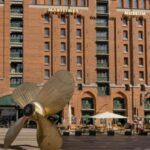
Hamburg: Entrance to the Museum Ship Cap San Diego
Book on GetYourGuide →Operated by Cap San Diego Betriebsgellschaft mbH · Bookable on GetYourGuide
A real cargo ship museum in Hamburg. I love the feeling of stepping into the 1960s–70s South America route and the chance to stand right in the engine room. One heads-up: expect lots of stairs, so it’s not a good fit if you have mobility limits or claustrophobia.
This is a self-guided walk through the Cap San Diego, the largest civil museum ship in the world, with stops that turn into moments: bridge lookouts, the machine areas, and the passenger saloon with light music. You’ll also have a documentary to watch, plus an exhibit on sea freight history.
For about $14 per person, it’s a strong value if you like hands-on places. The museum is open daily 10 AM–6 PM, so you can go whenever it works in your Hamburg day.
In This Review
- Key things to know before you go
- Cap San Diego in Hamburg: Why this museum ship feels different
- Getting there and entering at Überseebrücke
- Your self-guided journey through the 1960s, 70s, and South America
- Bridge and lookout stations: imagining the Atlantic route
- Machine room and the steady pulse: the most memorable stop
- Saloon and passenger life: a calmer slice of the voyage
- Documentary: A Suitcase Full of Hope and emigration 1850–1930
- Hatch 2: General Cargo and Container Handling (and why it matters)
- What $14 buys you: real value for a one-day Hamburg visit
- How much time to plan in practice
- Finding your way: helpful staff, but route signage could improve
- Who should book Cap San Diego, and who might skip it
- Should you book Cap San Diego in Hamburg?
- FAQ
- Where is the entrance to the Cap San Diego museum ship?
- Is this a guided tour?
- What’s the opening time for the museum ship?
- How much does it cost?
- Is a wheelchair available or is the museum ship wheelchair accessible?
- What’s included with the ticket?
Key things to know before you go
- Cap San Diego is a real ship: a preserved cargo vessel, still laid out like it once worked.
- Bridge to hatch, heart to head: you can move through multiple “levels” of ship life.
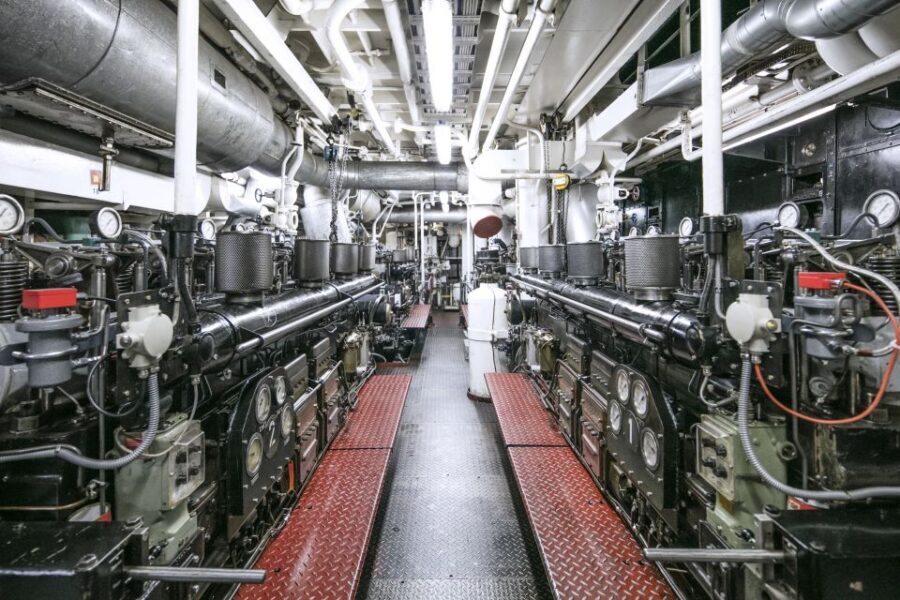
- Engine room time: you get to experience the machine space and feel the steady mechanical pulse.
- A Suitcase Full of Hope documentary: you’ll learn about emigrants’ fate between 1850 and 1930.
- Hatch 2 exhibition: General Cargo and Container Handling explains how sea freight changed from the 1960s onward.
- Self-guided means you control the pace: no live guide, so plan to wander and look carefully.
Cap San Diego in Hamburg: Why this museum ship feels different
Most museum ships show you a lot of surfaces. Cap San Diego tries to give you the working-ship feeling—so you don’t just read about cargo and navigation, you move through spaces designed for the job.
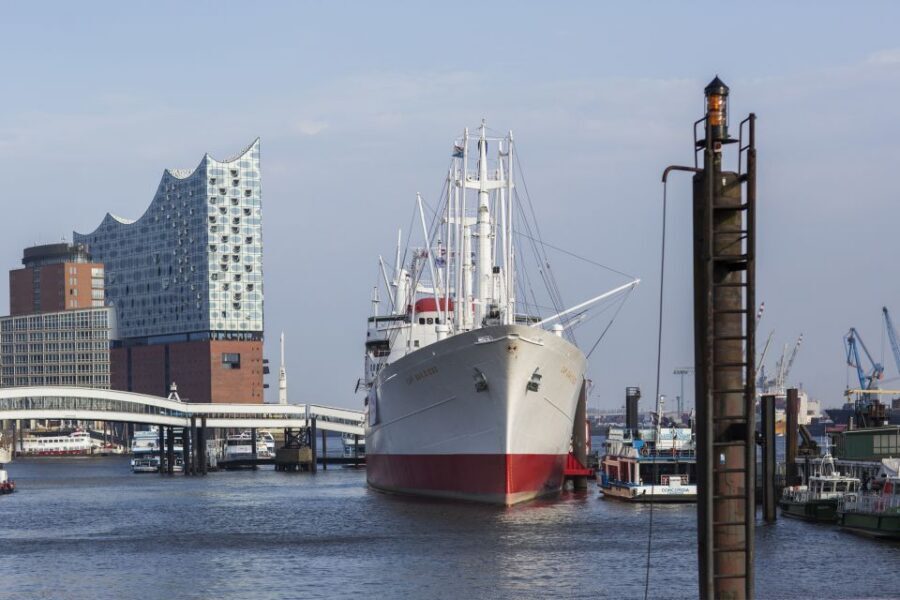
It helps that this ship is the last surviving vessel from a small series of fast general cargo ships built in the early 1960s. Cap San Diego served on routes to South America until 1981, and it has been a museum ship since 1988—so it has both maritime authenticity and real museum structure.
If you like travel that mixes emotion with mechanics, this is a good match. The ship’s layout lets the themes land in your body: the bridge perspective, the engine-room workload, and the passenger spaces that make the whole story human.
Other maritime museums and historic ships in Hamburg
Getting there and entering at Überseebrücke
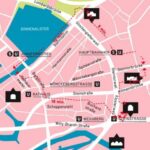
Your stop is straightforward: go directly to the ship entrance at the end of Überseebrücke. Arriving by foot is usually simplest, because you’re headed for the ship entrance rather than a ticket office in a separate building.
Once you’re at the entrance, you’ll essentially “start walking the ship.” There’s no live guide to meet, which means you’ll rely on signage and your own sense of direction—plus the natural flow of moving from upper to lower areas and back.
Also note this: the layout can feel maze-like in parts, and it involves multiple flights of stairs. If you’re the kind of person who finds tight corridors stressful, give yourself extra patience at the start.
Your self-guided journey through the 1960s, 70s, and South America
The museum’s main storyline takes you on an imaginary run in the 1960s to 1970s across the Atlantic—toward places like Rio de Janeiro and Buenos Aires—then back again. The idea is not just geography. It’s about how ship work shaped daily life for the people onboard.
As you explore, you’ll find different “roles” mapped into the ship spaces. You can experience the voyage from a lookout-style perspective on the bridge, then switch to the machine-room viewpoint where the work is all steady power and constant activity.
That change of perspective is the point. It’s an easy way to understand that ocean travel wasn’t one experience—it was a set of jobs, rhythms, and environments that all had to work together.
Bridge and lookout stations: imagining the Atlantic route
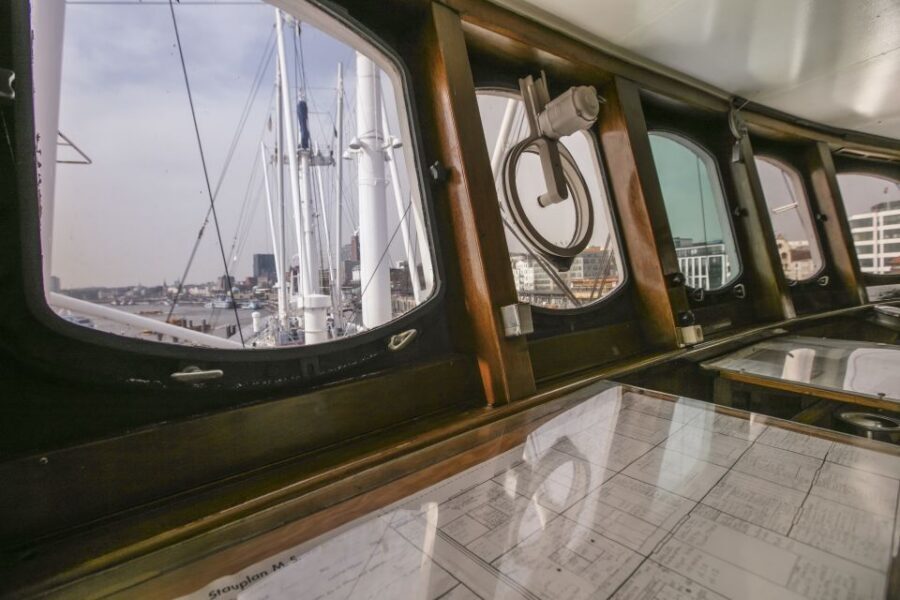
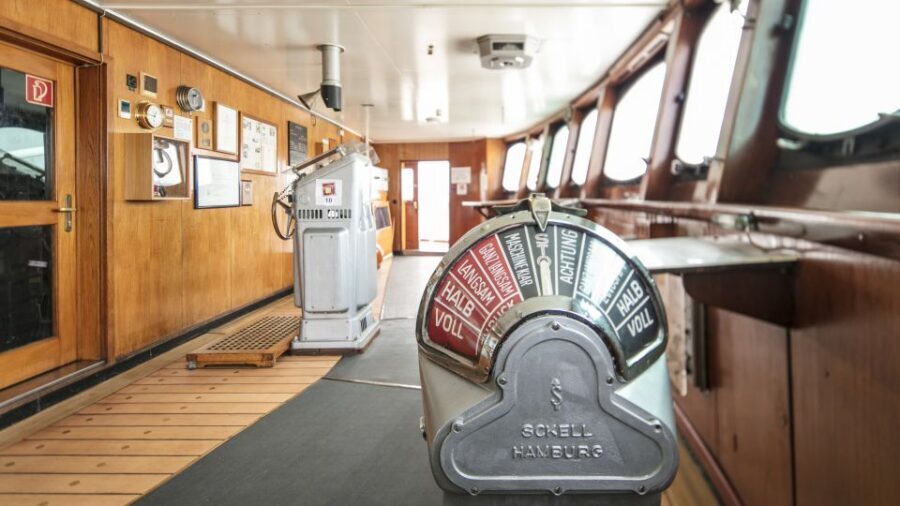
On the bridge areas, you’re set up to think like a lookout—what you’d need to notice, what you’d focus on, and how navigation decisions shaped the voyage. Even without a live guide, the ship’s configuration helps you “read” the space like a working station.
This is one of the best sections if you enjoy ship design details and spatial thinking. You get a sense of how command and observation were organized, and it’s a contrast to what you’ll do later in the machine spaces.
One practical tip: don’t rush this part. Spend a few minutes just looking around the bridge zones before moving downward, so the rest of the ship feels connected rather than random rooms.
Machine room and the steady pulse: the most memorable stop
If one area makes people stop and slow down, it’s the machine room experience. The museum invites you to stand deep within the machine area so you can feel the steady pulse of the engines.
This isn’t a story told only with panels. It’s physical. The space reinforces the idea that cargo ships weren’t quiet, gentle vehicles—they were powered systems where work and sound mattered.
It’s also where the visit connects best to the larger shipping story. Later, when you look at freight evolution in hatch 2, you’ll understand better what changed and what stayed the same: power, logistics, and the need to move goods efficiently.
Other museum experiences in Hamburg

Saloon and passenger life: a calmer slice of the voyage
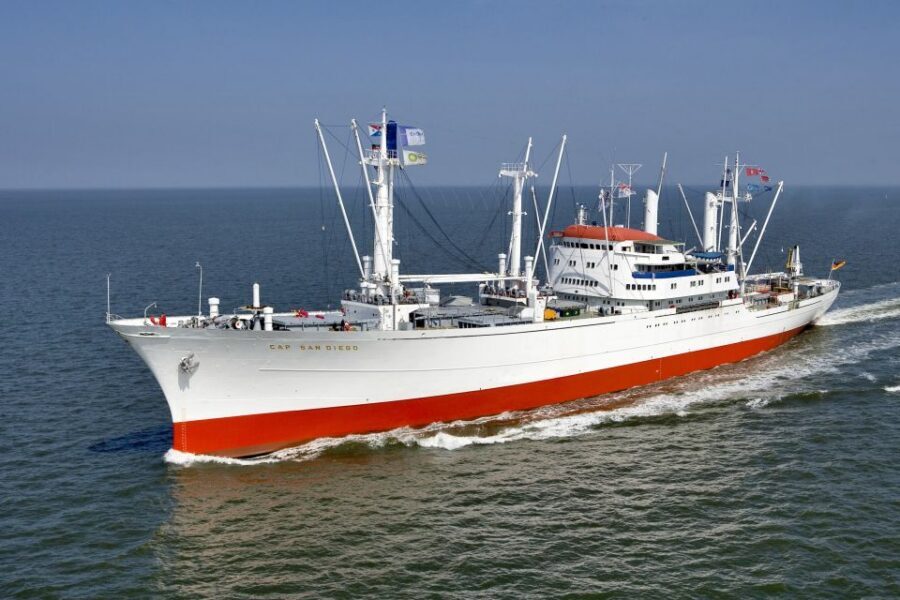
After the intensity of the machine areas, the passenger saloon gives you a softer rhythm. You can relax with passengers in the saloon while on a fun-filled voyage, and there’s light music to match the mood.
This section matters because it prevents the visit from becoming only technical. You get a sense of how time onboard could feel when people weren’t working the hard mechanics or managing cargo.
It’s also a nice place to reset your brain. If you’re doing this in one stretch, the saloon can be where you catch your breath, review what you’ve seen, and decide where you want to spend extra time.
Documentary: A Suitcase Full of Hope and emigration 1850–1930
Inside the museum, you’ll watch the documentary A Suitcase Full of Hope – Emigration Port of Hamburg. It focuses on the fate of emigrants between 1850 and 1930.
This is one of the most meaningful parts of the visit because it ties a ship museum to a human story. You can walk through ship spaces, but the documentary gives you context for why ships mattered so much to migration: the passage wasn’t just travel—it was a life-changing gamble.
If you’re sensitive to emotional topics, this section is also where you’ll want to take your time. Don’t treat it like background media; plan to actually sit and watch so the ship’s themes land with weight.
Hatch 2: General Cargo and Container Handling (and why it matters)
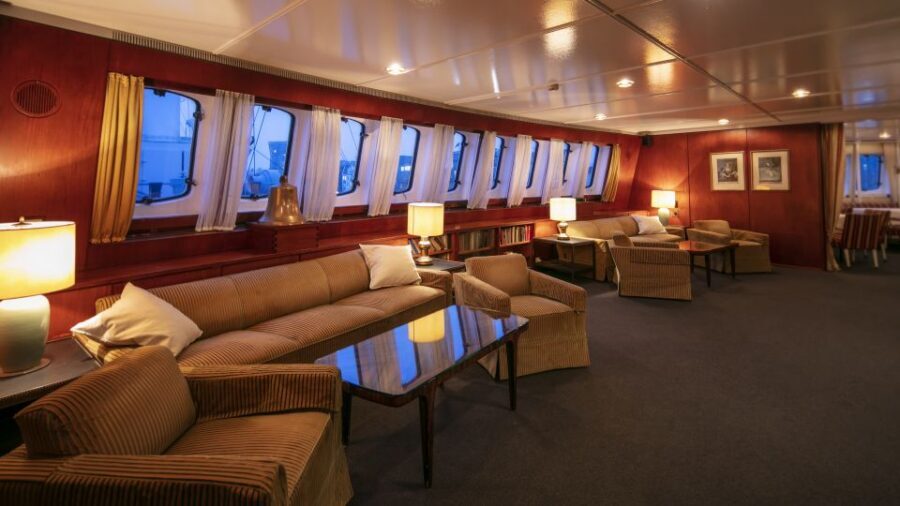
In hatch 2, you’ll find the permanent exhibition General Cargo and Container Handling. It explains sea freight transport history from 1960 to today using historical images and explanatory texts.
This is where the museum becomes especially useful if you like to connect the dots between past and present. Container handling didn’t just change how goods were packed—it changed how ports worked, how ships were designed, and how global supply chains moved.
The big value here is clarity. The exhibit format helps you understand the shift from general cargo methods to container-based systems, using visuals and straightforward explanations rather than dense academic language.
If you’ve ever wondered why shipping boxes changed everything, start here. Then walk back through the ship spaces and you’ll notice how the physical design supports the operational story.
What $14 buys you: real value for a one-day Hamburg visit
At around $14 per person for a one-day visit, Cap San Diego can be a very solid deal—especially if you compare it to typical indoor museum pricing. You’re not paying just for access to a room of artifacts. You’re paying for a whole working-ship environment you can explore.
And the self-guided format is part of the value. There’s no need to coordinate with a live group schedule. You can spend extra time where your curiosity pulls you—bridge view, machine room, documentary, or hatch 2—without feeling like you’re always catching up.
Optional audio guidance is available if you select it, but even without it, the ship’s structure does a lot of the work. You can still follow the visit’s key sections and build a coherent story as you go.
How much time to plan in practice
The listing calls it a 1-day experience, and that’s the right mindset. Since it’s self-guided, the time you’ll need depends on whether you skim or really look.
To avoid rushing, I suggest you plan around three “anchor moments”:
- Bridge/lookout sections
- The machine room experience
- Documentary plus the hatch 2 exhibition
Once those are done, you’ll likely have a natural sense of whether you want to loop back for a second pass on details or spend more time just wandering ship spaces.
If you’re pressed for time, focus on the machine room first. It’s the most distinctive part of the whole ship museum experience.
Finding your way: helpful staff, but route signage could improve
Because this is self-guided, you will rely on on-site navigation cues. One realistic note: the route could be better indicated, but the good news is that it’s still easy to get oriented quickly.
Also, the ship staff matter here. On board, the team tends to be very kind and willing to share useful information. If you’re unsure where to go next, asking a simple question can save time and help you keep your flow.
My advice: don’t try to do everything in one frantic hour. Instead, pick a few priorities, then let the ship guide the rest of your walk.
Who should book Cap San Diego, and who might skip it
Cap San Diego is a great choice if you want a hands-on Hamburg experience with strong atmosphere. It works well for people who like ships, ports, technology, and travel stories that connect logistics to real lives.
It’s also good for couples and friends who enjoy exploring at their own pace. Since it’s self-guided, you can split attention—one person checks ship details while the other takes in the documentary—and then recombine around the main exhibits.
It’s not the best pick if you:
- have claustrophobia or mazeophobia (tight ship corridors and complex routes can be challenging)
- have mobility limitations, because the visit isn’t wheelchair accessible and includes multiple flights of stairs
If those don’t apply, you’ll probably love how the visit mixes imagination (1960s–70s voyage storytelling) with concrete spaces (bridge and machine room) and then lands on shipping history (hatch 2).
Should you book Cap San Diego in Hamburg?
Yes, if you want an unusual Hamburg experience that isn’t just about looking—you’ll actually walk the ship. The engine room experience and the bridge-to-hatch layout are exactly the kind of museum that makes you feel like you’re learning by being there.
Skip it if stairs or tight ship spaces are a concern, because there’s no way around the ship’s physical design. If that’s you, you may want a different Hamburg museum day.
FAQ
Where is the entrance to the Cap San Diego museum ship?
You should go directly to the ship entrance located at the end of Überseebrücke.
Is this a guided tour?
No. This is a self-guided visit with no live guide.
What’s the opening time for the museum ship?
The museum is open 10 AM–6 PM daily.
How much does it cost?
The price is $14 per person, with an entrance ticket included.
Is a wheelchair available or is the museum ship wheelchair accessible?
No. The museum is not wheelchair accessible and is not recommended for people with limited mobility due to multiple flights of stairs.
What’s included with the ticket?
Your ticket includes entrance to the museum ship. An audio guide is included only if you select the option. You can also watch the documentary and visit the exhibitions as part of your self-guided walk.