REVIEW · HAMBURG
private city tour of Hamburg’s UNESCO World Heritage Site
Book on Viator →Operated by Marius Gebhardt Fotografie & Stadtführungen · Bookable on Viator
Hamburg’s port legend starts before the harbor. This private tour strings together three UNESCO World Heritage areas and explains how the city got its name, how trade changed, and how the port worked—without big-tour chaos around you, with mobile ticket convenience built in.
What I really like is the mix of big themes and small, specific details. You’ll hear the kind of stories that stick, especially around Speicherstadt and the people and jobs tied to shipping. And the guide, Marius Gebhardt, has the sort of explanation style that makes history feel usable, not like a lecture.
The one drawback to plan for is time. You get about 30 minutes at each main stop in a 2-hour walk, so if you want to linger for extra photos or read every sign on your own, you’ll need to come back for more afterward.
In This Review
- Key highlights of this UNESCO Hamburg private tour
- Hammaburg-Platz and Domplatz: Getting the city’s name and early logic
- Kontorhausviertel: Merchants, trade power, and the human side of architecture
- Speicherstadt: Red-brick gorges and the port job stories that explain everything
- Price and private-group value: What $208.28 buys you
- Your 2-hour flow: What to expect at each stage
- Practical tips before you book: Make the walk feel effortless
- Who this UNESCO Hamburg private tour fits best
- Should you book this private UNESCO Hamburg walk?
- FAQ
- How long is the private city tour of Hamburg’s UNESCO World Heritage Site?
- What is the group size for this private tour?
- Where does the tour start and end?
- Which areas are covered during the walk?
- Are admission tickets required for the included stops?
- Is the tour fully private?
- Do I get a mobile ticket?
- Is private transportation included?
- How soon will I get confirmation after booking?
- Can service animals join the tour?
- Question goes here
- Question goes here
Key highlights of this UNESCO Hamburg private tour
- Hammaburg-Platz start: You begin with Hamburg’s earlier identity and the name origin, so the rest of the city makes sense.
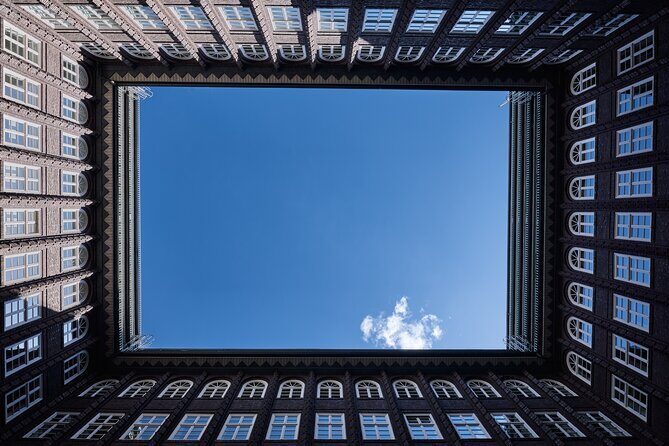
- Kontorhausviertel focus on modern trade: You connect the end of the 19th century with what merchants built and why it mattered.
- Kontorhäuser details you might miss: The guide points out the prima ballerina theme and other visual clues on the buildings.
- Speicherstadt port mechanics: You connect Hanseatic shipping to later container-era thinking, step by step.
- Names and contradictions with context: You’ll hear why certain wording, people, and roles raise questions—and what that reveals.
Hammaburg-Platz and Domplatz: Getting the city’s name and early logic
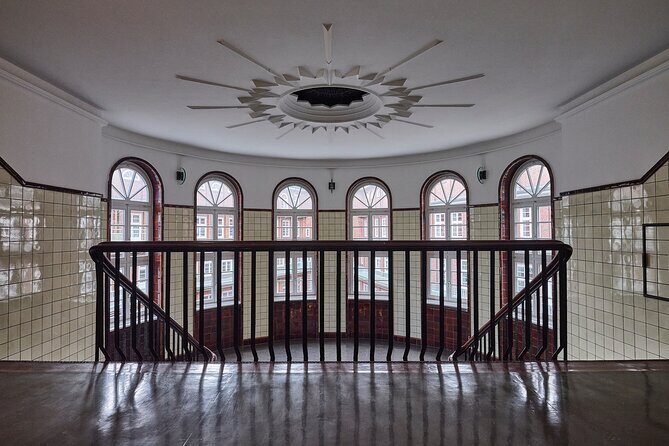
Your walk starts at Hammaburg-Platz in Altstadt and soon anchors at Domplatz. This is the right opening move because it gives you a framework for Hamburg: where the city began, how it grew, and why you keep seeing references to the “early Hamburg” in later port stories.
At Domplatz, you’ll get the thematic areas of the tour and a sense of development—basically, why Hamburg’s location and trade links pushed it into a specific kind of history. If you’ve only visited Hamburg for the harbor viewpoints and warehouses, this first chapter helps you understand what you’re looking at later. You’re not just seeing buildings; you’re reading a timeline.
The stop is about 30 minutes, with admission free at this part of the route. That short window is good for orientation. The only catch: if you’re the type who loves long museum-style explanations, you may feel slightly rushed here. But the pacing makes sense because the big payoffs come in Kontorhausviertel and Speicherstadt.
Other city tours we've reviewed in Hamburg



Kontorhausviertel: Merchants, trade power, and the human side of architecture
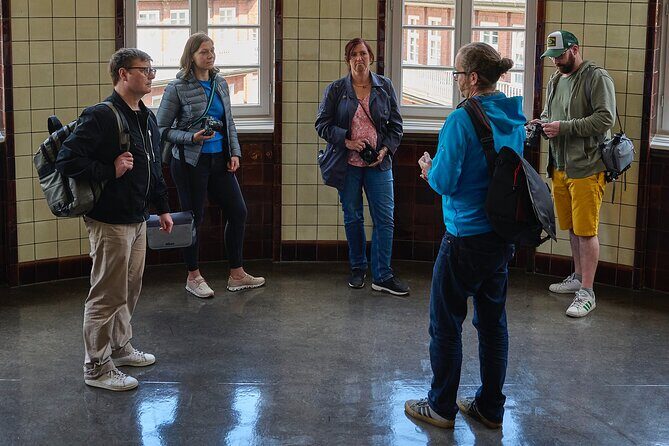
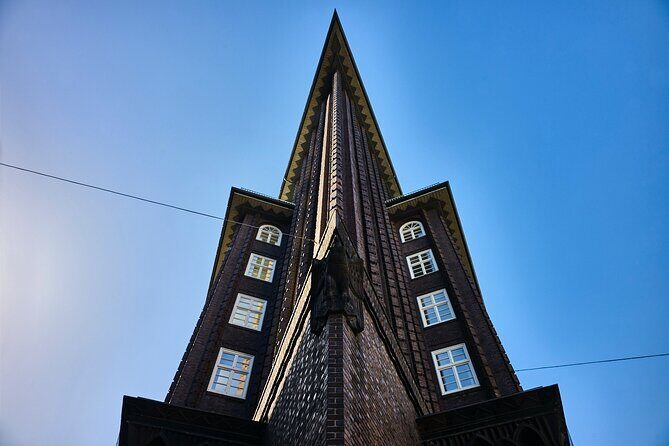
Next you move into Kontorhausviertel, the former center of Hamburg merchants. This section is one of the best parts of the UNESCO experience because it explains how world trade got organized and represented in brick-and-stone office life.
This stop is also about 30 minutes, and the tour focuses on the transition into more modern world trade at the end of the 19th century. You’re not just told that trade grew. You’re shown how the city’s architecture connected to commercial confidence—how merchants expressed status, stability, and ambition in the streets you walk.
One detail I like here is that the tour doesn’t treat buildings like static objects. It points out the prima ballerina of the Kontorhäuser, including the pretty ballerina skirt. That kind of specific, almost playful observation is a great way to remember where you are and what the buildings were meant to project.
You’ll also hear critical questions tied to the port’s founding charter. The guide talks about contradictions you might not notice on your own, which makes the story feel more honest. Instead of presenting a straight-line legend of success, you get the sense that Hamburg’s rise involved messy decisions, competing interests, and political wording that doesn’t always match the reality on the ground.
What about limitations? If you already know a lot about Hamburg’s commercial districts, you might still enjoy it, but you’ll likely want to add your own extra reading afterward. The tour gives direction and context, not a full reference library.
Speicherstadt: Red-brick gorges and the port job stories that explain everything
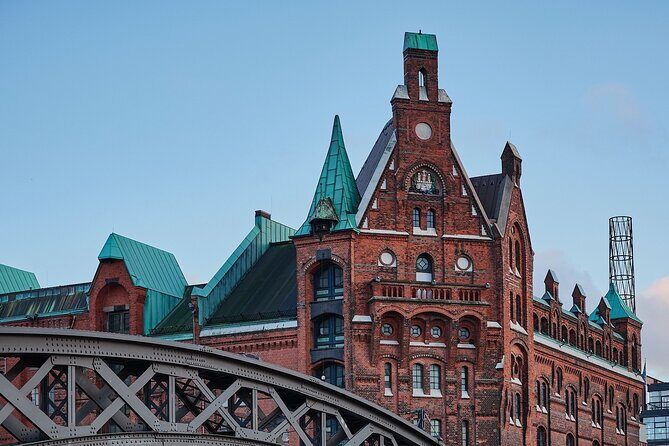
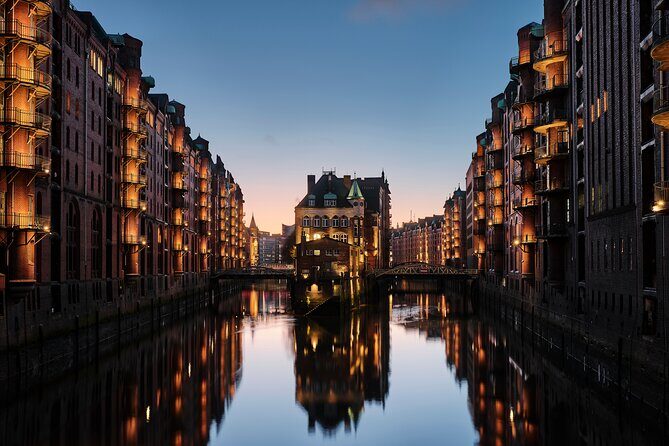
Then you reach Speicherstadt, the red-brick warehouse district that feels like a world of its own once you’re inside it. This part is where Hamburg’s UNESCO story really turns visible.
The guide helps you understand the port history behind Speicherstadt: the shift from a Hanseatic cog to the idea of a modern container ship. That comparison is useful because it explains why the district exists the way it does—why warehouses clustered, how movement and storage worked, and how shipping changed over time.
I especially like the tour’s emphasis on the people and jobs that made the system run. Instead of only talking about ships, you’ll find yourself learning about roles like Schutenschupser and Ewerführer—who they were and what they did in practical terms. If you’ve ever stared at a canal and wondered who operated what, this is the part that answers it with clear storytelling.
You’ll also hear why there are coffee barons and Persians in Hamburg, which is exactly the kind of detail that makes a city feel specific rather than generic. And the tour brings in the connection between Westphalen and Hamburg, including why workers lived in a castle. Those are the sorts of odd-to-you connections that make you look again at what you’re walking past.
This stop is about 30 minutes, with free admission for the included segments. The district itself is full of photo angles and small architectural cues, so you might feel tempted to slow down. Just know the tour is built to keep the story moving across all three UNESCO zones. For longer self-exploration, you’ll have a natural starting point for it at the end.
The tour concludes at Sankt Annenplatz, right on the border between Speicherstadt and Hafencity. That ending is practical: you’re placed near more viewpoints, more streets to wander, and easy continuation time if you want to keep going.
Price and private-group value: What $208.28 buys you
This tour runs for up to 15 people per group and costs $208.28 per group. For a private walking tour, the key value is how the price scales with your group size.
At the maximum size, it works out to roughly $14 per person—assuming you’re actually filling most of the slots. If you’re a smaller group (couples, families, friends), the per-person cost goes up, but you still get something more flexible than a standard group tour: you can ask questions, you’re not competing for attention, and the pace is easier to match to your walking speed.
You also get a mobile ticket, and you’ll be walking, not riding around in private transport. That’s good value logic. You’re paying for interpretation and guidance where it matters: while you’re looking at the UNESCO buildings and street-level details that would otherwise blur together.
One practical note: private transportation isn’t included. That’s normal for a walking tour, but it matters if your plan depends on door-to-door pickup. You’ll want to rely on public transit and your feet for the route.
Your 2-hour flow: What to expect at each stage
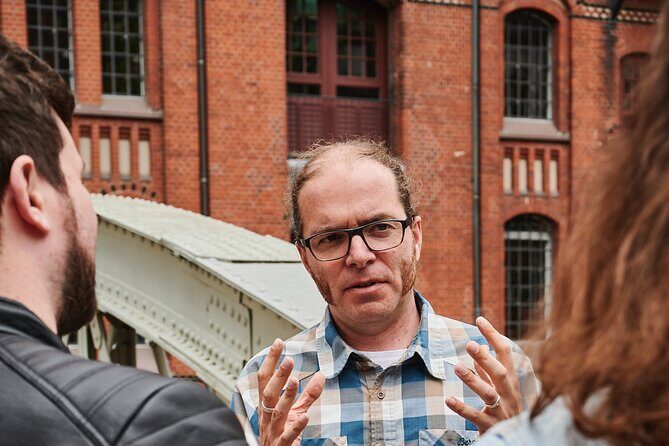
Even though the tour is short, it’s structured to build momentum.
- First chapter (Domplatz) gives you the origin logic: how Hamburg developed and why the name and early identity matter.
- Second chapter (Kontorhausviertel) explains the commercial district side: how merchants shaped modern trade imagery at the end of the 19th century, with specific building details and thoughtful questions about the port’s founding wording.
- Third chapter (Speicherstadt) turns the story into the visible port machine: red-brick warehouses, trade evolution from older shipping to container thinking, plus the job titles and character details that make the place feel real.
The total duration is about 2 hours. Each main stop is roughly 30 minutes, so you’re moving often enough to keep energy up, but not so fast that you miss the main points.
If you’re traveling with kids, this pacing can be a strength. One family-friendly experience shared that children aged 12 and 16 enjoyed it. The guide’s mix of architecture details and human stories usually works better for mixed ages than a straight timeline.
Other private tours in Hamburg






Practical tips before you book: Make the walk feel effortless
To get the most out of a private UNESCO walk, you don’t need special prep. You just need a few smart choices.
Wear comfortable shoes. Even if the route is “just walking,” Speicherstadt’s streets and canal-area paths can feel longer than they look. Dress for weather too; you’ll be outside for most of the experience.
Bring questions. The best part of a private format is that you can ask where things get confusing, like job names, charter contradictions, or why certain groups ended up in Hamburg. The tour focuses on those exact kinds of links, so your curiosity will land well.
If you love photos, plan to do a bit of your own exploring at the end. The tour finishes at Sankt Annenplatz, and that location is a clean springboard for the rest of Hafencity and Speicherstadt wandering. You’ll know where to point your camera because you’ll have context before you take pictures.
Who this UNESCO Hamburg private tour fits best
This is a smart pick if you want a high-signal introduction to Hamburg’s UNESCO World Heritage Site and you prefer walking with interpretation rather than reading alone.
It’s especially good for:
- Couples and friends who want a private experience without feeling stuck in a closed group.
- Families with teens who can handle a story-driven walk at a reasonable pace.
- Anyone who likes port history but wants it explained through people, jobs, and architecture—not only ships and dates.
- Travelers who want a guide to point out specific building details, like the Kontorhäuser ballerina theme.
If you’re expecting a museum-style deep archive session, this may feel brief. It’s a narrative walk built to orient you and make Hamburg’s UNESCO areas click fast.
Should you book this private UNESCO Hamburg walk?
I’d book it if your goal is to understand what you’re looking at in Hamburg’s UNESCO areas and to leave with the “why” behind the warehouses and the commercial district. The combination of Domplatz orientation, Kontorhausviertel merchant context, and Speicherstadt port mechanics is a tight, practical route.
You should skip it or plan differently if you want lots of slow time inside buildings or you expect a longer-than-2-hour deep dive. Also remember: it’s a private group walking tour with no private transportation, so you’ll want to manage your own getting there.
If you like history with specific names, clear street-level pointing, and a guide who can make the city feel coherent, this one is a strong match.
FAQ
How long is the private city tour of Hamburg’s UNESCO World Heritage Site?
The tour lasts about 2 hours.
What is the group size for this private tour?
It’s priced per group for up to 15 people, and only your group participates.
Where does the tour start and end?
It starts at Hammaburg-Platz (Altstadt, 20095 Hamburg) and ends at Sankt Annenplatz (Sankt Annenplatz, 20457 Hamburg).
Which areas are covered during the walk?
The tour covers three main stops: Domplatz, Kontorhausviertel, and Speicherstadt.
Are admission tickets required for the included stops?
The information provided lists admission tickets as free for the stop times given.
Is the tour fully private?
Yes. It’s a private tour/activity, so only your group will participate.
Do I get a mobile ticket?
Yes. The tour includes a mobile ticket.
Is private transportation included?
No, private transportation is not included.
How soon will I get confirmation after booking?
Confirmation is received within 48 hours of booking, subject to availability.
Can service animals join the tour?
Yes, service animals are allowed.
Question goes here
Answer paragraph
Question goes here
Answer paragraph