REVIEW · HAMBURG
Ticket for the Emigration Museum BallinStadt Hamburg
Book on Viator →Operated by BallinStadt Auswanderermuseum Hamburg · Bookable on Viator
A trip to BallinStadt turns migration history into something you can touch and do, not just read. I like the way the museum is built around an English audio guide and hands-on activities across multiple spaces. You’ll also get a strong family-story angle that makes the subject feel personal fast.
The museum’s big strength is its interactive setup for different ages, including play elements for kids (yes, even a museum rat). One caution: if you’re expecting a laser-focus on emigration from Hamburg before 1934 only, you’ll want to know the museum broadened its overall theme to migration as a whole.
In This Review
- Key highlights to look for at BallinStadt
- Entering the Emigration Museum BallinStadt: timing, duration, and the flow
- Ticket price ($15.62) and what you’re really paying for
- The three-house visit: how the story is organized across spaces
- Four eras of migration, explained with an English audio guide
- Emigration via Hamburg (1850–1934): where that focus fits in
- The family research center: turning museum history into a personal project
- Interactive games and the museum rat Jette for kids
- What to expect in practice: pacing, group feel, and English support
- Logistics that matter: getting there, animals, and practical comfort
- Should you book BallinStadt? My decision guide
- FAQ
- FAQ
- How much are tickets for the Emigration Museum BallinStadt Hamburg?
- How long does the Emigration Museum BallinStadt visit take?
- Is the experience offered in English?
- What hours is BallinStadt open?
- How is the experience organized inside the museum?
- What is included with the ticket?
- Is there anything for younger children?
- Can I use public transportation to get there?
- Is this ticket refundable or changeable?
- Are service animals allowed?
Key highlights to look for at BallinStadt

- Three connected houses spread over a large indoor area, so you can pace yourself
- Four eras of emigration and migration, explained through an audio guide in English
- Family research center where you can search your genealogy ideas on-site
- Interactive games that keep the experience from turning into a quiet museum crawl
- Museum rat Jette designed to bring younger visitors into the story
- A core focus on emigration via Hamburg (1850–1934), but framed within a wider migration story
Entering the Emigration Museum BallinStadt: timing, duration, and the flow
BallinStadt is in Hamburg, and it runs on a simple, visitor-friendly schedule: Tuesday through Sunday, from 10:00 AM to 6:00 PM. Plan on about 1 hour 30 minutes for the full guided experience. That timing matters here because the museum is organized as a multi-room journey; if you only have an hour, you may end up skipping the parts that make it fun.
This is one of those experiences where the pacing is part of the design. You move through different sections of the museum and let the audio guide shape the story. Because it’s organized across three houses, you’re not stuck in one long gallery where everyone shares the same level of energy. I like that: you can take short breaks without feeling like you’re losing the plot.
Booking tends to happen in advance (on average, about 11 days out), so if you’re traveling at a busy time, you’ll feel better locking your spot early. You’ll also get confirmation at booking time, and the ticket includes admission.
Other art museums and gallery tickets in Hamburg



Ticket price ($15.62) and what you’re really paying for
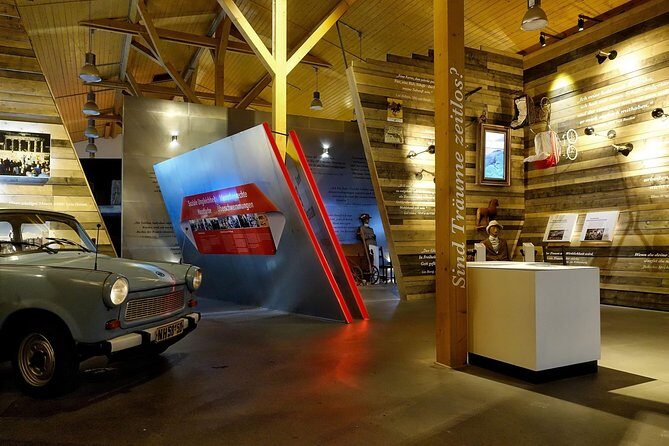
At $15.62 per person, BallinStadt sits in a very reasonable price zone for a museum experience that includes more than one space and an audio guide experience in English. The value isn’t just the topic—it’s the format.
What you’re paying for:
- Admission to a multi-house museum visit
- An audio guide experience designed to move you through multiple eras
- Hands-on elements like interactive games and a family research area
A lot of museums charge similar prices but give you mostly “look and read.” Here, the museum pushes you to do—which is where the time and money feel justified, especially if you’re visiting with kids. If you love history but get restless when it’s only text panels, this is the kind of place that can work for you.
The three-house visit: how the story is organized across spaces
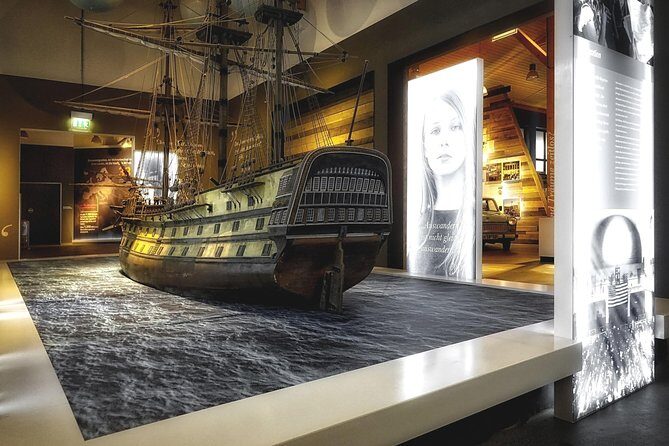
BallinStadt’s story is set up as a physical journey through three separate houses. Even though you’ll experience it as one continuous visit, the museum changes location so you stay oriented and engaged. That’s a practical advantage when you’re bringing children or anyone who needs frequent “new scenery.”
Here’s what you can expect overall:
- You start at the core emigration museum area connected to Hamburg’s role in migration
- You follow the story in four distinct eras using your audio guide
- The museum shifts between personal stories, historical context, and activities that let you participate rather than just observe
The museum is described as covering 2,500 sqm, so you’re not in a tiny room setup. That space is part of the reason the visit can include games and interactive sections without everything feeling cramped.
One practical tip: give yourself permission to slow down for the interactive parts. If you rush, the museum becomes more like a standard museum. If you take your time, it feels more like a guided experience.
Four eras of migration, explained with an English audio guide
One of the museum’s most useful features is that it structures migration history into four eras, which are delivered through an audio guide in English. This is helpful because migration history can feel overwhelming if it’s presented as a nonstop list of events. The audio guide format gives you a timeline you can follow while you walk.
The museum’s framing is also grounded in why people left. Migration isn’t treated as a single “type” of story. Instead, the museum highlights themes that still feel familiar: escape from war, hunger, and persecution, plus the pull of adventure and the dream of a better life.
For you, this matters because it makes the museum feel relevant beyond a single century. You’re not only learning what happened in Hamburg—you’re also seeing how similar motivations repeat across time.
Emigration via Hamburg (1850–1934): where that focus fits in
BallinStadt is especially tied to emigration via Hamburg (1850–1934). It connects this history to Albert Ballin, the founder of the former emigration halls in Hamburg. If you’re curious about how a city could become a gateway, this angle gives you a clear entry point.
Still, it’s worth planning your expectations. The museum was redesigned in 2016 with a broader migration focus. That doesn’t mean the Hamburg pre-1934 story disappears. The emphasis is just distributed: parts of the museum—especially House 1 and some content in House 2—are where the emigration-through-Hamburg story remains central.
So if you’re the kind of person who likes one tightly focused theme, you may need to approach BallinStadt with a wider lens. If you’re happy to see Hamburg’s emigration story as one chapter inside a bigger migration conversation, you’ll likely find it hits the right balance.
A few more Hamburg tours and experiences worth a look





The family research center: turning museum history into a personal project
If you like the idea of mixing museum learning with real-world curiosity, you’ll appreciate the family research center. The concept is simple: you follow the journey story and then shift into family research as part of the visit.
This is where the museum becomes more than a lecture. You can search your genealogy there, and that makes the history feel less abstract. Even if you don’t find every answer, the experience can still help you understand what kinds of records and questions matter.
I also like that this section supports different comfort levels. Some people want to work hard at research on-site. Others just want to understand where the research leads. Either way, it keeps you engaged instead of passive.
Interactive games and the museum rat Jette for kids
BallinStadt’s family-friendly strength shows up in the way it uses play. The museum includes interactive games and activities that give kids a job during the visit instead of only asking them to stand still.
A standout detail here is museum rat Jette, specifically mentioned as part of the experience for little ones. That matters because “kid-friendly museum” can sometimes mean a sad little coloring sheet. Here, the design signals that even children are meant to participate in the story.
For you, especially if you’re traveling with children, the advantage is energy management. Kids can burn off restlessness by interacting with game-like stations. Adults get to keep moving too, because the museum doesn’t force everyone into a single long, quiet section.
What to expect in practice: pacing, group feel, and English support
The experience is offered in English, and the structure is based on your audio guide. That makes it a good fit if you want to understand the story without needing a live group lecture in your language. It also means you can adjust your pace a bit while still following the museum’s design.
Duration is about 1 hour 30 minutes, so you’re unlikely to feel trapped. But do watch how you spend time: the interactive elements and genealogy searching can pull you in, and that’s the point. If you know your group tends to move fast, you may be tempted to skim. If you want a balanced visit, plan for the museum to take the full time.
Group size isn’t specified in the details I have, so I can’t promise anything about crowd level. But the museum’s multi-house layout usually helps with crowd flow, since people spread out across rooms.
Logistics that matter: getting there, animals, and practical comfort
BallinStadt is near public transportation, so you’re not likely to need a car. That’s a real benefit in Hamburg, where parking can eat up time. The museum also allows service animals, which is important for visitors who need them.
As for who can participate: the experience notes that most people can join in. The content includes interactive elements and multiple sections, so it’s generally approachable for a wide range of ages—especially families.
One more practical note: tickets are non-refundable and cannot be changed for any reason. If your travel plans are flexible, build in a bit of margin so you don’t feel stuck with a ticket you can’t use.
Should you book BallinStadt? My decision guide
Book BallinStadt if:
- You want migration history presented through actions, not just panels
- You’re traveling with kids and want them involved (games and museum rat Jette are built into the experience)
- You like the idea of following four eras with an English audio guide
- You’re curious about Hamburg’s role in emigration and why a city became a gateway
- You want a chance to explore the family research center and think about genealogy
Skip or reconsider if:
- You’re specifically seeking a narrow, pre-1934-only emigration museum focus
- You prefer live guided storytelling and dislike audio-guide-led experiences
If you’re unsure, here’s the simplest way to think about it: BallinStadt is best when you’re open to the broader story of migration and you’re happy to participate. The price is fair for a hands-on museum format, and the four-era structure keeps the topic from turning into one big blur.
FAQ
FAQ
How much are tickets for the Emigration Museum BallinStadt Hamburg?
Tickets cost $15.62 per person.
How long does the Emigration Museum BallinStadt visit take?
The visit takes about 1 hour 30 minutes.
Is the experience offered in English?
Yes, it is offered in English.
What hours is BallinStadt open?
It’s open Tuesday to Sunday from 10:00 AM to 6:00 PM (for the listed date range).
How is the experience organized inside the museum?
The visit is spread across three houses and uses an audio guide to explore migration through four eras.
What is included with the ticket?
Admission to the museum is included.
Is there anything for younger children?
Yes. The museum includes interactive games and mentions a museum rat named Jette for little ones.
Can I use public transportation to get there?
The museum is near public transportation.
Is this ticket refundable or changeable?
No. The ticket is non-refundable and cannot be changed for any reason.
Are service animals allowed?
Yes, service animals are allowed.