REVIEW · HAMBURG
Sightseeing Tour – Free Tour – Historic Center-Hamburg On Foot
Book on Viator →Operated by Hamburgo A Pie · Bookable on Viator
Hamburg has a knack for surprises. This on-foot tour strings Viking-era legends, war scars, and 18th-century streets into one easy walk, and I love how a Spanish-speaking guide keeps the stories clear and fun (with names like Jian and Isabel showing up in the guide lineup). One thing to plan for: it’s an outdoor walking route, so rain can slow your pace and change the vibe.
You’ll start at Rathausmarkt and move through classic landmarks plus quieter stops, ending near Martin-Luther-Straße. The group is kept small (up to 30), so it stays manageable, and the pace is built for getting oriented fast.
In This Review
- Key things to know before you go
- A Viking-to-WWII walk you can do in two hours
- Where you start: Rathausmarkt and the easy meetup
- Town Hall outside: why you still get the point
- St. Petri Kirche and Domplatz: old churches and a dramatic mystery
- Trostbrücke and the names that carry meaning
- St. Nikolai Memorial: what WWII meant for Hamburg
- Deichstraße: stepping into an 18th-century street feel
- Speicherstadt: “seen” versus “counted”
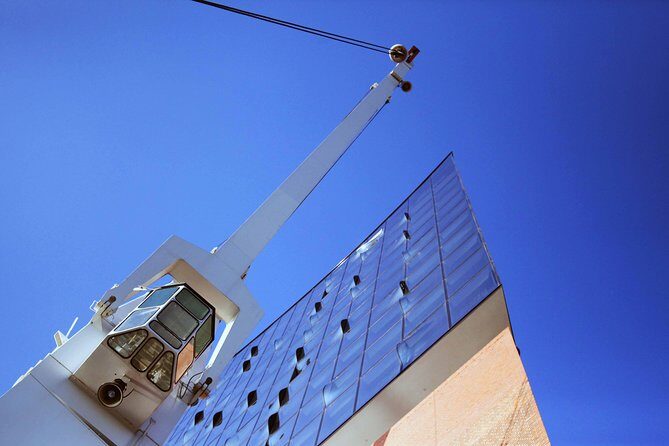
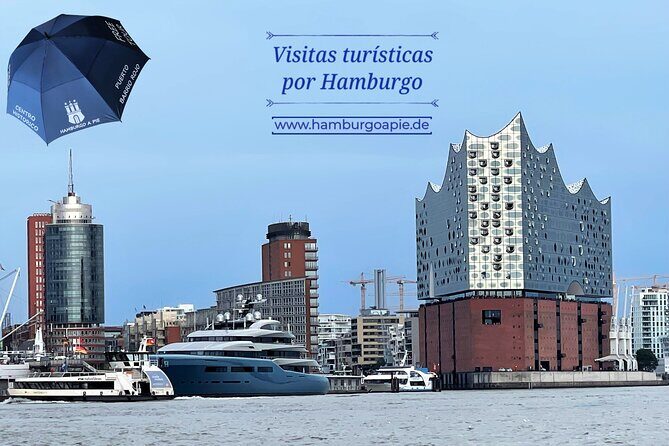
- Elbphilharmonie: why feelings are mixed
- Hopfenmarkt: beer secrets to end the walk
- Price and value: $3.48 per group is the headline, but the real value is the pacing
- Who should book this walking tour?
- Should you book this tour?
- FAQ
- How much does the Historic Center Hamburg on Foot tour cost?
- How long is the tour?
- Where do I meet the guide?
- Where does the tour end?
- Is the Hamburg Town Hall visit inside or outside?
- What landmarks are included on the route?
- What language is the guide?
- What should I do about weather?
- Are service animals allowed?
Key things to know before you go
- Meet at Rathausmarkt by the San Miguel church area (the Miguelito spot)
- Small group size with a maximum of 30 people
- Spanish-speaking guide who explains the city’s twists in plain, lively terms
- Town Hall is outside-only (you learn from the outside)
- Speicherstadt + Elbphilharmonie are on the same route, not as far-off add-ons
- Weather matters: good conditions help this run smoothly, and an umbrella is smart
A Viking-to-WWII walk you can do in two hours
Hamburg is not just postcard views. It’s a city that has been fought over, rebuilt, and renamed by events you can still feel in the streets. On this walking tour, you’ll connect those dots fast, without needing a museum ticket or a long day.
You’ll move through places tied to old churches, a dramatic cathedral storyline, and the city’s beer culture. Then you’ll pivot to wartime impact at the St. Nikolai Memorial, and finish in areas where Hamburg’s rebuilding story is visible in brick, canals, and architecture. If you like your sightseeing with a strong narrative thread, this works well.
The time budget is also realistic. About 2 hours is enough to cover major highlights like Speicherstadt and Elbphilharmonie while still stopping to listen. You’ll spend short bursts at each stop (mostly 5 to 15 minutes), which keeps the energy up and helps you avoid the usual fatigue of “sightseeing marathons.”
Other walking tours we've reviewed in Hamburg


Where you start: Rathausmarkt and the easy meetup
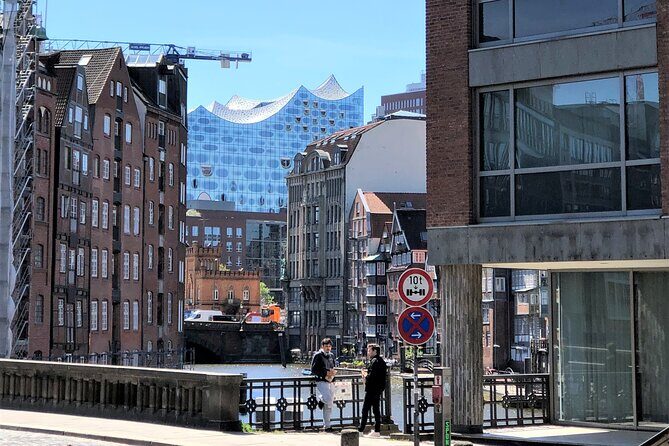
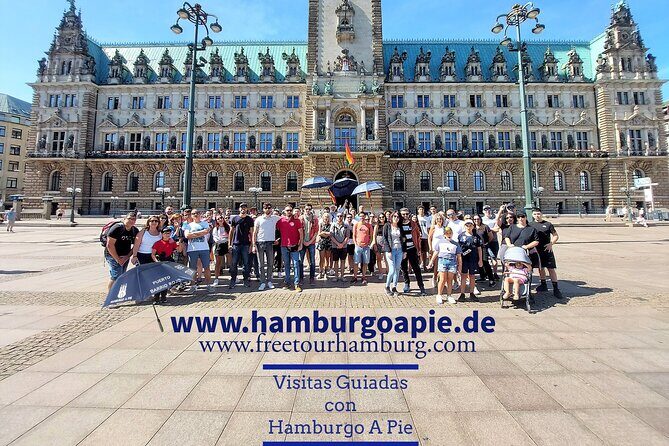
Meet-up matters more than people think. If you arrive late or confused, you lose the whole flow. Here, the start point is clearly set at Rathausmarkt (20095 Hamburg), near the San Miguel church area, nicknamed Miguelito.
Once you’re with the group, you’ll follow a route through the historic center on foot. The tour uses a mobile ticket, and it’s set up as a guided experience rather than a self-guided wander. With a cap of 30 travelers, you’re unlikely to get swallowed by a huge crowd.
You’ll also want to think about footwear. Most time on this tour is spent walking between compact sights, and you’ll stand and look around often, especially at plazas and memorial areas.
Town Hall outside: why you still get the point
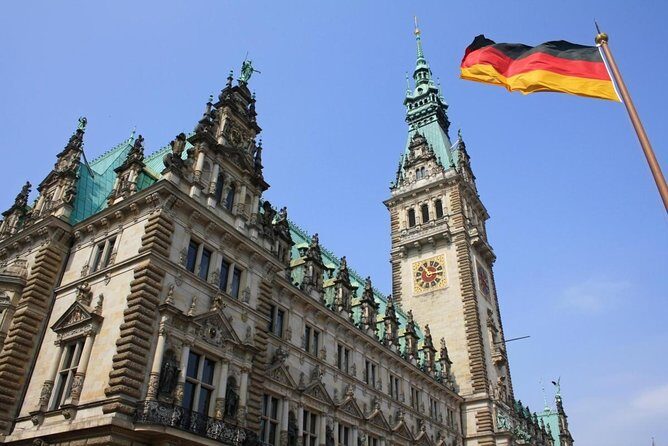
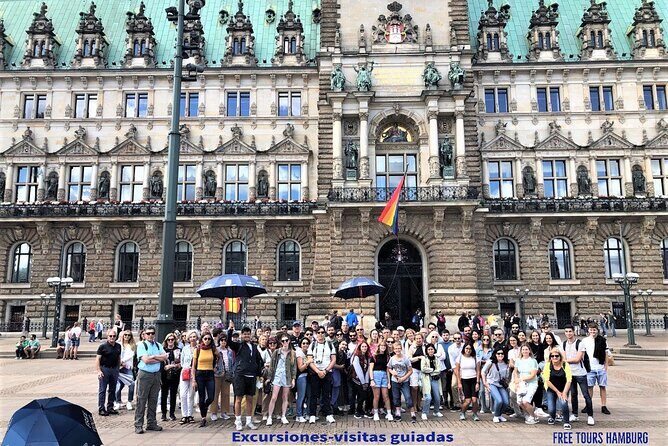
The Hamburg Town Hall is an obvious headline stop, but there’s a catch: you can only see it from the outside. The listing notes that interior access isn’t included because guided tours inside are separate.
That said, you’re not just taking photos and moving on. You’re getting the story from the outside, which is often the best approach anyway. You can look at the building, orient yourself in the square, and listen to the meaning behind the form and position in the city center.
If you’re hoping for an inside visit, this is your one mismatch. If you’re happy learning how a landmark fits into the city’s timeline, the outside approach still lands.
St. Petri Kirche and Domplatz: old churches and a dramatic mystery
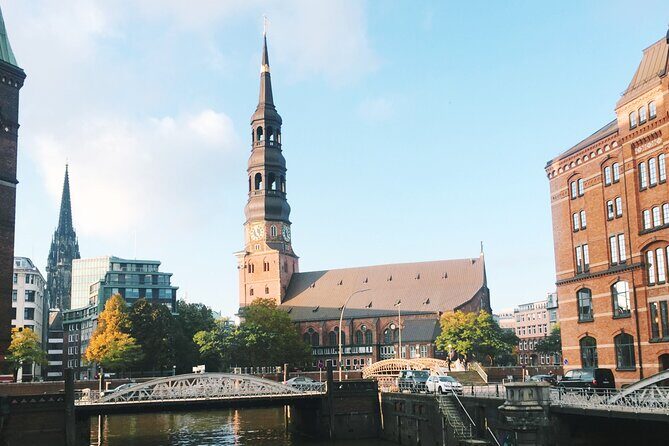
You’ll start leaning into the “deep time” of Hamburg with St. Petri Kirche, described as the oldest church in the city that has survived centuries. That kind of continuity is grounding. Even if you’re not religious, old churches are like architectural memory banks: stones carry the weight of repeated change.
Next is Domplatz, where the tour is built around big questions: where the cathedral was, what happened to it, and whether legend has anything to do with it (including the playful angle of evil Vikings). You’ll spend about 10 minutes here, and it’s clearly structured for story first, facts second.
This stop is worth your attention because it shows how cities rewrite themselves. Hamburg didn’t just grow; it lost, rebuilt, and relocated key symbols. Listening to that as you stand at the square helps the place make sense fast.
Trostbrücke and the names that carry meaning
A short walk brings you to Trostbrücke, with a focus on the meaning behind the name. The tour asks whether it relates to a moment of acquittal involving a death row case, or if the name traces back to something else.
I like stops like this because they teach you how to read a city like a language. Bridge names, street names, and small landmarks often hold local explanations that don’t show up on big tourist signage.
You only get about 10 minutes here, so your best move is to tune in rather than rush for photos. If you want to ask questions, that’s a good time to do it—this part of the route is the most “conversation-friendly.”
Other free / pay-what-you-want tours in Hamburg






St. Nikolai Memorial: what WWII meant for Hamburg
Then the tone shifts. At the St. Nikolai Memorial, you’ll focus on what the Second World War meant for Hamburg.
This is the kind of stop that benefits from being walked through with a guide. You don’t need a lot of extra facts; you need context—what was lost, why it mattered, and how a city carries that forward. The tour allocates about 10 minutes here, so it’s respectful and focused.
If you’re someone who prefers light and cheerful sightseeing only, this might feel heavy. If you want a fuller Hamburg—one that doesn’t skip the difficult chapters—this stop is essential.
Deichstraße: stepping into an 18th-century street feel
After the memorial weight, you’ll shift to the calmer texture of daily city life with Deichstrasse. The emphasis here is that you can feel the 18th century as you walk, because buildings from that era were preserved.
This part is about pace. You’re not trying to “win” the route; you’re letting the street shape do the talking—fronts, scale, and the overall rhythm of old construction. You’ll spend around 15 minutes, which is enough time to notice details without turning it into a long lecture.
It’s a nice contrast to the larger, more headline-oriented sites. And it helps you balance your photos with actual observation.
Speicherstadt: “seen” versus “counted”
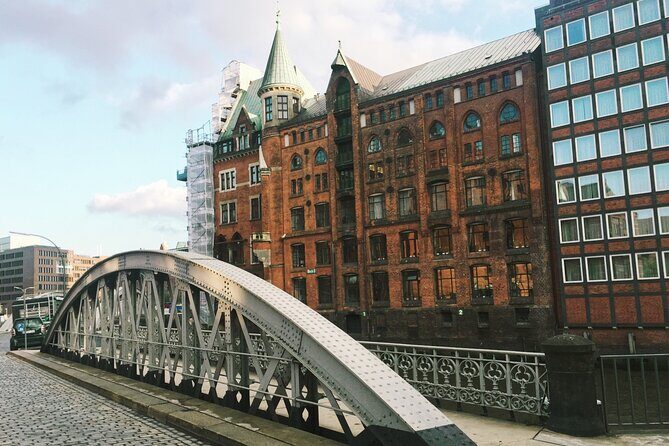
Next up is Speicherstadt, Hamburg’s UNESCO-protected warehouse district. The story angle here is the damage and recovery: a huge construction project was almost destroyed in World War II, and today it shines again.
You’ll also hear a practical truth that’s built into the stop: in this area, some things can be seen, others can only be counted. That’s a guide-friendly way to describe how warehouse districts often work. From street level, the scale is the story. You can observe the structure, the canal-side arrangement, and the grand planning—while the full total is more about perspective and repetition.
Plan to slow down for this one. Even with a 15-minute stop, you’ll get more out of the visit if you pause at vantage points and watch the lines of buildings recede.
Elbphilharmonie: why feelings are mixed
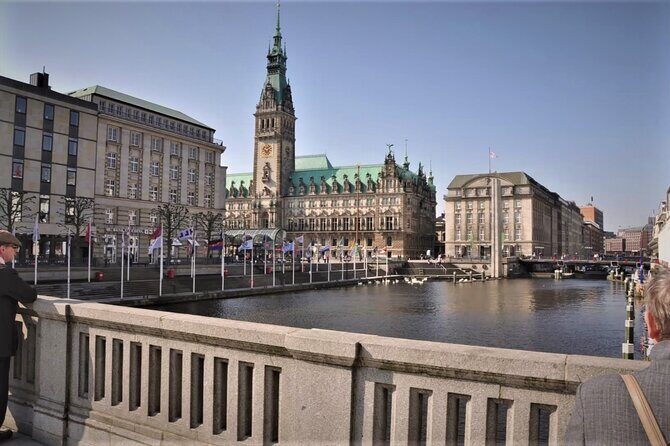
You’ll reach the Elbphilharmonie, and the tour openly acknowledges something locals still feel: mixed emotions about the building.
That doesn’t mean it’s bad; it means the story is messy enough to be human. Here, the guide’s job is to explain the history behind the debates, so you can understand why the landmark lands differently for different people.
You’ll get about 15 minutes. This is enough time to take photos and also learn what people argue about when they argue about a building. If you only look at it from afar, you miss the “why” part. If you listen, it becomes a stronger stop.
Hopfenmarkt: beer secrets to end the walk
Finally, you’ll land at Hopfenmarkt, where the focus is Hamburg’s beer and its breweries. The tour also mentions learning how hamburgers keep a secret—more of a playful clue than a culinary lecture.
This last segment is about shifting gears back to something lighter and local. You’ll have roughly 10 minutes here, so it’s a quick wrap-up. But it’s a useful one: it leaves you with a sense that Hamburg isn’t only monuments. It’s also craft, food culture, and working-class traditions.
The tour ends near Martin-Luther-Straße 20 (20459 Hamburg), so it’s handy for continuing your own day around the center.
Price and value: $3.48 per group is the headline, but the real value is the pacing
The listed price is $3.48 per group (up to 6). That sounds almost too small to matter, especially for a guided walking tour. Here’s how I think about value for this specific experience:
- You get a guided route that strings together major sites and shorter story stops, rather than a random collection of photos.
- You get a consistent narrative thread—from old churches to WWII impact to rebuilt landmarks.
- You get an approach where your time is managed. Stops are short, so you keep moving and listening without getting trapped in one location.
A small price can also mean you should come with the right mindset. Don’t expect deep ticketing or museum time; this is street-level learning and orientation. The “included” part is basically the route plus guidance and good humor—so bring energy, not expectations of indoor access at every stop.
The group size cap (max 30) helps too. It’s big enough that you can meet others, but not so big that the guide can’t keep you together.
Who should book this walking tour?
Book it if you want:
- A 2-hour way to get oriented in Hamburg’s historic center
- Story-first sightseeing with Spanish-speaking guidance
- Stops that include both famous landmarks like Speicherstadt and Elbphilharmonie and smaller, story-driven squares and bridges
- Clear, lively explanations (guides such as Jian and Isabel have been highlighted for being especially engaging)
You might skip it if:
- You only want indoor visits or paid ticket attractions
- You’re sensitive to WWII memorial topics and want a strictly upbeat itinerary
- You hate walking between multiple short stops in changing weather
Should you book this tour?
If your goal is to understand Hamburg in a short, practical way, I’d say yes. This is built for making the city make sense: start in the center, hit the big icons, and connect them through a storyline that doesn’t avoid the harder parts.
Just be ready for an outdoor walking format, plan for an umbrella just in case, and come with curiosity. If you do that, you’ll leave with a stronger mental map of Hamburg than you’d get from wandering alone.
FAQ
How much does the Historic Center Hamburg on Foot tour cost?
The price is $3.48 per group (up to 6).
How long is the tour?
It lasts about 2 hours.
Where do I meet the guide?
Meet at Rathausmarkt (20095 Hamburg), near the square of the San Miguel church (Miguelito).
Where does the tour end?
The tour ends at Martin-Luther-Straße 20, 20459 Hamburg.
Is the Hamburg Town Hall visit inside or outside?
You can only visit the outside of the Town Hall building on this tour, as guided interior tours are separate.
What landmarks are included on the route?
You’ll see St. Petri Kirche, Domplatz, Trostbrücke, the St. Nikolai Memorial, Deichstrasse, Speicherstadt, Elbphilharmonie, and Hopfenmarkt, plus the Town Hall area.
What language is the guide?
The guide is Spanish-speaking.
What should I do about weather?
The tour requires good weather, and it’s a good idea to bring an umbrella just in case.
Are service animals allowed?
Yes, service animals are allowed.