REVIEW · HAMBURG
Hamburg: Crimes of St. Pauli Guided Walking Tour
Book on GetYourGuide →Operated by St. Pauli Office · Bookable on GetYourGuide
St. Pauli has teeth. This 2-hour guided walk looks at how a century of crime shaped the neighborhood you see today, from the Reeperbahn’s long shadow to specific cases tied to streets and local memories. I especially liked the way the tour connects notorious names like Fritz Honka and Mucki Pinzner to real places, and how a local guide keeps the stories grounded with sharp, street-level anecdotes. One heads-up: the material is dark and it is German-only, so you’ll want to be comfortable with the language before you book.
What also matters: the tour is short. In two hours, the focus stays on key scenes and true-crime highlights, not a slow, document-by-document courtroom replay. And it is not suitable for children under 18, so keep that in mind if you’re deciding as a group.
In This Review
- Key highlights you can actually plan around
- St. Pauli’s crime trail in 2 hours: what you’re really signing up for
- Meeting at Wohlwillstraße 1: how to start without stress
- The case-name anchors: Fritz Honka and Mucki Pinzner on the street
- Walking the Reeperbahn after the headlines
- The 1980s pimp wars: power struggles you can map in your head
- What the guide actually does well (and how it can affect depth)
- Price and value: is $29 worth two hours of crime history?
- Who this tour suits best (and who should skip it)
- Practical tips to get the most out of your walk
- Should you book this Hamburg St. Pauli crimes tour?
- FAQ
- Where does the tour start?
- When should I register?
- How much does the tour cost?
- How long is the tour?
- What language is the tour in?
- Is there hotel pickup or drop-off?
- Are food and drinks included?
- What is included in the price?
- Is the tour suitable for children?
- Can I get a refund if my plans change?
Key highlights you can actually plan around
- Walk St. Pauli’s crime scenes rather than reading about them from a screen
- Fritz Honka and Mucki Pinzner get real context through street-level storytelling
- 1980s pimp wars are treated as a neighborhood story, not just a headline
- The Reeperbahn’s survival is the ending note, showing how the area moved on
- Local guide anecdotes make it feel like you’re hearing it from inside Hamburg
St. Pauli’s crime trail in 2 hours: what you’re really signing up for
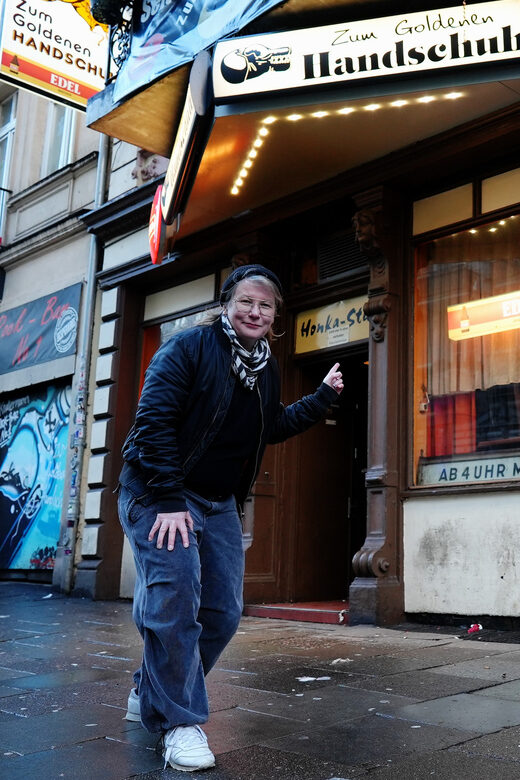
This is not a polite “old Hamburg” stroll. It’s a guided walking tour through St. Pauli with a true-crime focus, built around the idea that what happened here left marks that still show up in how the district works and how people talk about it. You’ll cover a span of roughly a century of criminal events, with stops centered on notorious cases and places linked to them.
The pitch is simple: learn how crime shaped the city, then walk those steps with your guide pointing out locations tied to the stories. The result is the kind of tour where you start noticing the street layout differently. Even if you know St. Pauli as nightlife, the walking route pushes you to see the neighborhood as something else too: a place where power struggles, policing, and hidden histories collided.
If you like crime history as a way to understand society, you’ll probably enjoy this more than a general “sights of St. Pauli” tour. If you want cozy atmosphere only, you may find the tone heavy.
Other Reeperbahn and St. Pauli tours we've reviewed in Hamburg


Meeting at Wohlwillstraße 1: how to start without stress
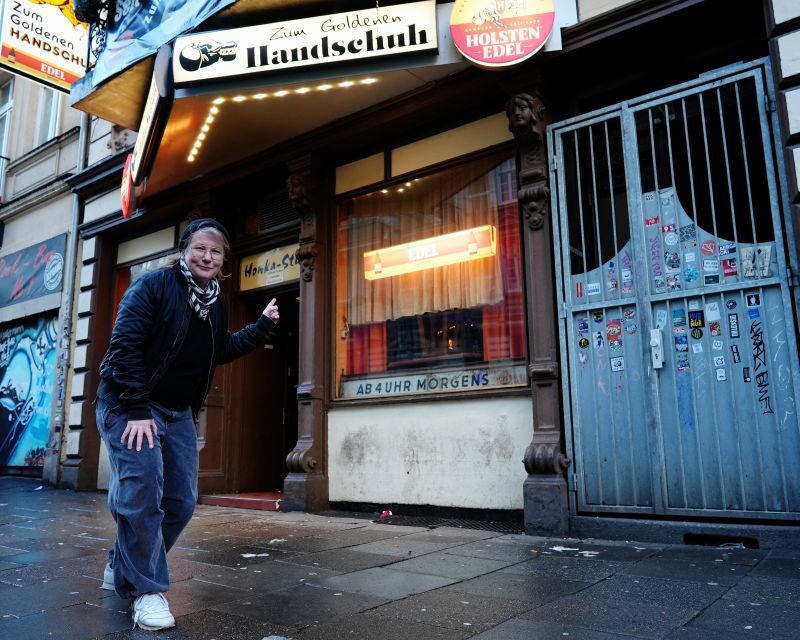
You meet at the St. Pauli Office at Wohlwillstraße 1, 20359 Hamburg. The key detail is timing: you should register about 15 minutes before the tour start at the counter.
That early arrival matters because this tour is guided with an on-site start, and it’s German-led. I’d treat that 15-minute buffer like part of the experience. It gives you time to settle, find the right counter, and be ready for instructions before you’re walking in the middle of St. Pauli.
Also, hotel pickup and drop-off aren’t included. So plan to get yourself to the office on your own. Once you’re in the group, the guide handles the story flow and the movement from scene to scene.
The case-name anchors: Fritz Honka and Mucki Pinzner on the street

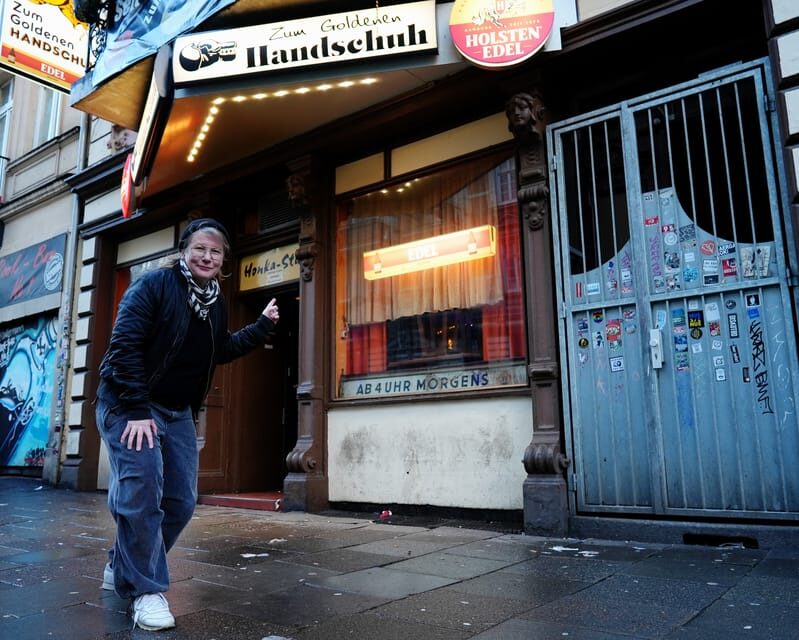
Two names drive a big chunk of the tour: Fritz Honka and Mucki Pinzner. The tour doesn’t treat them like trivia. It uses them as anchors to explain how Hamburg’s darker side played out locally—who got targeted, how the crimes were investigated, and how the neighborhood responded afterward.
Why those case anchors work for you: they turn “crime history” into something concrete. Instead of generic descriptions of law and disorder, the guide can point to specific locations and connect them to the behavior patterns and pressures that surrounded each case. You’re essentially training your eyes to read the neighborhood as a sequence of events.
Now for a practical caution. The tour runs only 2 hours. That means even for major cases, you may get the big points rather than every detail. One piece of feedback I’d watch for is how much background the guide includes about victims and motives. If you care deeply about those human details, it’s smart to communicate what you want at the start, because some guides may summarize certain parts more quickly than others.
Walking the Reeperbahn after the headlines
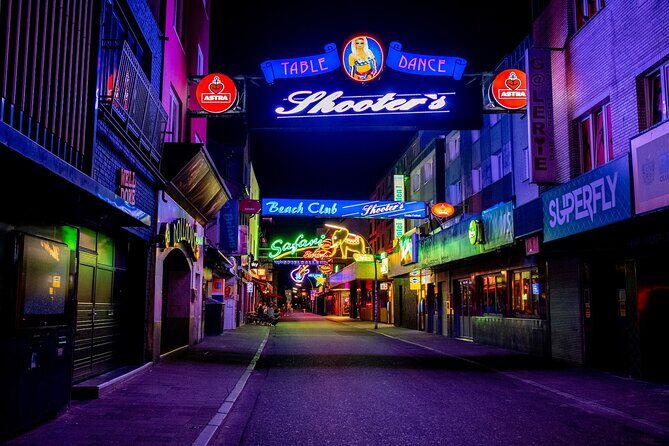
The Reeperbahn is the big magnet for most visitors, but this tour treats it differently. You don’t just see it as a nightlife street. You see it as a district that survived trouble and kept functioning, even after the stories people prefer not to remember built up over time.
That shift is valuable. St. Pauli has been reinventing itself for decades, and the tour helps you understand how that reinvention happens. You’ll hear the idea that the district didn’t simply erase what went wrong. Instead, it moved forward while still carrying a past that can resurface in stories, reputation, and the way certain areas are talked about.
The tour also frames the ending in a very specific way: you’ll learn about parts of Hamburg that have been scrubbed away, but still leave a mark. That’s the “so what” lesson. You leave with the sense that places don’t forget instantly. They just learn to live alongside the past.
The 1980s pimp wars: power struggles you can map in your head
One of the standout themes is the 1980s pimp wars. This is where the tour gets very “street politics.” Instead of focusing only on individual villains, the guide connects conflict to the neighborhood’s ecosystem—money, control, and the competition that forms when people try to dominate a lucrative zone.
This kind of stop can be a fun test for you as a listener. After a couple of cases, you start noticing how the guide’s explanations relate to each other. The 1980s story isn’t random. It helps you understand how earlier criminal patterns evolved over time, and why certain streets and gathering places mattered.
A small drawback to consider: if you personally don’t care much about red-light district history, this part of the tour may feel less relevant. Even with a great guide, the subject choices are built into the tour. You’re coming to St. Pauli for true crime, so the story will follow that center.
Other walking tours we've reviewed in Hamburg






What the guide actually does well (and how it can affect depth)
The tour is led by a live German guide. That’s not just a language note; it shapes pacing, tone, and what gets emphasized. In the feedback, guides like Malte and Olivia are mentioned by name, and both are described as making the stories feel alive with insider knowledge and flexibility.
Here’s the practical takeaway for you: if you want the tour to match your interests, arrive ready to steer it a little. One guide approach included asking whether certain topics should be left out if they don’t interest you. That’s a smart way to keep the tour from becoming a fixed script that doesn’t fit the group mood.
At the same time, there can be variation in how deeply individual cases are explained. If your main interest is the murders tied to Fritz Honka, don’t assume every tour will spend the same amount of time on background details. For some people, the level of detail can feel too brief. If that matters to you, you’ll get the best experience by going in expecting a guided overview of multiple high-profile stories in a short window.
Price and value: is $29 worth two hours of crime history?
At $29 per person for a 2-hour walking tour, the value comes down to one question: do you want a guided, scene-based explanation, or would you rather go at your own pace?
If you’re the type who enjoys learning through context—names, motives, investigations, and how a neighborhood changed—this price can feel reasonable. You’re paying for two things that self-guided options can struggle with: a local guide who can connect the dots, and the fact that you’re shown locations connected to real cases rather than just reading about them.
If you already know the basics and want deep documentation, the short duration can make it feel like a headline summary. But for most first-time visitors to St. Pauli who want a different angle than bar-hopping, the cost-to-time ratio is strong.
Bottom line: for $29, you’re buying access to local storytelling and on-foot scene context. That’s where the value lives.
Who this tour suits best (and who should skip it)
This tour is not suitable for children under 18, and the subject matter is inherently disturbing. So if you’re bringing a family, this is an easy skip.
It’s a great fit if you:
- Like history that’s uncomfortable and real, not polished into tourism gloss
- Want to understand St. Pauli beyond the obvious nightlife image
- Enjoy true-crime storytelling where places matter, not just the plot
It may be a mismatch if you:
- Want a light, funny tour with upbeat sights only
- Need detailed victim-by-victim context for every case
- Are not comfortable doing the tour in German
Practical tips to get the most out of your walk
This is a German-language tour, so your listening comfort matters. If your German is basic, you can still follow the overall story, but you’ll miss nuance. I’d treat it like visiting a museum talk: you’ll enjoy it more if you’re ready to pay attention for the full two hours.
Also, decide ahead of time what you want most: the major case names like Fritz Honka and Mucki Pinzner, the broader neighborhood evolution of the Reeperbahn, or the 1980s pimp wars. The tour is structured around those themes, but your expectations will change how satisfying each stop feels.
Finally, remember you’re walking. No time is wasted. If you’re the kind of person who gets impatient with guided storytelling, this might feel long by minute 45. If you like learning on the move, you’ll probably find the pacing keeps your brain engaged.
Should you book this Hamburg St. Pauli crimes tour?
I’d book it if you’re in Hamburg for a few days and you want one experience that changes how you see St. Pauli. The tour’s strength is that it turns notorious crime into street-level understanding. For $29, you get a guided route, a local German-speaking guide, and a focus on cases and scenes that shaped how the district is remembered.
Skip it if you’re looking for family-friendly fun, or if you only want high-detail case files. The tour is short, and different guides may vary in how much background they give inside that time.
If you do book, go with the right mindset: you’re here for dark history, told on the ground where it happened. That’s exactly why it stays with you.
FAQ
Where does the tour start?
You should register at the St. Pauli Office at Wohlwillstraße 1, 20359 Hamburg.
When should I register?
Please register 15 minutes before the tour start.
How much does the tour cost?
The price is $29 per person.
How long is the tour?
The tour lasts 2 hours.
What language is the tour in?
The tour guide speaks German.
Is there hotel pickup or drop-off?
No, hotel pickup and drop-off are not included.
Are food and drinks included?
No, food and drinks are not included.
What is included in the price?
A local guide and anecdotes are included.
Is the tour suitable for children?
No. It is not suitable for children under 18.
Can I get a refund if my plans change?
Yes. You can cancel up to 24 hours in advance for a full refund.