REVIEW · HAMBURG
Hamburg: Speicherstadt & HafenCity 2-Hour Walking Tour
Book on GetYourGuide →Operated by Jutta Hülsmann your personal guide · Bookable on GetYourGuide
Hamburg has two faces in two hours. This walking tour pairs Speicherstadt warehouse-area atmosphere with modern HafenCity sights, and it does it at a pace that keeps the facts fun. I like the hands-on feel of the story (yes, you’ll even step inside a warehouse and sniff the old-port vibe), and I like how you finish with big HafenCity landmarks and harbor views.
If you’re expecting a marathon history lecture, plan on it being more of a guided walk with clear stops than a deep, slow museum experience.
The smart move here is wearing good walking shoes and dressing for Hamburg weather. It’s a mostly outdoor circuit, and even with photo stops, you’ll be on your feet for the full 2 hours. If you prefer longer sit-down museum time, you may feel a bit rushed.
In This Review
- Key things that make this tour worth your time
- Finding your way: Rödingsmarkt and Steintwiete setup
- Deichstraße: 17th-century houses before the port story kicks in
- Zollkanal and Speicherstadt: canals, origins, and the “no floors” twist
- Sniffing out history: entering a warehouse and reading the atmosphere
- Speicherstadt’s red brick and “castle-like” port feel
- Brooktorkai crossing: switching gears into HafenCity
- HafenCity highlights: Kaispeicher B, Maritime Museum, and the port authority
- Elbe Philharmonic Hall area and the Coffee Plaza viewpoints
- Unilever building harbor views and cruise ship spotting
- How the 2 hours actually feels in real life
- Price and value: $294 per group, up to 15 people
- Who this tour fits best (and who might want a different plan)
- What to do after: turning the walk into your own day
- Should you book this Hamburg Speicherstadt & HafenCity walking tour?
- FAQ
- Where is the meeting point?
- How long is the tour?
- Is it a private tour?
- What’s the group size limit?
- What languages are available?
- What parts of Hamburg does the tour cover?
- Do you enter any buildings?
- What are some HafenCity highlights on the route?
- Can the tour start time be adjusted?
- What should I wear?
Key things that make this tour worth your time
- You enter a real warehouse and get a sensory look at how the district worked.
- Zollkanal canal talk explains how this unique warehouse complex was shaped and used.
- Red brick and round towers: you’ll learn why only some buildings have circular tower elements.
- Jobs, transport, and building design: you get practical answers to how goods moved through the system.
- A clean jump from old docks to 21st-century HafenCity at the Brooktorkai crossing.
- Harbor wow-points like the Elbe Philharmonic Hall area and skyline views from major waterfront buildings.
Finding your way: Rödingsmarkt and Steintwiete setup
The tour begins at Steintwiete 1, and the easiest landmark to use is the subway station Rödingsmarkt (U3). You’ll want to exit toward Willy-Brandt-Straße / Ludwig-Ehrhard-Straße, then match up with the meeting point on the street. This matters because the area around Hamburg’s waterfront can be confusing in a hurry, especially when you’re hunting for the exact spot the guide is using.
You’re also starting close enough to the action that you can get a feel for the neighborhood right away. The first stretch gets you looking at building forms before you even start talking about canals and docks. That “see first, understand second” flow is one of the reasons this tour works well for first-timers.
Other harbor and port cruises in Hamburg



Deichstraße: 17th-century houses before the port story kicks in
Right after meeting, you’ll spend time along Deichstraße with a photo stop and guided tour time. The focus here is on those older waterfront structures—especially the look of the houses that anchor the area in earlier centuries. It’s a quick start, but it helps you avoid that common mistake of treating Speicherstadt like it appeared out of nowhere.
Then you cross Binnenhafenbrücke, which is a practical way to connect the “city fabric” to the water-and-warehouse world. Bridges are underrated on walking tours: they give you a moving viewpoint while the guide sets up what you’ll be seeing next.
Zollkanal and Speicherstadt: canals, origins, and the “no floors” twist
One of the most memorable parts is the stop along the Zollkanal, where the guide gives short photo time plus guided explanation. This is where you start connecting the canal system to why Speicherstadt looks the way it does. The canal isn’t just scenery here—it’s part of the logic of the district.
You’ll learn the origins of the Speicherstadt warehouse complex and what day-to-day work looked like for the people who built and operated it. I especially like tours that explain “how things moved” because that turns architecture into something you can picture, not just admire.
And then come two details you won’t forget:
- You’ll find out why the warehouse buildings are built the way they are—specifically why there are no floors in the way many people expect.
- You’ll also learn why only the buildings in the east have round towers.
You don’t need to be an architecture nerd for this to land. The guide turns these design quirks into explanations you can repeat later at dinner.
Sniffing out history: entering a warehouse and reading the atmosphere
The tour doesn’t keep Speicherstadt at arm’s length. You’ll sniff out the old warehouse atmosphere and enter one of the warehouses. That’s a big deal because the district is easy to treat like a pretty postcard. Walking inside makes it feel like a working space—cooler, more industrial, and shaped by storage needs.
This is also where the guide personality really matters. Past participants praised Jutta Hülsmann for her relaxed, knowledgeable style that made the stories feel approachable. Others also had strong experiences with guides named Karin Eberle, Jörn, and Kerstin, with notes about being informative, patient, and easy to learn from. In a place like this, that’s exactly what you want: explanations that connect the bricks and canals to real human effort.
Speicherstadt’s red brick and “castle-like” port feel
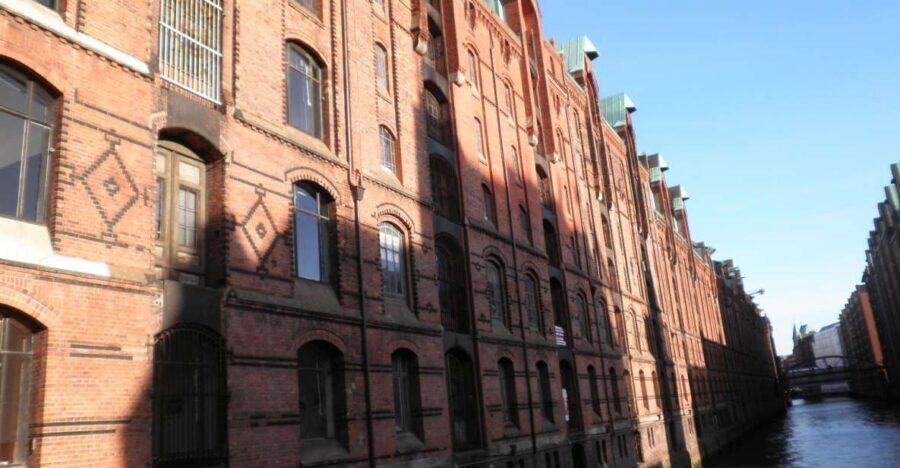
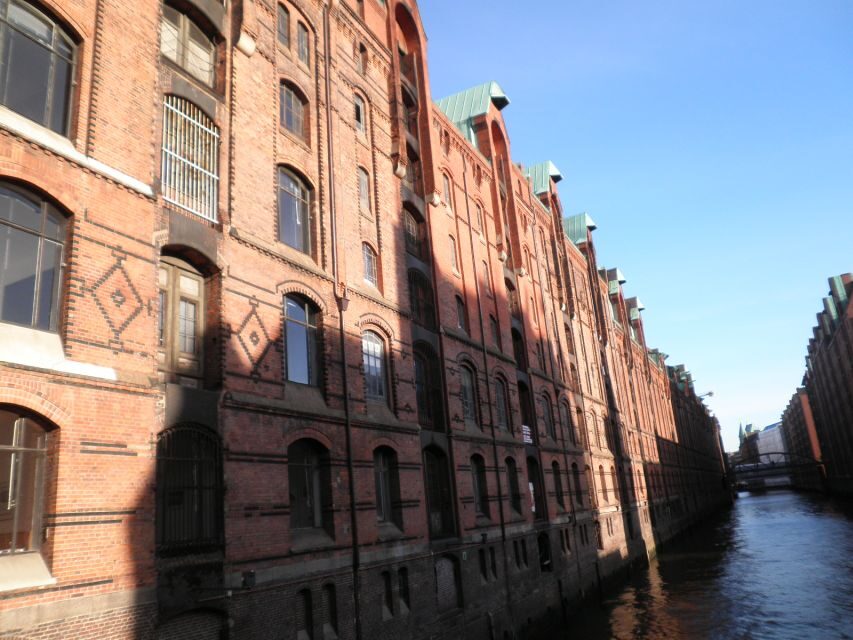
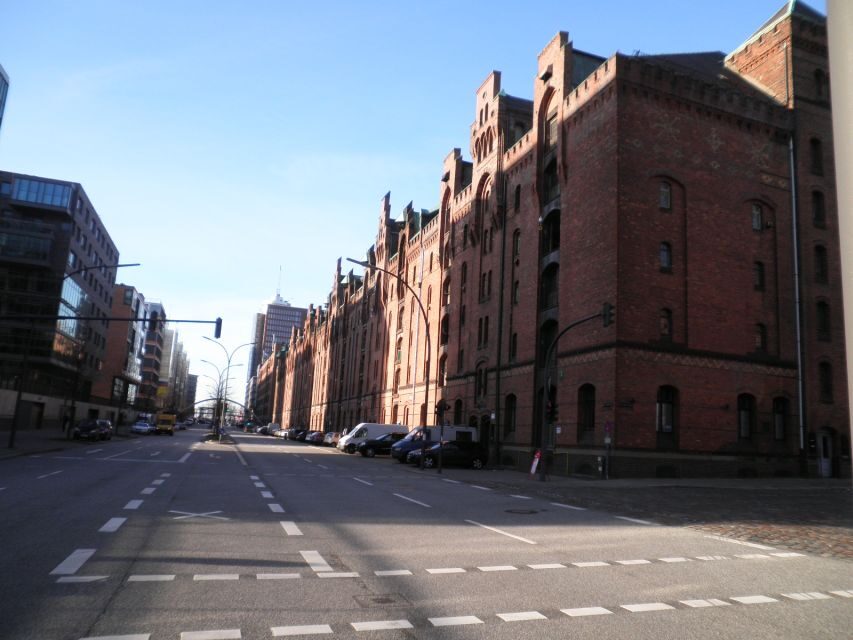
In Speicherstadt, the look of the place does a lot of the teaching. You’ll get time focused on the beautiful red brick architecture, and the guide connects it to ideas of castles and built power—how these structures expressed security and control in a working trade zone.
You’ll also hear about the kinds of labor behind the scenes. The highlights call out the hard work of the people who worked here, and that’s an important balance. It’s easy to romanticize old ports as grand places of commerce; the better tours remind you it was also repetitive, physical work—moving goods, keeping storage systems running, and dealing with a constant schedule.
So when the guide talks about jobs and what the workers did, I treat it as the missing layer: it explains the district beyond its looks.
Other Speicherstadt and HafenCity tours in Hamburg




Brooktorkai crossing: switching gears into HafenCity
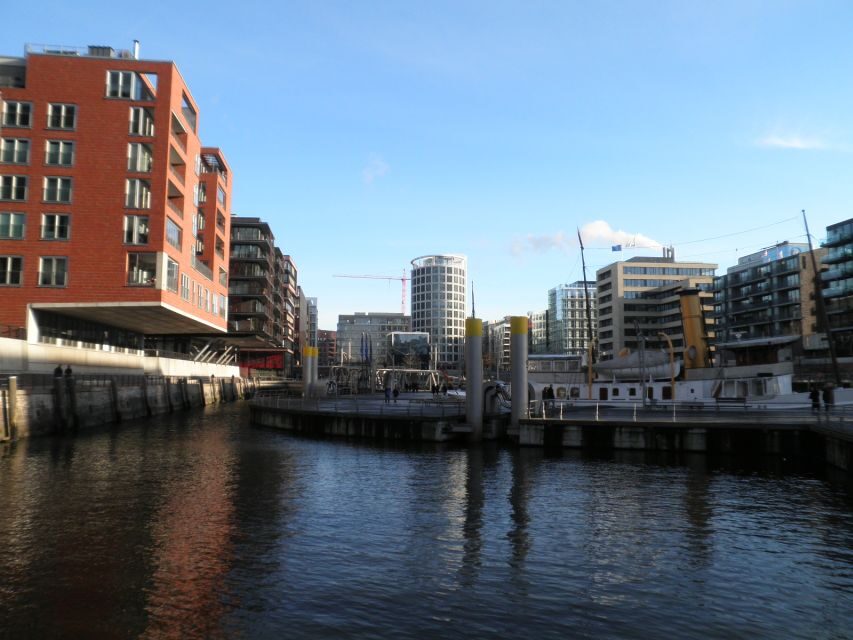
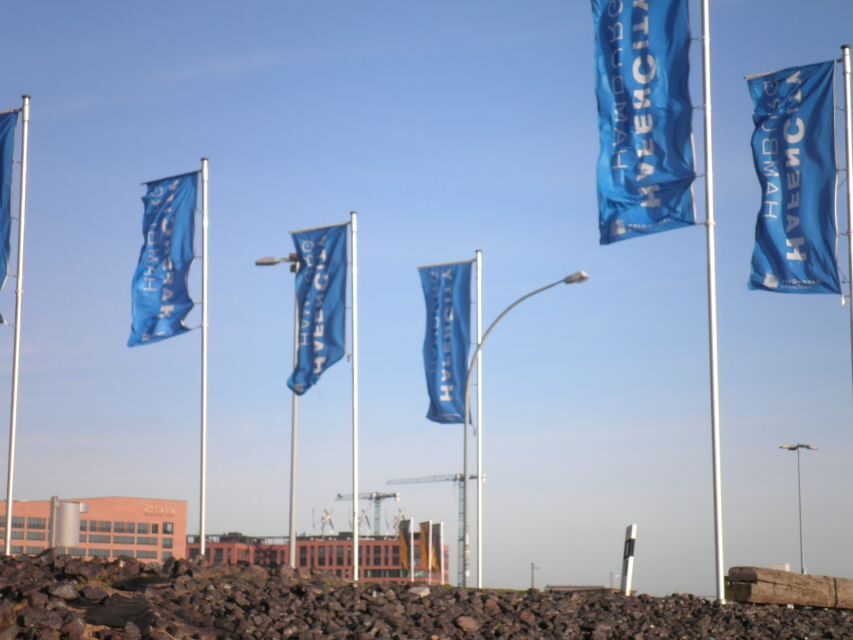
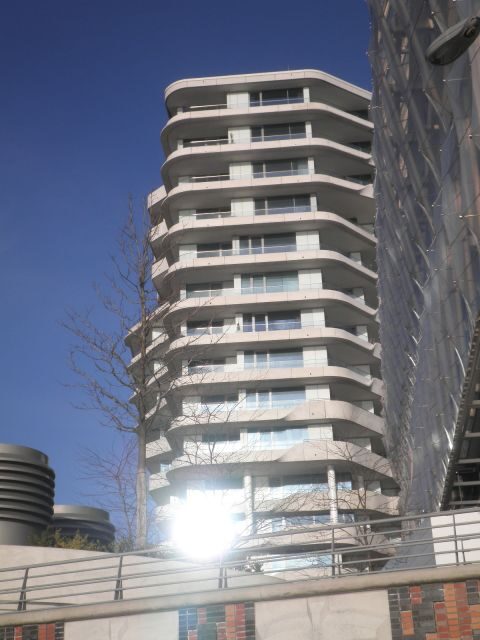
After Speicherstadt, you cross Brooktorkai and join the 21st century side of the waterfront. That moment works because it’s not a random cut to modern architecture—it’s the same harbor logic, just updated with new design language.
This is a great time to reset your brain. Your eyes will go from canal edges and warehouse brick to glass buildings and cleaner modern lines. And because the tour has already taught you what the old district was for, you’ll better understand what HafenCity is trying to do now: keep the port identity while changing how people live, visit, and view the waterfront.
HafenCity highlights: Kaispeicher B, Maritime Museum, and the port authority
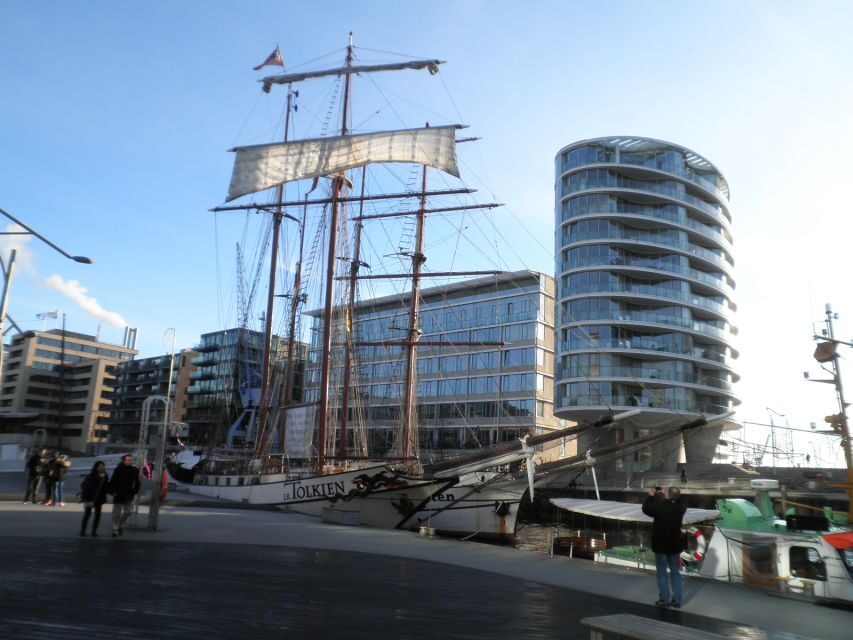
Once you’re in HafenCity, you’ll hit several landmark areas where the guide can tie modern civic waterfront life back to the port world you just learned about. One key stop is Kaispeicher B, described as a listed building and paired with the Maritime Museum. Even if you don’t go inside, it’s useful to know what this building represents in Hamburg’s maritime storytelling.
You’ll also see the Port Authority on Überseeboulevard. This is one of those practical sights people often skip, but it’s perfect for your tour because it anchors the harbor’s ongoing operations. Instead of thinking the port is now just scenery, you remember it’s still a working system.
Elbe Philharmonic Hall area and the Coffee Plaza viewpoints
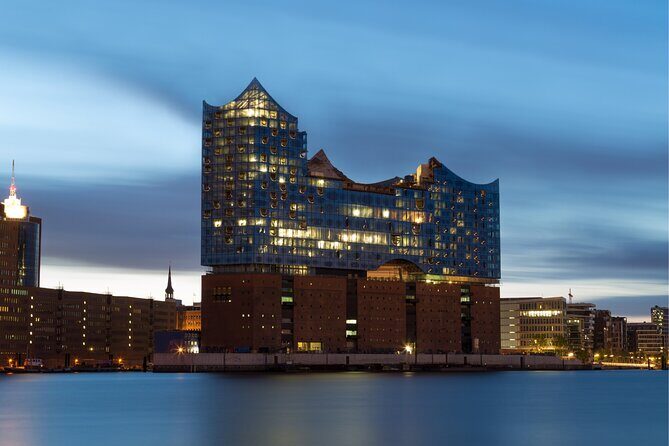
A standout on this route is the Elbe Philharmonic Hall, referenced at the Coffee Plaza area. Even if you’re not a concert person, you’ll likely appreciate it more after the Speicherstadt part of the walk. The harbor has always been about trade and traffic; now it’s also about culture and public life.
The highest schoolyard in Hamburg is also part of the walk. That detail is oddly delightful because it signals HafenCity’s shift toward designed community spaces, not just commercial buildings and water access.
Unilever building harbor views and cruise ship spotting
Near the waterfront viewpoints, you’ll get a chance for views over the harbor from the Unilever building. This is where I’d tell you to keep your eyes up and not just your phone out. HafenCity looks good in photographs, but the real win is seeing how ships, cranes, and waterfront architecture relate to each other in real time.
The tour notes that you can hope for a large cruise ship. Even if one isn’t there, you still get the perspective you came for: the harbor as a living stage, not a static image.
How the 2 hours actually feels in real life
This is a 2-hour private walking tour through both Speicherstadt and HafenCity, starting near transit and finishing on the modern waterfront side. Because it’s private and sized for a group of up to 15, you can usually expect a smoother flow than bigger open tours. The guide can keep everyone together and still spend a few extra seconds on questions.
Photo stops are built in, but the tour is still “walk, look, learn.” That’s a strength if you want a high-yield orientation, especially if you’re short on time. It’s also a consideration: if you want linger-and-wander freedom, you’ll need to plan extra time after the tour to branch out on your own.
Price and value: $294 per group, up to 15 people
At $294 per group for up to 15 people, this pricing can be a good value if you’re traveling with friends or family and want a focused guide rather than joining a larger public group. The real question is how you’ll use your guide time.
If you’re the kind of traveler who enjoys explanations about why buildings work the way they do—like the reasons behind warehouse design choices, the canal system, and the differences between old storage logic and modern waterfront planning—this tour earns its cost. If you mainly want a casual stroll with minimal talking, you might feel like you’re paying for guidance you don’t fully use.
In short: for small groups who want a smart walkthrough, it’s priced like a “do it right” option. For solo travelers, it may feel pricey compared to self-guided wandering—unless you strongly value a human guide to connect details.
Who this tour fits best (and who might want a different plan)
I think this tour is especially good for:
- First-time visitors who want Speicherstadt plus HafenCity without missing the key story beats.
- Travelers who like ports and architecture but prefer clear, practical explanations over long museums.
- Small groups who want a guided pace and a chance to ask questions.
It might be less ideal if:
- You only have an interest in one side of the waterfront (either the old warehouses only, or the modern sights only).
- You want a long, slow photo session with no schedule.
What to do after: turning the walk into your own day
Because the tour covers both ends of the waterfront story, it’s a great springboard. Afterward, you can pick a direction: go deeper into museum territory near places like Kaispeicher B, or keep walking through HafenCity streets for modern architectural angles and waterfront views.
If you’re trying to build a full day, I’d plan another hour on your own somewhere that matches your vibe—old bricks and canals, or modern design and harbor viewpoints. The tour gives you the map in your head, which makes independent wandering much more satisfying.
Should you book this Hamburg Speicherstadt & HafenCity walking tour?
Yes—if you want a tight, guided connection between warehouse engineering and modern waterfront design, this is the kind of 2-hour plan that pays off quickly. The sensory detail of entering a warehouse, the canal explanations, and the contrast switch at Brooktorkai are strong reasons to choose a guided format.
Book it especially if you’re traveling with a small group (up to 15) and you’d rather spend your time learning the “why” than just photographing the “what.” If you’re short on time and want the two most important Hamburg waterfront stories in one shot, this is a smart choice.
FAQ
Where is the meeting point?
Meet the guide at Steintwiete 1, in front of the underground station Rödingsmarkt (U3). Use the exit for Willy-Brandt-Straße / Ludwig-Ehrhard-Straße.
How long is the tour?
The tour lasts 2 hours.
Is it a private tour?
Yes, it’s listed as a private group experience.
What’s the group size limit?
The price is per group up to 15 people.
What languages are available?
The live guide offers German, Spanish, English, and French.
What parts of Hamburg does the tour cover?
You’ll walk through Speicherstadt (historic warehouse district) and HafenCity (modern waterfront).
Do you enter any buildings?
Yes. The tour includes entering one of the warehouses and spending time experiencing the warehouse district atmosphere.
What are some HafenCity highlights on the route?
You’ll see areas including Kaispeicher B (with the Maritime Museum), the Port Authority on Überseeboulevard, the Elbe Philharmonic Hall area at Coffee Plaza, and views from the Unilever building.
Can the tour start time be adjusted?
Yes, the start time can be adjusted to suit your needs upon request.
What should I wear?
Wear appropriate clothing for the weather in Hamburg, since it’s a walking tour.