REVIEW · HAMBURG
Hamburg: Speicherstadt and Hafencity Guided Tour
Book on GetYourGuide →Operated by Hamburg-Stadtführung · Bookable on GetYourGuide
Hamburg’s harbor tells stories fast. In just 2 hours, you’ll connect the Elbphilharmonie “crown” views to the Speicherstadt warehouses, then finish in the bold new HafenCity. I love that the guide focuses on the real reason Speicherstadt exists: Hanseatic merchants, money, and the daily work of trade. I also like how you don’t just look at buildings—you walk through the same kind of sightline from modern Hamburg to the old Pfeffersäcken world. One drawback: parts of the route are outdoors, so if it’s freezing, plan for cold.
You’ll start at Sandtorkai, work your way past key sights like Miniatur Wunderland, and end with a clear contrast in HafenCity’s modern, environmentally minded architecture. If you’re the type who enjoys explanations more than just photos, this tour fits well. If you only want inside stops or have zero interest in the Hanseatic trade angle, you may feel the pacing is too focused.
In This Review
- Key Points You’ll Actually Use
- Starting at Sandtorkai 74: how this tour flows in real life
- Elbphilharmonie from the harbor: the “crown” moment you shouldn’t rush
- From Kaiser to Miniatur Wunderland: turning the corner into shopping-and-culture stops
- Magellan Terraces across Speicherstadt: the perfect in-between viewpoint
- Speicherstadt warehouses and Pfeffersäcken: understanding why it feels cathedral-like
- What to notice as you walk Speicherstadt’s trade geometry
- HafenCity after the warehouses: reading modern Hamburg in one strong contrast
- Price and value: is $16 for 2 hours a smart buy?
- Who this tour suits best (and who might want another option)
- Quick practical tips before you go
- Should you book this Hamburg Speicherstadt and Hafencity guided tour?
- FAQ
- Where is the meeting point?
- How long is the tour?
- How much does the tour cost?
- Is the tour guided?
- What language is the guide?
- Is entrance to attractions included?
- Is the tour wheelchair accessible?
- Can I cancel for a refund?
Key Points You’ll Actually Use
- A 2-hour “big picture” route: Elbphilharmonie → Speicherstadt → HafenCity
- Hanseatic merchants explained: you’ll hear about the Pfeffersäcken and what drove daily life
- Speicherstadt courtyards on the Dutch Brook: the guide points out what to notice
- Elbphilharmonie photography from the harbor: dramatic angles without long detours
- Modern HafenCity contrast: eco-minded architecture after the warehouse era
- German-only live guide: great if you’re comfortable, limiting if not
Starting at Sandtorkai 74: how this tour flows in real life
This tour runs for about 2 hours, paced as a guided walk that moves you across Hamburg’s waterfront moods. The meeting point is specific: Sandtorkai 74, right at the corner of Sandtorkai/Kaiserkai, on the square in front of the stairs and on the white wall with the hole in the middle. If you arrive early, use the spot to orient yourself before the group gathers.
The tour is led by a professional city guide, and the spoken language is German. That matters more than most people think: you’ll get the best experience if you’re comfortable following the explanation while walking. Entrance fees are not included, so if there’s anything your group does that requires paid entry, you’ll handle that separately.
One practical note: this is a waterfront route. Even when the stops are short, you’ll feel the wind. Bring a hat or hood and dress like you expect a chill, not like you’re stepping into a café.
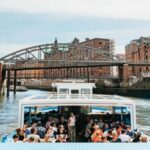
Other harbor and port cruises in Hamburg


Elbphilharmonie from the harbor: the “crown” moment you shouldn’t rush
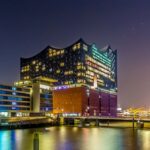
Your first big visual stop is the Elbphilharmonie—the abstract-front concert hall that sits above the harbor like a crown. Even if you’re not a classical-music person, the building’s form is a shortcut to understanding modern Hamburg. It’s not subtle. The guide’s approach helps you look past the wow-factor and notice why the building feels like a statement piece.
You’ll also get a guided look tied to the building itself. In cold weather, you may not want to linger, but try to take your photos quickly and then listen. A good guide will connect what you’re seeing to why Hamburg invested in something this bold, and that context makes the architecture stick.
Weather can be the deciding factor here. One comment you should take seriously: if it’s icy, the outdoor viewing portions can feel long. If winter is your only option, treat this as a “layer up and move” tour. If you’re choosing timing, a less windy season makes the early harbor section more comfortable.
From Kaiser to Miniatur Wunderland: turning the corner into shopping-and-culture stops
After the Elbphilharmonie area, the route moves toward the Kaiser area. Along the way, you pass major sights that shape how people experience Hamburg even today. The most notable one in the flow is Miniaturwunderland, described as the world’s largest model railway. Even if you don’t go inside, seeing it referenced during the walk helps you understand why HafenCity and Speicherstadt sit in the same city as hyper-detailed entertainment.
You’ll also encounter the old coffee roasting plant and a spice museum. These stops shift the story from “buildings as icons” to “everyday goods as the engine of the city.” Hamburg’s trade era wasn’t abstract—it was powered by commodities, and the route keeps that idea alive as you transition toward Speicherstadt.
There’s a small caution here: if the tour includes a short shopping or browsing moment at the coffee-roasting spot, it can feel longer than you’d expect if you want more explanation about how coffee and spices connect to trade. If that matters to you, ask your guide targeted questions on the spot—why those goods, what the trade routes meant, or how the museum angle ties back to the Hanseatic merchants. In a 2-hour tour, questions can turn a brief stop into a memorable one.
Magellan Terraces across Speicherstadt: the perfect in-between viewpoint
A key part of the pacing is the move to the Magellan Terraces, positioned right across from Speicherstadt. This is more than a photo stop. It’s a visual setup that lets you see how Hamburg’s trading world occupies space—dense, purposeful, and designed to handle commerce.
From the terraces, you can get oriented before stepping into the Speicherstadt zone. This helps you follow the guide’s references later when you’re at ground level. If you arrive and immediately start looking down at your phone, you’ll miss that orientation step—so give the skyline and warehouse mass a moment first.
Then the tour shifts from “where am I?” to “why was this built?” That change is the real payoff. You’re about to hear how trade ruled everyday life.
Speicherstadt warehouses and Pfeffersäcken: understanding why it feels cathedral-like
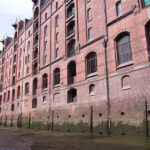
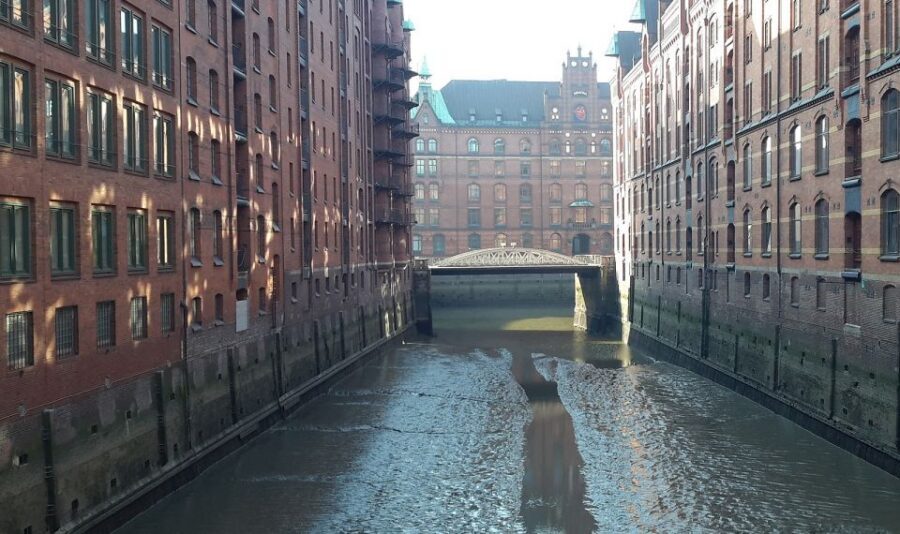
Now you enter the Speicherstadt, the historic warehouse district strongly linked to the Hanseatic League. The guide frames it around the Pfeffersäcken—the Hanseatic merchants often associated with the spice trade era. That framing is smart because it gives you names for what you’re seeing. Buildings can feel like bricks until someone connects them to people and habits.
One of the most interesting parts of Speicherstadt on this route is the stop at the inner courtyards on the Dutch Brook. The guide points out that these spaces feel cathedral-like, but the key lesson is what actually determined everyday life here: trade and money, not church activities. That’s the kind of correction that makes architecture teaching work. You stop treating the courtyards as decoration and start seeing them as functional space shaped by commerce.
If you love stories with a clear theme, you’ll enjoy this section. The tour doesn’t only say Speicherstadt is old; it explains the logic behind the design. And once you understand that logic, the place becomes more than a “cool district”—it becomes a place with a job.
Other Speicherstadt and HafenCity tours in Hamburg





What to notice as you walk Speicherstadt’s trade geometry
Here’s how to make the most of your walking time in the warehouse area—without needing technical architecture terms. Look for how the spaces are organized for activity rather than leisure. Listen for the guide’s emphasis on practical commerce: who used these warehouses, why the Hanseatic League mattered, and how merchant identity (including the Pfeffersäcken idea) shaped the district’s character.
Also watch how the guide points out contrasts in scale. Courtyards can feel dramatic because they gather space, but the tour explanation anchors that drama to commerce, not to religion. That’s why the Dutch Brook courtyards are such a central stop here: they’re where you can feel the “designed for traders” vibe.
If you’re traveling with someone who wants fast photo stops, you might need a compromise. This part rewards listening, so try to stay close to the guide during the walking segments. When you drift too far back, you lose the connection between what you see and what the guide is saying.
HafenCity after the warehouses: reading modern Hamburg in one strong contrast
Once you’ve spent time with Speicherstadt’s merchant logic, the route finishes in HafenCity, Hamburg’s newest and most modern harbor district. This is where the contrast becomes the main point. Hafencity offers what you might call a “future answer” to the question of how waterfront cities evolve: sophisticated, modern buildings with environmentally friendly building ideas.
You’re not comparing two districts only because one is old and one is new. The tour nudges you to compare purpose. Speicherstadt shows a city organized around trade wealth and storage needs. HafenCity shows a city trying to reconcile density and design with modern environmental thinking.
This last section is also a good emotional reset. If you’ve been cold, the walk can still feel brisk, but the modern architecture tends to hold your attention. It’s the kind of finish that makes the first half feel more meaningful, because you end with a clear “then vs now” story rather than a random stop.
Price and value: is $16 for 2 hours a smart buy?
At $16 per person for roughly 2 hours, the value comes from how many major ideas you cover in one guided loop. You get:
- A major modern icon area at Elbphilharmonie
- The historic warehouse story at Speicherstadt
- A modern architectural contrast at HafenCity
- Commodity-and-trade framing through stops tied to coffee roasting and spices
- A guided interpretation that ties it together, rather than a checklist
This isn’t a “slow travel” tour where you sit down for long museum time. It’s efficient. That’s good if you want orientation and context, especially on a first or second day in Hamburg. Just keep expectations realistic: entrance fees aren’t included, and since the route includes outdoor walking, comfort depends heavily on the day’s weather.
Who this tour suits best (and who might want another option)
This fits you if:
- You like architecture but also want the reason behind it
- You’re interested in Hamburg’s Hanseatic trade story and the Pfeffersäcken focus
- You want a tight route that hits Elbphilharmonie, Speicherstadt, and HafenCity without planning transfers
- You can follow a German live guide while walking
You might look for something else if:
- You need an English guide and don’t want to rely on partial understanding
- You’re only interested in inside museum time or paid-entry experiences
- You hate outdoor walks in cold weather and don’t want to dress for it
Quick practical tips before you go
- Dress for wind and cold along the harbor route. Layers win.
- Arrive a few minutes early at Sandtorkai 74 so you’re not hunting around while the group moves.
- If you care about coffee or spices, ask the guide questions during the coffee-roasting stop. A short pause can turn into real learning when you know what to ask.
- Stay close during the Speicherstadt courtyard section. That’s where the guide’s explanation matters most.
Should you book this Hamburg Speicherstadt and Hafencity guided tour?
If you want a compact, high-impact Hamburg experience, I’d book it. The strongest reason: you leave with a clear story connecting modern Hamburg’s icon (Elbphilharmonie) to the warehouse-era trading mindset (Speicherstadt, Pfeffersäcken) and then to HafenCity’s modern architectural direction. It’s a smart way to get oriented without turning your day into a puzzle.
Book it especially if you enjoy guided explanation and don’t mind cold outdoor walking. If you’re sensitive to wind, pick a warmer time of year when possible. And if German language will be a barrier, you’ll likely enjoy the route less—because the tour’s value is in the guide’s interpretation.
FAQ
Where is the meeting point?
The meeting point is directly at Sandtorkai 74, at the corner of Sandtorkai/Kaiserkai, on the square in front of the stairs and on the white wall with the hole in the middle.
How long is the tour?
The tour lasts 2 hours.
How much does the tour cost?
The price is $16 per person.
Is the tour guided?
Yes. It includes a professional city guide, and it is a live tour.
What language is the guide?
The live tour guide speaks German.
Is entrance to attractions included?
No. Entrance fees are not included.
Is the tour wheelchair accessible?
Yes, the tour is listed as wheelchair accessible.
Can I cancel for a refund?
You can cancel up to 24 hours in advance for a full refund.