REVIEW · HAMBURG
Hamburg: Speicherstadt and HafenCity 2-Hour Tour
Book on GetYourGuide →Operated by Adventure World Tours · Bookable on GetYourGuide
Two hours can feel like a full Hamburg voyage. Start at Baumwall, walk through Speicherstadt waterways and warehouses, then roll into modern HafenCity sights before ending at the Chilehaus.
I especially love how the guide turns the port into a story you can picture, with jokes and practical context about spices, coffee, tea, and even oriental carpets. I also love the architecture stops—Wasserschloss, Fleetschlösschen, and the viewpoints tied to the Elbe Philharmonic vibe make it a walk that’s easy to photograph and understand.
One thing to consider: this is mostly outdoors, and you’ll cover plenty of ground in just 2 hours, so comfy shoes and layers matter. Also, the public tour is German-only, so if you want English, go private.
In This Review
- Key points to know
- Starting at Baumwall: the smart way to get oriented
- Harbor Police Station No. 2 to Wilhelminenbrücke: reading the waterfront like a local
- Enter Speicherstadt: canals, depots, and the Wasserschloss moment
- The photo magnet: Wasserschloss
- Fleetschlösschen and the “castle-like” details you’ll miss on your own
- Poggenmühlen Bridge and the transition toward HafenCity
- Finishing at Chilehaus: when the route lands on an icon
- Pace, weather, and how to enjoy it without rushing
- Price and value: what $282 per group buys you
- Who this tour fits best (and who should skip it)
- The guide quality is the real differentiator
- Should you book this Hamburg Speicherstadt and HafenCity tour?
- FAQ
- Is this tour a boat ride?
- How long is the tour?
- Where do I meet the guide?
- What languages are available?
- Is entry to attractions included?
- What’s the group size for the price?
Key points to know
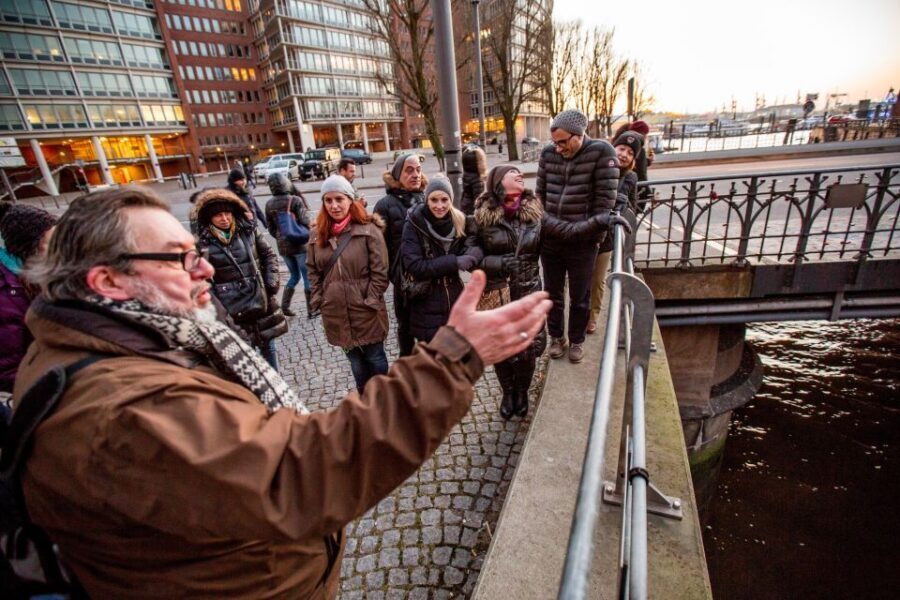
- UNESCO Speicherstadt + modern HafenCity in one tight 2-hour route
- Coffee, tea, and trade goods come to life through real stories, not facts dumps
- Wasserschloss and Fleetschlösschen are highlight-photo moments along the canals
- Short bridges and canal crossings help you read the waterfront fast
- You’ll finish at Chilehaus, one of Hamburg’s most recognizable office buildings
- Guides like Stefan, Mikel/Mikkel, and André have a reputation for friendly, funny pacing
Starting at Baumwall: the smart way to get oriented
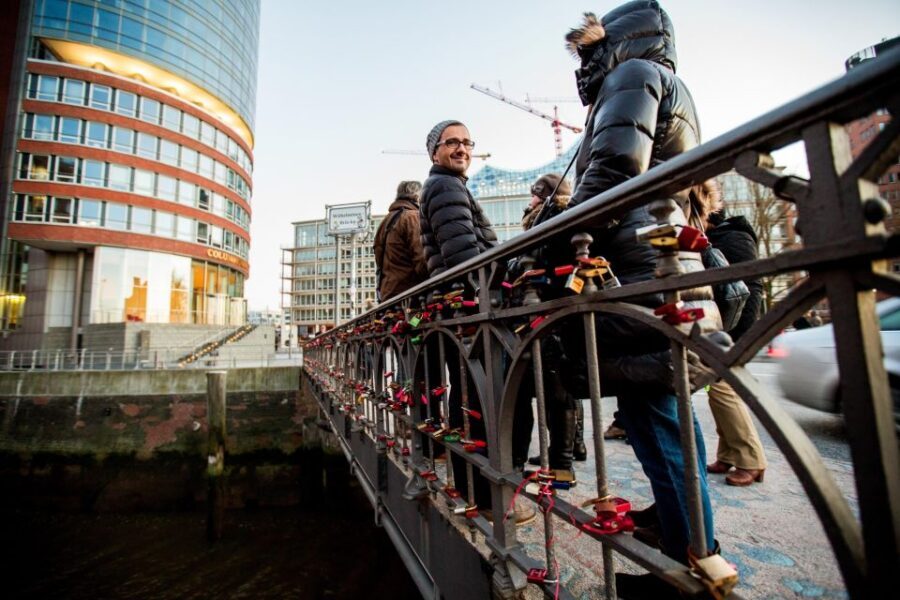
Meet at Baumwall subway station, Kehrwiederspitze exit. Go down to the bottom of the stairs, and look for the kiosk called Back Shop, located under the railway bridge.
This start matters because you’re not just “walking around Hamburg.” You’re beginning right at the edge of the harbor world, with the river-and-canal logic already in front of you. From there, the tour naturally shifts from working-port space into the carefully arranged Speicherstadt warehouse maze.
Also, there’s no pickup and drop-off, so plan to arrive a few minutes early. If you’re coming by transit, I’d treat this as a quick subway-to-street conversion, then let the guide do the navigation.
Other harbor and port cruises in Hamburg



Harbor Police Station No. 2 to Wilhelminenbrücke: reading the waterfront like a local
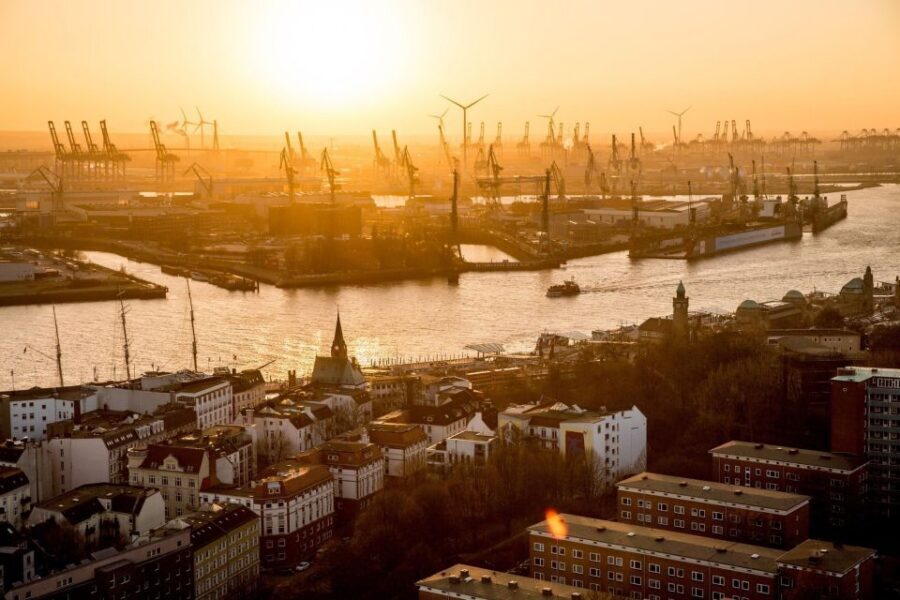
The tour opens with a photo stop at Harbor Police Station No. 2 (about 10 minutes with guided context). This is a good warm-up because it frames what you’re looking at: Hamburg’s port isn’t just a pretty backdrop. It’s a working system, and that working role helps explain why the warehouses, canals, and bridges were built the way they were.
Next you move through Hanseatic Trade Center (short stop) and out toward Wilhelminenbrücke. Bridges are underrated in walking tours, because they give you instant scale. Here, you’ll get a better sense of how water routes connect districts and why the Speicherstadt feels both enclosed and perfectly placed.
Then you continue with a photo stop at Am Sandtorkai 73, which helps bridge your mental model from broad harbor function into the more detailed warehouse district layout. Even if you’re not an architecture person, the guide’s explanations make the waterfront feel organized instead of confusing.
Enter Speicherstadt: canals, depots, and the Wasserschloss moment
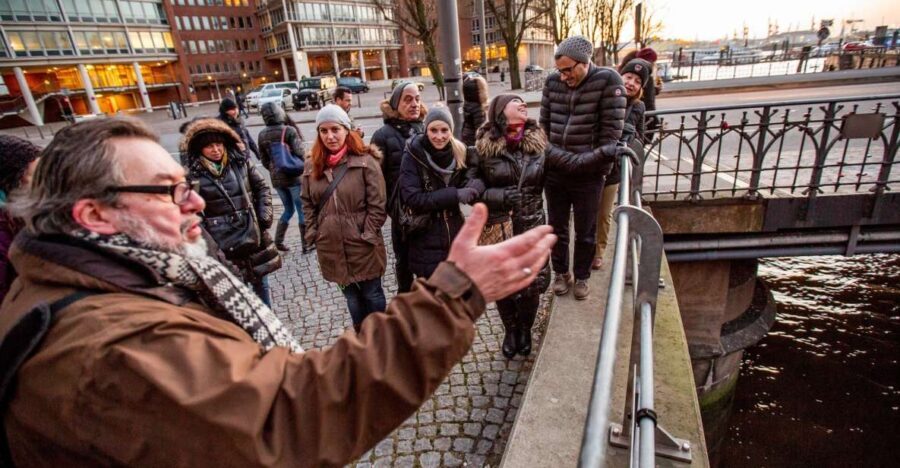
Once you’re deeper into Speicherstadt, the UNESCO designation stops being a label and starts being visual. The place is famous as a 19th-century trading center, and the tour connects that reputation to what the guide calls out: spices, coffee, and oriental carpets.
You’ll make short stops that function like map pins—quick photos, quick context, then back to walking. One good example is Kibbelsteg, a canal crossing where you can see how the waterways slice the district. These little bridges help you understand the “fleet” of routes—how goods moved, and how people moved too.
Then comes one of the big sensory themes of the tour: coffee and tea trade. You’ll spend time at Hälssen & Lyon GmbH, and the guide uses stops like this to connect luxury everyday goods to the global commerce that built Hamburg’s warehouse power. You’re not just hearing that trade existed. You’re seeing the physical reasons it needed to be stored, sorted, and protected.
From there, you continue through Sandtorkai-Hof (Block H) and toward Genuss Speicher. Even without museum entry, these stops are useful because they show how old storage spaces and dockside infrastructure shape what stands here today. You start seeing continuity: the district’s purpose changed, but its structure still guides daily life.
The photo magnet: Wasserschloss
The tour highlights Wasserschloss as the Speicherstadt’s most frequently photographed motif. Think of it as the kind of building that looks like it belongs to a storybook—yet it’s part of the working-world warehouse design. When the guide points it out, it clicks: this is why people remember Speicherstadt even after they’ve stopped taking photos.
Fleetschlösschen and the “castle-like” details you’ll miss on your own
A big highlight is Fleetschlösschen by Daniel Wischer. The guide uses it as a kind of turning point: you’re walking through one of the world’s largest connected depot complexes, and then suddenly you get this playful, magical-feeling canal structure.
This is where a good guide earns their pay. Without someone to frame it, you might walk past and think, Nice building. With the right story, you understand why it exists and what it represents in the district’s trading logic.
Another stop that adds color is Bei St. Annen 1, followed by Teekontor. The tour is built around the idea that Speicherstadt’s big trade items weren’t just shipped—they were organized into systems. The guide connects the dots between the district and commodities, including the coffee-and-tea theme you’re told to expect before you even start.
You also pause at the Speicherstadt town hall, where you’ll notice the neo-Gothic style. It’s not just a decorative detour. Town-hall architecture in districts like this signals civic pride and order—like the port economy wasn’t only about shipping, but about building a whole identity around trade.
Other Speicherstadt and HafenCity tours in Hamburg




Poggenmühlen Bridge and the transition toward HafenCity
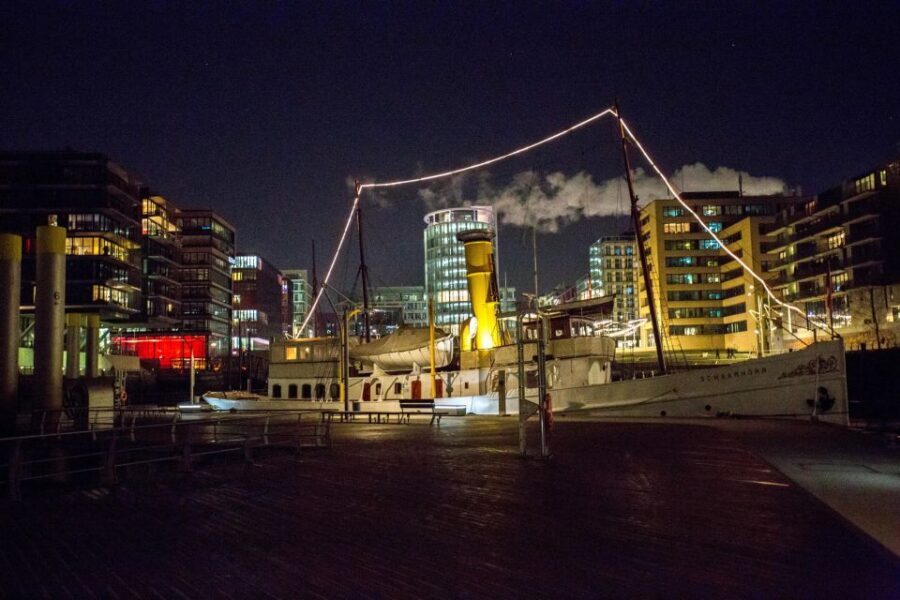
At Poggenmühlen Bridge, you get a short photo stop and a brief walk segment (around 5 minutes). Bridges like this are great for re-centering. After a block of dense warehouse details, you need one “breathing frame” to re-map where you are and how the canals open up.
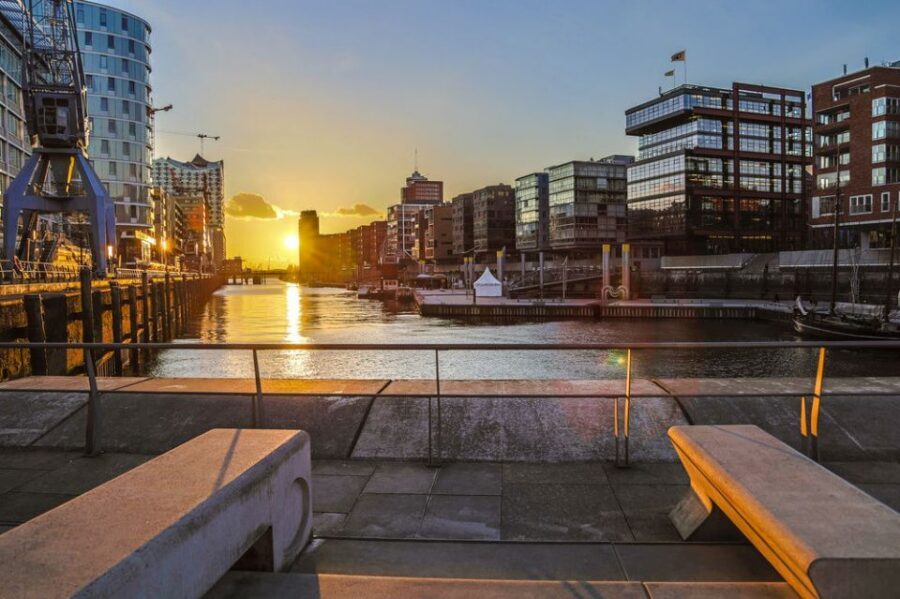
Then the tour prepares you for the shift into HafenCity, Hamburg’s modern face. HafenCity is a visual reset: newer architecture, wider spaces, and a different pace of daily life. The guide keeps the connection clear—historic harbor function on one side of the story, modern development on the other.
Along the way, you’ll hear insider knowledge about the Elbe Philharmonic Hall. You don’t need to be a concert-goer to appreciate the stories. The Elbphilharmonie area often becomes a symbol of Hamburg’s modern ambition, and having context helps it feel less like a landmark you saw and more like a decision the city made.
Finishing at Chilehaus: when the route lands on an icon
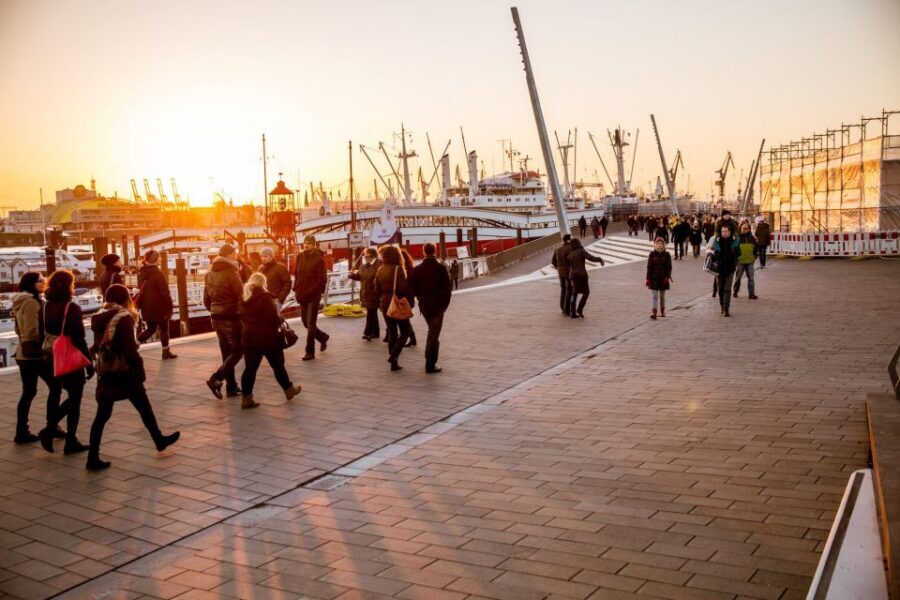
The tour ends at Chilehaus in the Kontorhaus district. It’s a world-famous finish, and it’s the right kind of ending: you’ve spent two hours learning how Hamburg’s wealth and logistics were built on water and storage, then you close the loop at a landmark tied to office-era ambition.
The best part about a finish like this is how it helps your memory. You’re not ending with another “random street scene.” You’re ending with a recognizable anchor point that you can return to later for photos, coffee, or a casual self-guided walk around the area.
If you want an easy next step, use the Chilehaus finish as your launchpad: linger outside, take a final round of pictures, then head toward nearby central streets on your own.
Pace, weather, and how to enjoy it without rushing
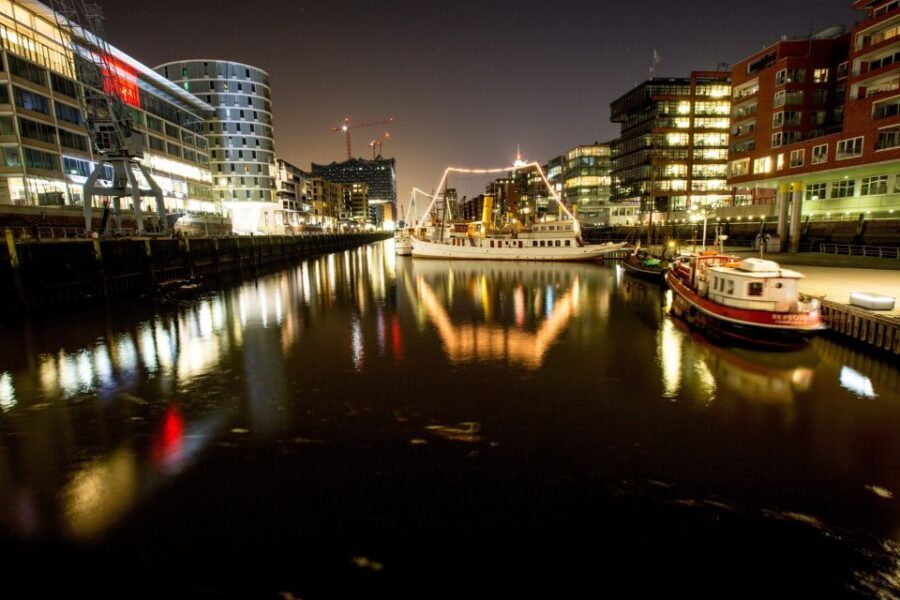
This is a 2-hour walking tour, and the schedule uses lots of short photo-and-guide segments. That structure keeps it energetic, but it also means you’ll never feel like you have time to wander off.
Winter can be a factor. One of the standout notes from recent experiences is that guides keep things fun even in bitter cold, with a pace that still feels manageable. Still, don’t count on indoor warmth, because this is not a boat ride and not a museum loop.
Wear shoes you trust on uneven outdoor surfaces. Bring a hat or hood if it’s windy. If rain is possible, a light rain layer beats carrying an umbrella around.
Price and value: what $282 per group buys you
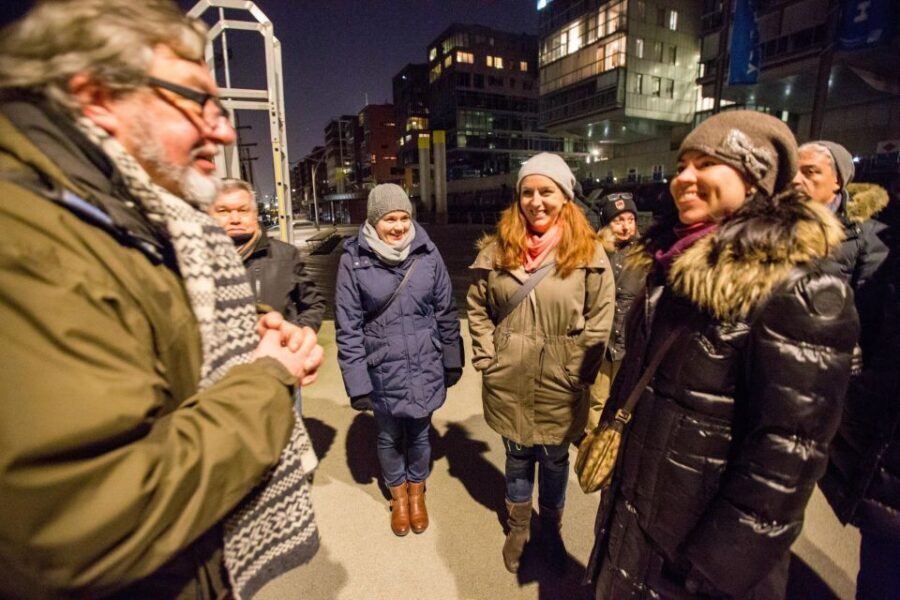
The price is $282 per group up to 10, which is the big value angle here. That makes the math friendlier for small groups—two to four people can effectively share the cost and still get a live guide through both Speicherstadt and HafenCity in just two hours.
What you’re paying for is not entry fees. The tour includes the guided tour of Speicherstadt and HafenCity and a live guide, while entry to attractions is not included. So think of this as an information-and-route experience: the guide helps you see what you’d otherwise miss, especially in a place as interconnected as Speicherstadt.
Because there are so many distinct motifs along the way—Wasserschloss, Fleetschlösschen, town hall neo-Gothic details, and the Elbe Philharmonic stories—the guide’s interpretation is the main “ticket value.” You’re not just collecting sights. You’re learning how the district fits together.
If you choose the private group option, you can also get English language service (the public tour is German-only). That can be a big quality upgrade if you want the stories in your own language.
Who this tour fits best (and who should skip it)
This is ideal for you if:
- You’re in Hamburg for a short time and want Speicherstadt + HafenCity in one hit
- You like architecture and landmark photos, but you also want the “why” behind them
- You want trade-themed storytelling—coffee, tea, and oriental carpets—tied to the real places
It may not be ideal if:
- You hate walking or you’re expecting lots of indoor time
- You want entry into specific buildings during the tour (that’s not included)
- You only want English and plan to book the public departure (public runs German-only)
The guide quality is the real differentiator
The happiest part of this tour experience is how the guides work the group. Names that have come up include Stefan, Mikel/Mikkel, and André—and the consistent theme is that they make the district feel understandable fast, with interesting facts and entertaining anecdotes.
I like that the guide approach isn’t stiff. In several accounts, guides answer questions and adjust pacing when people are curious. One experience even ran a little longer because the group was asking for more, which is exactly what you want from a live walking guide.
That flexibility is a practical benefit. You get a plan, but you also get room to ask what you noticed—like why certain buildings look castle-like or what a specific canal crossing is all about.
Should you book this Hamburg Speicherstadt and HafenCity tour?
Book it if you want a guided route that connects UNESCO Speicherstadt’s trading past to modern HafenCity, with recognizable photo stops like Wasserschloss and Fleetschlösschen and a satisfying finish at Chilehaus. For most first-time visitors, it’s an efficient way to learn what you’re seeing and avoid wandering in circles.
Skip it if you’re hoping for a boat ride, heavy indoor time, or scheduled entry into attractions. And if English is a must, treat the public departure as a language mismatch—choose the private option instead.
If you’re unsure, use this rule: if you like walking tours where the guide turns landmarks into stories, this one fits your style.
FAQ
Is this tour a boat ride?
No. This is a walking tour through Speicherstadt and HafenCity.
How long is the tour?
The duration is 2 hours.
Where do I meet the guide?
Meet at Baumwall subway station, Kehrwiederspitze exit, at the bottom of the stairs in front of the kiosk named Back Shop under the railway bridge.
What languages are available?
The tour is available in German and English. The public tour is only available in German, while a private tour can be booked in English.
Is entry to attractions included?
No. Entry to attractions is not included.
What’s the group size for the price?
The price is $282 per group up to 10. A minimum of 2 participants is required.