REVIEW · HAMBURG
Hamburg Old Town on foot – the guided tour with heart
Book on GetYourGuide →Operated by Best Hamburg Tours · Bookable on GetYourGuide
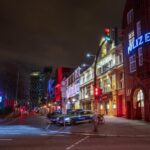
Hamburg’s history walks right alongside you. This 2-hour guided walk links merchant power and music-city modernity, starting at the city’s Town Hall area and ending near the Elbphilharmonie. You’ll move through classic old-town sights, plus the warehouse-and-trade streets of Speicherstadt, with a guide who keeps the details human and easy to follow.
Two things I really like: first, the route is paced for real sightseeing at street level, including a town model at Rathausmarkt so you quickly understand where everything sits. Second, the tour doesn’t treat landmarks like postcards; it explains what they meant for the Hanseatic era and later Hamburg growth. One consideration: you do need to be a good walker, and the whole experience runs in all weather.
If the sky is gray, that’s fine. Hamburg is moody, and the tour is designed for outdoor conditions, so plan on weatherproof layers. You’ll cover about 2.5 km total, so it’s short enough for most schedules but long enough to feel like you actually walked through Hamburg’s “story map.”
In This Review
- Key highlights worth your attention
- From Rathausmarkt to Rathausdiele: get your bearings fast
- Hamburg’s Town Hall and the merchants’ authority
- Chamber of Commerce and St. Nikolai: power and consequence in the skyline
- Willy-Brandt-Straße to Deichstraße: 500 years of Hanseatic architecture
- Speicherstadt: tea, coffee, and oriental carpets in the warehouse world
- HafenCity and the Elbphilharmonie: where old trade becomes music city
- How long is it, and what’s the walking effort really like?
- Price and value: what $33 buys you
- What kind of traveler should book this?
- Should you book the Hamburg Old Town on foot tour?
- FAQ
- How long is the walking tour?
- Where does the tour start?
- How much does it cost?
- What languages is the guide available in?
- Is food or drinks included?
- Are HVV public transportation tickets included?
- What should I bring?
- Is the tour wheelchair accessible?
- What if I want a panoramic view at the Elbphilharmonie?
Key highlights worth your attention
- Rathausmarkt start with a city overview so the streets make sense fast
- Historic Town Hall with imperial statues and a 112 m tower
- St. Nikolai memorial and its skyline-legend of once being the tallest building in the world
- Chamber of Commerce and the stock exchange dating back to 1558
- Speicherstadt stop with stories tied to tea, coffee, and oriental carpets
- Elbphilharmonie arrival where Hamburg’s merchant roots meet today’s music identity
From Rathausmarkt to Rathausdiele: get your bearings fast
The tour kicks off at Hamburg City Hall, right by the main entrance on Rathausmarkt 1. Before you even hit the big façades, you start with an overview using the city model on Rathausmarkt. That’s the smart move here. Hamburg’s old core can look like one long list of impressive buildings, but the model helps you understand the logic of the streets and the river-facing orientation.
Next you head into the Rathausdiele, the grand interior area connected to the Town Hall complex. This is where you start seeing how civic power was displayed, not just how it was governed. Even if you’re not a museum person, the scale and the positioning help you read the buildings like part of a system. You’ll also get context on the founders and early city structure, which sets up the rest of the walk.
There’s a lot to see around Rathausmarkt, and that’s intentional. The early stops help you settle into the “Hamburg way” of viewing history: practical, trade-focused, and always tied to the city’s waterfront reality.
Other walking tours we've reviewed in Hamburg


Hamburg’s Town Hall and the merchants’ authority
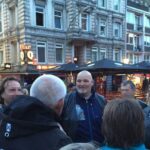
A major stop is the historic town hall, including its impressive 112 m tower and imperial statues. Don’t rush past the symbolism. In Hamburg’s story, civic buildings weren’t just administrative. They were a public declaration of status—built to last and built to be seen.
From there, you follow the thread of city founders and merchant tradition. You’ll stroll through the area where old trading influence still shows up in the street character and the way buildings face the square and the routes traders used. This is one of those sections where a guide matters. You’re walking past structures that can look similar at first glance, but the explanations help you understand what was happening economically and why those places mattered.
Chamber of Commerce and St. Nikolai: power and consequence in the skyline
One of the most interesting stops is the historic Chamber of Commerce, which is tied to Germany’s oldest still-active stock exchange, dating back to 1558. You don’t need a finance background. The tour frames it as a trade machine: people, timing, networks, and the confidence to keep markets running over centuries. That perspective makes the building feel less like a relic and more like a working part of the city’s identity.
From business, the tour shifts to reflection at St. Nikolai memorial. This stop lands with emotional weight because it points to a church that once held a world record in height. You’ll learn why it was so prominent, and what its former role meant for the people who depended on the church as part of the city’s daily rhythm.
The practical value here is skyline literacy. Once you’ve heard what St. Nikolai represented, you’ll start noticing how Hamburg’s skyline “talks” through heights, locations, and silhouettes. It’s the kind of mental model that makes future photos and walks more rewarding.
Willy-Brandt-Straße to Deichstraße: 500 years of Hanseatic architecture
Next comes a change of tempo: you move along Willy-Brandt-Straße and then into Deichstraße, where the tour frames the walk as a journey through 500 years of Hanseatic architecture. This is the section where Hamburg feels most like an “old street city” rather than a set of single monuments.
Deichstraße isn’t only pretty. It’s about continuity. You’re seeing how the Hanseatic era shaped street lines, building presence, and the way architecture carries economic life. Even if the buildings are weathered or partially obscured by street activity, the guide helps you interpret what you’re looking at.
If you’re the type who loves architecture, you’ll enjoy this part most. If you’re more into stories than façades, you’ll still get a strong payoff because the explanations connect the architecture to trade, storage, and city planning logic.
Speicherstadt: tea, coffee, and oriental carpets in the warehouse world
After the Hanseatic street section, you detour through Speicherstadt, the warehouse district. This is where the tour gets very tangible. The guide talks about tea, coffee, and oriental carpets, which turns the area from an attractive canalside photo stop into a trade-history lesson.
Speicherstadt is built for storage and movement, so you get a feel for how goods flowed and why that mattered to Hamburg’s growth. The tour approach here is a good match for the district: instead of only pointing at architecture, the guide ties buildings to what went on inside them.
One consideration: this section can feel a bit more “thematic” than monument-focused. If you want only the biggest sights and shortest walks, you might find it slightly more educational than cinematic. But if you like your city history with real-world details, this is one of the most memorable segments.
Other guided tours in Hamburg





HafenCity and the Elbphilharmonie: where old trade becomes music city
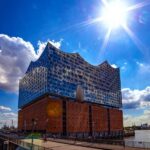
Then it’s time for the contrast. You head into HafenCity, Hamburg’s newer quarter, and the highlight is the Elbphilharmonie. This is the move from merchant tradition to music-city identity, and it works because the tour has already built that context earlier.
You’ll learn why the Elbphilharmonie matters beyond its looks, and you get a strong sense of how Hamburg rebranded itself while still carrying forward its port and trade DNA. Even if you’re not attending a concert, the exterior presence and location make it one of those landmarks you’ll want in your photos and in your mental map.
If you like views, there’s an option to book an Elbphilharmonie Plaza guided tour for a panoramic perspective. That’s a smart add-on if you’re already thinking about skyline photos or simply want the building story plus a view angle.
How long is it, and what’s the walking effort really like?
The tour runs for 2 hours and covers about 2.5 km, so it’s manageable for a lot of people with decent mobility. The route is wheelchair accessible as well, which is a big plus if you need a more supported pacing.
You’ll spend time at each stop with a mix of photo moments and guided explanation. The total walking feels steady, not rushed, and the stop structure helps you avoid the classic problem of walking tours where you’re always moving but never looking.
If you’re the kind of person who stops for photos every few minutes, you’ll still be okay. Just be sure your shoes match real weather. Hamburg’s conditions can shift quickly, and the tour takes place in all weathers, including rougher days.
Price and value: what $33 buys you
At $33 per person for a 2-hour guided walk, the value comes from three places: the guide, the structure, and the connections between locations.
First, you’re paying for an experienced guide, not just movement from one landmark to another. Second, the route is built with “story logic”—Town Hall to trade to a memorial to Hanseatic streets, then warehouse district to modern waterfront identity. Third, you get practical context that makes the buildings easier to read after the tour, which is usually where walking tours earn their keep.
Food isn’t included, and that’s normal for a short tour like this. If you want a proper meal, plan it after you finish near the Elbphilharmonie area, once you’ve had your fill of explanations and photos.
What kind of traveler should book this?
This tour is a great fit if you:
- want an organized way to see Hamburg’s old core in a short window
- like history told through trade, architecture, and city purpose
- prefer walking with small-group/private options (when available)
- want a bridge from classic Hamburg (Town Hall, St. Nikolai) to today’s landmark culture (Elbphilharmonie)
It may not be your best choice if you’re chasing only the biggest must-see interiors or you dislike walking in open weather. But if you like city texture—street by street—this one makes sense.
Should you book the Hamburg Old Town on foot tour?
Yes, if you want a guided walk that turns landmarks into a coherent story. The strongest part is how the tour connects civic power, trade institutions, and architecture to Hamburg’s later reinvention. The route hits the big names—Town Hall, St. Nikolai, Speicherstadt, and the Elbphilharmonie—while still giving you enough detail to remember what each stop meant.
If you’re deciding between doing it on your own or with a guide, I’d pick the guided version. The information and pacing are built for street-level understanding, and the walk is short enough to fit into a first or second day in the city without turning into a marathon.
FAQ
How long is the walking tour?
The tour lasts about 2 hours, with a total walking distance of roughly 2.5 km.
Where does the tour start?
You meet in front of the main entrance of Hamburg City Hall at Rathausmarkt 1.
How much does it cost?
The price is $33 per person.
What languages is the guide available in?
The live guide speaks English and German.
Is food or drinks included?
No. Food and drinks are not included.
Are HVV public transportation tickets included?
No. HVV tickets/public transport are not included.
What should I bring?
Wear weather-appropriate clothing. Hamburg weather can change fast, and the tour runs in all weather.
Is the tour wheelchair accessible?
Yes, it is wheelchair accessible.
What if I want a panoramic view at the Elbphilharmonie?
If you’d like a panoramic perspective, you can book an Elbphilharmonie Plaza guided tour.