REVIEW · HAMBURG
UNESCO World Heritage – Speicherstadt and Kontorhaus district
Book on Viator →Operated by Stattreisen Hamburg e.V. · Bookable on Viator
Hamburg’s office palaces have real secrets. This 2-hour UNESCO walk through the Speicherstadt and Kontorhaus district uses free stops and points out what you’d miss on your own. I especially like the chance to see weekday staircases inside 1920s office buildings.
Chilehaus is the other big reason to go: you’ll connect its famous brick form to the work of Fritz Höger, nicknamed Klinkersticker for his filigree brick details. You also get a practical way to understand why these buildings mattered to the Hanseatic city.
One watch-out: Hamburg streets can be loud, and you may struggle to hear the guide at times. A microphone isn’t guaranteed, so if audio is important to you, plan to stand where you can hear.
In This Review
- Key highlights worth your time
- UNESCO Speicherstadt and Kontorhaus: what this walk really teaches
- Price and value: $21.34 for 2 hours of “see it, then understand it”
- Timing and getting there: a 3:00 pm start that fits a tight day
- Sprinkenhof: the big office building with courtyards you can read
- Chilehaus and Fritz Höger’s Klinkersticker style
- Messberghof and the round staircase: design plus a hard lesson
- Internationales Maritimes Museum Hamburg: seeing it without entry
- How to get the most from a small group (and noisy streets)
- Weekday vs weekend: staircases are the deciding factor
- Who should book this UNESCO architecture walk?
- Should you book this tour of Speicherstadt and Kontorhaus?
- FAQ
- What is the duration of the UNESCO Speicherstadt and Kontorhaus tour?
- How much does the tour cost per person?
- Where does the tour start and end?
- What time does the tour begin?
- Can I use a mobile ticket?
- Are the staircases inside the office buildings included?
- Which stops are free, and is the maritime museum included?
- Is free cancellation available?
- Is there a maximum group size?
Key highlights worth your time
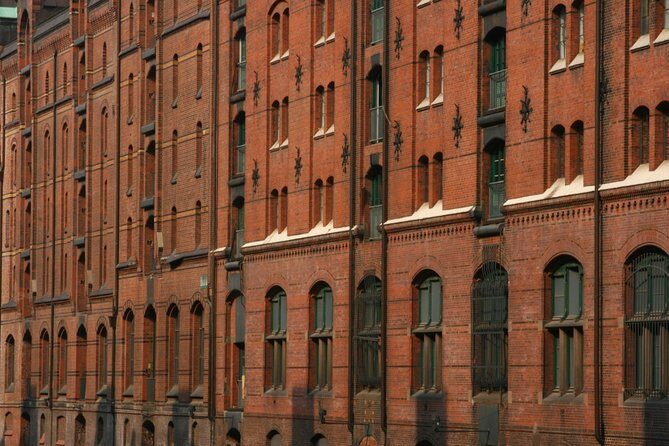
- UNESCO context that makes Speicherstadt and the Kontorhaus district click fast
- Sprinkenhof: large courtyards, staircases, and facades you can actually study
- Chilehaus: Fritz Höger and the ship-like brick silhouette tied to Kontorhaus life
- Messberghof: a round staircase plus a frank look at its role in National Socialism
- Weekday-only access to staircases in 1920s office buildings
- Small group (max 25), which helps you ask questions while you walk
UNESCO Speicherstadt and Kontorhaus: what this walk really teaches
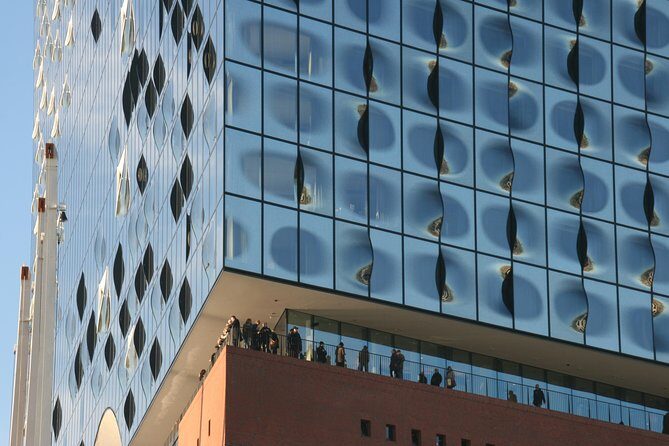
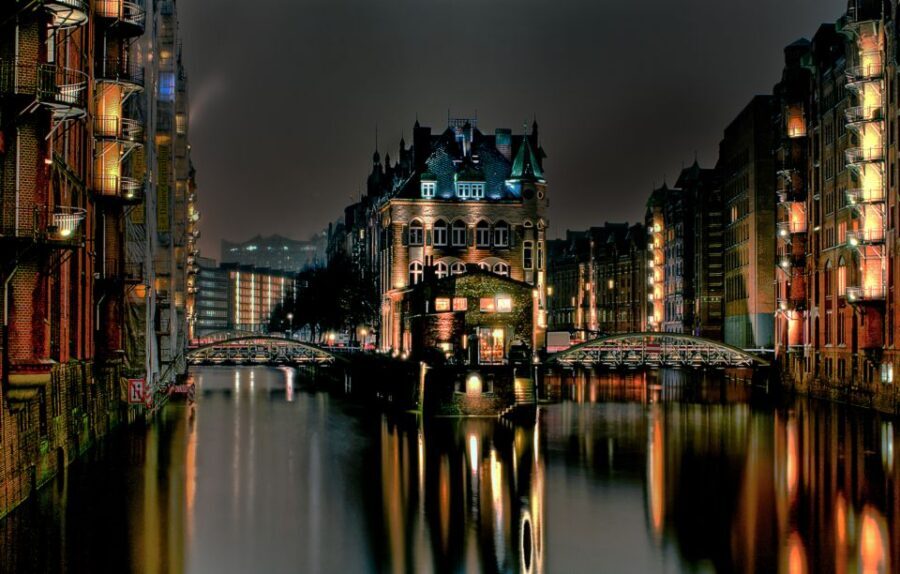
UNESCO doesn’t award sites just because buildings are old. In Hamburg’s case, the reason is how the city worked—trade, shipping, and business—made visible in brick, steel, and planed-out streets.
This tour works because it teaches you how to read the Kontorhaus district like a functioning system. You’re not just looking at pretty facades. You learn why certain buildings were built around courtyards and staircases, how they supported office life, and how the Hanseatic economy shaped the look of the city. If you like architectural details, the explanations give you a way to see them with fresh eyes after the fact.
I also like that the route is built around a few signature addresses. Instead of a long march of random stops, you get concentrated time in places that represent the district’s story. That keeps the walk focused and makes the UNESCO label feel earned rather than abstract.
Other harbor and port cruises in Hamburg



Price and value: $21.34 for 2 hours of “see it, then understand it”
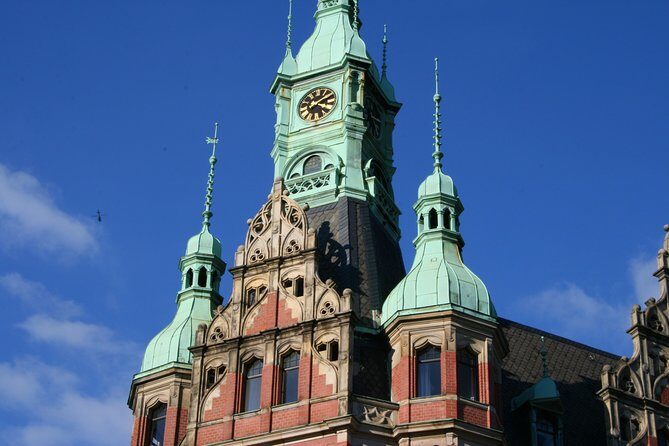
At $21.34 per person for about 2 hours, you’re paying mostly for interpretation—not for a stack of paid admissions. The stops you’ll make are listed as free entries at Sprinkenhof, Chilehaus, and Messberghof, while the Internationales Maritimes Museum Hamburg is viewed from the outside and not included.
That matters because it turns the price into “guidance value.” You’re getting help noticing things like how staircases are designed, how courtyards are framed, and why particular architectural choices made everyday work easier. If you’ve ever spent time in Europe reading plaques while everyone else moves on, this style of tour is a better use of your limited time in Hamburg.
Also, you’re not stuck with a huge crowd. The group maximum is 25, which is still big enough to feel lively, but small enough for the guide to keep your bearings.
If you’re comparing options, the best way to think about the cost is this: you’re paying to learn how to look at the Speicherstadt and Kontorhaus district properly. That’s hard to replicate from a map alone.
Timing and getting there: a 3:00 pm start that fits a tight day
The tour starts at 3:00 pm and meets at Jakobikirchhof 8, 20095 Hamburg. It ends at International Maritime Museum Hamburg, Koreastraße 1, 20457 Hamburg.
You’ll be on foot and moving between districts on an afternoon schedule, so plan this as a “later-day anchor.” It pairs well with an earlier museum or harbor area visit, because by the time you reach these office-building addresses, you already have a feel for Hamburg’s waterfront identity.
Logistically, you’re also set up for an easy arrival: it’s near public transportation, and the tour uses a mobile ticket. Service animals are allowed, and the walk is described as suitable for most travelers.
Sprinkenhof: the big office building with courtyards you can read
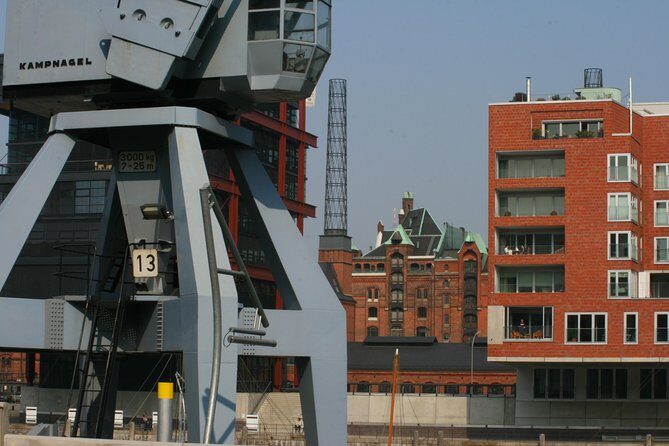
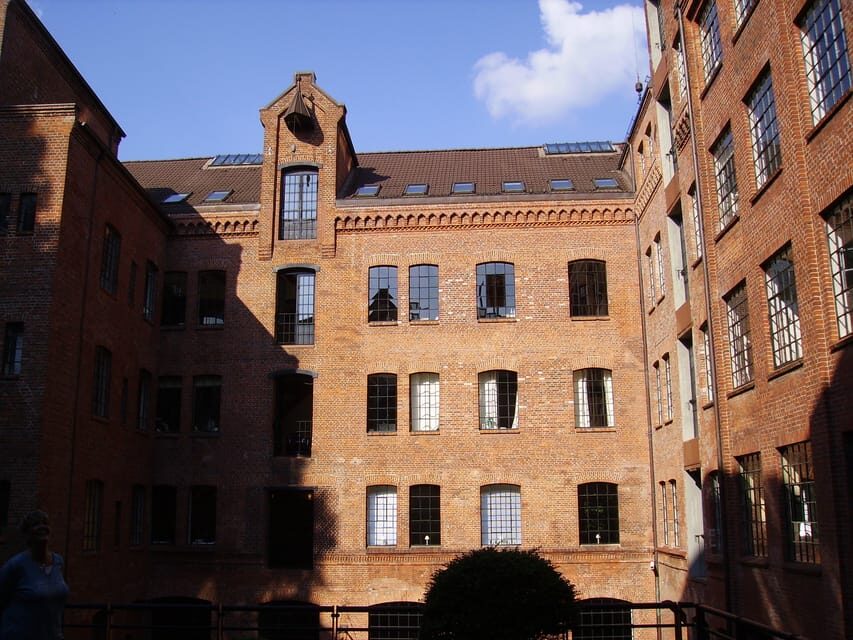
Sprinkenhof is the opening stop, and it’s a strong choice. This is described as the largest office building in the area, and the real payoff is that you’re not just passing by. You get time to look closely at the courtyards, staircases, and facades.
Here’s what to focus on during your visit:
- Courtyards: Notice how the building is organized around open space. That tells you how these offices worked—light, air, movement, and how people were separated into practical flows.
- Staircases: Even if you only catch a glimpse, stair design in these buildings is the storytelling tool. It shows what the architects expected daily life to look like.
- Facades: The outer “face” is doing business too. It’s the public signal of a private commercial world.
One key consideration: the tour mentions that the “breathtaking staircases” of the office buildings from the 1920s are only possible on weekdays. If Sprinkenhof stair access is on your must-see list, choose a weekday date.
If you’re short on time, Sprinkenhof is also where you’ll get the most “visual vocabulary” for the rest of the tour. After it, Chilehaus and Messberghof won’t feel like random landmarks. They’ll feel like variations on the same office-city idea.
Chilehaus and Fritz Höger’s Klinkersticker style
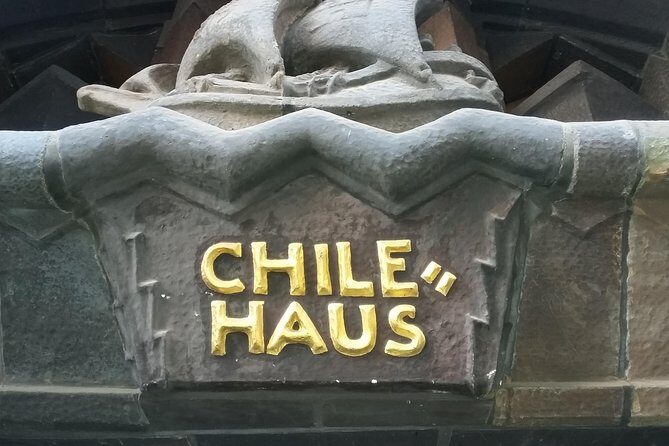
Chilehaus is the stop people bring up later. It’s world-famous and for good reason: it’s a Kontorhaus with a striking top, built in brick by Fritz Höger—a nickname linked to his detailed brickwork, Klinkersticker.
When you arrive, don’t just scan the building from the street. Take your time with how the brick surfaces are shaped and patterned. The building’s character comes from the precision in the material work as much as the silhouette.
Also, Chilehaus is where the tour’s UNESCO angle becomes more tangible. There’s a World Heritage Centre located at the iconic Chilehaus, and it’s described as a useful starting point with lots of offerings. Even if you only use it briefly, you’ll be able to connect what you saw on the walk to deeper context—so you leave with more than a photo.
A practical tip: if you care about best viewing angles, arrive with your phone camera ready, but also keep one eye on the guide’s suggested viewpoints. This stop is the type where you can easily miss the “shape” if you’re only reading details up close.
Other Speicherstadt and HafenCity tours in Hamburg



Messberghof and the round staircase: design plus a hard lesson
Messberghof is another Kontorhaus stop, and the standout feature is the round staircase. A circular stairwell is more than an architectural flourish. It often signals a building designed for human movement—efficient circulation, a sense of order, and a recognizable internal landmark.
But Messberghof also carries a difficult layer. The tour description notes a “turbulent history” connected to National Socialism in Germany. This is important context, and it changes how you look at the building. Instead of treating the staircase as only a design object, you’re prompted to think about what kinds of institutions and systems used these spaces and how architecture can be repurposed.
How to make this part feel meaningful without getting lost:
- Look at the staircase form first, then let the historical context color your interpretation.
- If the guide mentions specific turning points, take notes. Even one or two details help you connect this building to the larger timeline of the city and country.
This stop is ideal if you prefer history that’s grounded in the physical reality of a place—not only dates on a board.
Internationales Maritimes Museum Hamburg: seeing it without entry
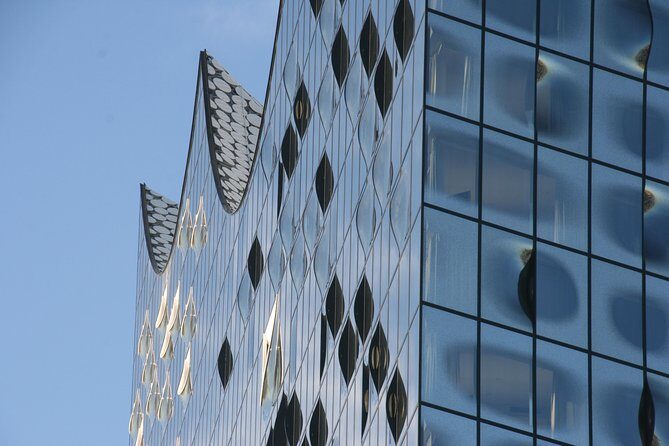
You’ll only view the Internationales Maritimes Museum Hamburg from the outside, and admission isn’t included. That might sound like a letdown until you remember what this tour is doing: it’s an architecture and district story first, not a museum ticket event.
Still, the outside view can be worthwhile because it gives you a clean endpoint to the walk. You finish at Koreastraße 1, right near a major maritime landmark, which quietly ties back to why Hamburg’s commercial buildings matter at all.
If you want more depth after the walk, you could use the museum as your next stop. Just know you’re not paying for that entry as part of the tour.
How to get the most from a small group (and noisy streets)
This is a walking tour with a max of 25 people. That size helps, but Hamburg also has street noise—especially around major sights and corners. One negative experience shared by a guest points to difficulty hearing the guide because of the soundscape and a lack of mic equipment.
So here’s what you should do:
- Position yourself where the guide’s voice carries best. Don’t assume standing at the back is fine.
- If you know you’ll struggle in noisy environments, this is the time to plan for it—ear protection can help some people, and closer placement helps everyone.
On the plus side, the pace seems to work well. Multiple experiences describe the timing as staying on track and the guide leading with clarity.
If you’re the type who likes to ask questions, this tour can be a good setup. With a group this size, it’s easier for the guide to respond rather than speed past everyone.
Weekday vs weekend: staircases are the deciding factor
If you do just one thing to choose the right day, choose the right day of the week. The tour description states that the “breathtaking staircases” inside the 1920s office buildings are only possible on weekdays.
That affects your planning in a simple way:
- If you want interior staircase access, book a weekday.
- If you’re going mostly for architecture exteriors and district storytelling, a weekend visit can still be rewarding, but you should lower expectations for interior access.
This is one of those travel details that changes the entire experience, so don’t treat it as optional.
Who should book this UNESCO architecture walk?
You’ll likely enjoy this most if you:
- love architecture that’s functional, not just decorative
- want a guided way to understand UNESCO sites in a short time
- are curious about the Kontorhaus era and how trade shaped city design
- appreciate historical context that doesn’t skip the uncomfortable parts (especially at Messberghof)
It also fits well if you want a “walk plus meaning” tour rather than a bus ride with quick stops. The building sequence is tight enough that you can connect each place to the next.
On the other hand, if you strongly rely on audio clarity, or you’re sensitive to noisy environments, plan to stand where you can hear. The tour seems to work great for most people, but hearing is the one area you should consider before you commit.
Should you book this tour of Speicherstadt and Kontorhaus?
Yes, I think you should book it—if your goal is to understand Hamburg’s UNESCO office-city story in a couple hours.
Book it especially if:
- you can do a weekday and want access to the 1920s staircases
- you want to see major Kontorhaus addresses like Sprinkenhof and Chilehaus with guided interpretation
- you like tours that explain why buildings look the way they do, not just what they’re called
Skip it or adjust expectations if:
- hearing the guide clearly is a top priority for you, because Hamburg streets can make audio tougher and a microphone isn’t guaranteed
- you prefer deep museum time, because this is primarily a district walk with one museum view from the outside
If you go in with those expectations, you’ll come away with the kind of architectural understanding that makes future walks through Hamburg feel smarter.
FAQ
What is the duration of the UNESCO Speicherstadt and Kontorhaus tour?
It lasts about 2 hours.
How much does the tour cost per person?
The price is $21.34 per person.
Where does the tour start and end?
It starts at Jakobikirchhof 8, 20095 Hamburg, Germany and ends at International Maritime Museum Hamburg, Koreastraße 1, 20457 Hamburg, Germany.
What time does the tour begin?
The start time is 3:00 pm.
Can I use a mobile ticket?
Yes, it’s listed as a mobile ticket experience.
Are the staircases inside the office buildings included?
Staircase access inside office buildings from the 1920s is only possible on weekdays.
Which stops are free, and is the maritime museum included?
Sprinkenhof, Chilehaus, and Messberghof are listed with free admission tickets. The Internationales Maritimes Museum Hamburg is only viewed from the outside and admission is not included.
Is free cancellation available?
Yes. You can cancel for a full refund up to 24 hours before the start time.
Is there a maximum group size?
Yes, the tour has a maximum of 25 travelers.