REVIEW · HAMBURG
Hamburg: Mysterious Stairwells Guided Walking Tour
Book on GetYourGuide →Operated by DIE STADTSPÜRER® · Bookable on GetYourGuide
Hamburg’s stairwells have secrets. This guided walking tour takes you behind the facades of the Kontorhaus trading houses and into the merchant Mercury world inside. You’ll follow the route from the Nikolai Memorial toward Gänsemarkt, with a guide who helps you read the mysterious symbols you see along the way.
I particularly like how the tour turns famous Hamburg landmarks into a second story: you don’t just look at the exteriors, you get a more mystical angle on what made the city powerful. The other big win for me is the focus on tolle Treppenhäuser-style interior details, with enough explanation to make those spaces feel meaningful rather than random.
One thing to plan for: this tour is not suitable for wheelchair users, so if mobility is an issue, you’ll want to look for an alternative route or another format.
In This Review
- Key highlights to expect
- Why Hamburg’s Kontorhaus stairwells feel like secret museums
- The route that stitches the whole story together (Nikolai Memorial to Gänsemarkt)
- Entering the 19th-century trading houses: Mercury symbols and the inside story
- Stairwells that you’ll actually want to photograph
- Speicherstadt, Michel, and Elbphilharmonie—seen through an interior lens
- What the guide does (and how the tour stays fun for 2 hours)
- Price and value: does $35 make sense for a 2-hour stairwell walk?
- Best for: who will love this Kontorhaus stairwell experience
- A quick practical checklist before you go
- Should you book Hamburg’s Mysterious Stairwells tour?
- FAQ
- Where is the meeting point for the tour?
- How can I identify the guide?
- How long is the tour?
- What is the price per person?
- What language is the tour in?
- What is the route of the walk?
- What do you actually do during the tour?
- Which landmarks are part of the experience?
- What’s included in the tour price?
- Is the tour wheelchair-friendly, and can I cancel?
Key highlights to expect
- Secret stairwells inside Kontorhaus buildings you can’t really notice from the street
- Symbols decoded with stories that connect ornament to Hamburg’s trading era
- A walk from Nikolai Memorial to Gänsemarkt, through the city center’s historic core
- Photo-friendly interiors that beat standard façade sightseeing
- A guide you can spot easily: blue Stadtspürer bag with the golden Mystix logo
- 19th-century trading-house atmosphere, with story tone shifts that add drama
Why Hamburg’s Kontorhaus stairwells feel like secret museums
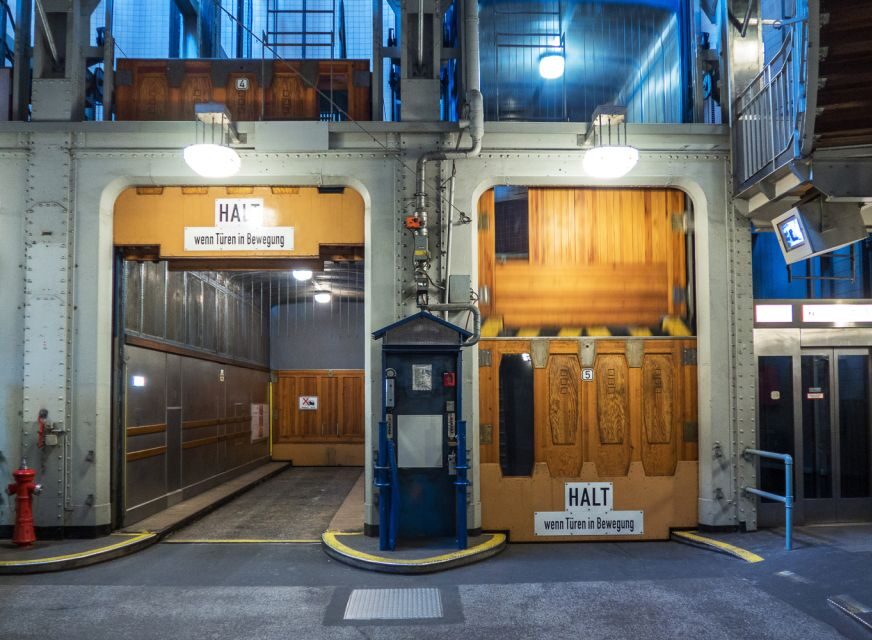
Hamburg looks impressive from the outside. But the whole point of this tour is that the real “wow” is often hidden behind doors—especially the stairwells inside the Kontorhaus buildings.
These stairwells weren’t built as quiet back-of-house spaces. They were part of the merchants’ world: decorative, symbolic, and meant to signal status. The tour leans into that idea, framing the interiors almost like cathedrals for commerce, tied to the merchant god Mercury. Even if you’re not a hardcore architecture person, the guide’s explanations make you see details you’d normally miss.
You’ll also get a sense of how Hamburg’s trading power shaped everyday space. A staircase becomes more than a way to move up and down; it becomes a message about money, trade, and identity in the city center.
Other walking tours we've reviewed in Hamburg



The route that stitches the whole story together (Nikolai Memorial to Gänsemarkt)
The walk connects two strong anchors: you start around the Nikolai Memorial and finish at Gänsemarkt. That matters because you’re not wandering aimlessly—you’re moving through the same historic city core merchants once cared about most.
Along the way, you’ll encounter major Hamburg landmarks in context: Speicherstadt, Michel, and Elbphilharmonie show up as part of the big-city skyline, but the tour’s “main character” remains the interior of older trading houses.
What I like about this structure is that you get variety in a short time. Exteriors give you orientation, while stairwell visits give you the deeper pay-off. If you’re the kind of traveler who gets a bit bored by pure sightseeing, this format keeps your attention because every few minutes you’re switching from streetscape to storytelling to close-up details.
Entering the 19th-century trading houses: Mercury symbols and the inside story
This is a stairwell tour, but it’s not just about old stone and pretty banisters. The heart of it is understanding what you’re looking at.
The Kontorhaus interiors were designed by leading merchants who poured care into their offices. The tour explains that the result is a unique interior world: spaces dedicated to Mercury, the merchant god, with mysterious symbols that carry meaning. You’ll learn how to spot and interpret those symbols so the decoration stops feeling random.
You’ll also get history and stories tied to Hamburg’s past eras. The tour describes the vibe as something like a time-hopping walk—sometimes with a mid-20th-century flavor, sometimes with the drama of Titanic-style storytelling. That doesn’t mean you’ll be watching movies or doing reenactments. It just means the guide uses tone to help you feel the shift between eras and the emotions tied to trade and city life.
For you, the practical takeaway is this: when the guide points out a motif or a symbol, lean in. Even if your German is only “good enough,” the visual explanations make it easier to follow. This kind of tour rewards curiosity.
Stairwells that you’ll actually want to photograph
If you’ve ever tried to photograph older interiors, you know the usual problems: dim light, awkward angles, rules about tripods. This tour’s payoff is that the stops are chosen so you have a reason to look upward and close.
The “tolle Treppenhäuser” praise in the feedback matches the core idea: stairwells in these buildings have distinctive design, and the tour uses that. You’ll likely spend real time stopping at key points rather than sprinting from one exterior to the next.
Bring your camera mindset, not your museum-slow-stroll mindset. The best photos usually come from simple angles: one step back to capture the stair geometry, then a second shot that isolates the most interesting symbol or detail. If you’re with a friend, one person can watch the guide while the other takes a quick framing test.
And yes, the photo factor is real here—this is one of the best types of walking tours for getting pictures that feel different from the standard Hamburg postcard shots.
Speicherstadt, Michel, and Elbphilharmonie—seen through an interior lens
Hamburg has major headline buildings. But it can be hard to connect them without understanding what made the city rich in the first place.
That’s why I like that this walk includes big landmarks as reference points while your primary focus stays on the Kontorhaus stairwells. Passing by places like Speicherstadt helps you ground the story in geography—trade city, warehouse city, merchant city. Seeing Michel and Elbphilharmonie in the broader urban setting helps you remember that today’s Hamburg sits on top of that older commercial power.
The “mystical angle” promised in the tour description works because it changes your perspective. Instead of treating landmarks as isolated architecture, you start seeing them as part of the same city engine: money, logistics, status, and style.
Other German-language tours in Hamburg





What the guide does (and how the tour stays fun for 2 hours)
The tour is led live by a German-speaking guide. You’ll get a walking tour format, but the experience isn’t just a lecture on sidewalks. The guide’s job is to make interior details legible: where to look, what symbols mean, and how stairwells connect to the story of trading houses.
There’s also a practical advantage: the guide is easy to identify. Look for the blue Stadtspürer bag with the golden Mystix logo at the meeting point.
Even with only two hours, the tour tries to pack in a lot of meaning by keeping each stop focused. That’s why it fits well for travelers who love architecture specialties but don’t want a half-day of pure museum pacing.
If you’re the type who reads everything in guidebooks, you’ll probably enjoy the fact that the guide points out what matters visually, then adds just enough historical context to make it stick. If you prefer a slower, deeper history seminar, you may wish there were time for even more old-Hamburg context—but the structure is designed for momentum.
Price and value: does $35 make sense for a 2-hour stairwell walk?
At $35 per person for a 2-hour guided tour, this sits in the category of “short, focused, and worth paying for if it saves you effort.”
Here’s how to judge value for your trip:
- You’re paying for access to interiors. From the street, stairwells like these are invisible, and they aren’t the kind of thing you’d easily explore on your own without knowing where to go.
- You’re paying for interpretation. Symbols and ornament can look cool without meaning. The guide’s explanations are the difference between pretty and memorable.
- You’re paying for curation of time. Two hours means you’ll see highlights without spending half a day on planning and wandering.
So yes, the price can feel “tour-pricey,” but it’s justified by the interior focus. If your travel style is mostly exterior photo stops, then it might feel expensive. If your travel style includes architecture details and story-rich walking, it’s a good deal.
Also, it’s offered with reserve now & pay later and free cancellation up to 24 hours in advance, which gives you flexibility if your schedule is still moving around.
Best for: who will love this Kontorhaus stairwell experience
This tour is best when you fall into one (or more) of these groups:
- You love architectural specialties and want to see the design choices up close.
- You enjoy stories that connect symbols to real city history, not just dates and names.
- You want more than “stand here, take photo.” You want a guided reason to look upward.
- You’re traveling in the city center and want a compact experience that still feels distinct.
It’s also a strong fit for photographers who want interiors with character and visual details worth spending a minute on.
The one clear mismatch: if you need wheelchair access, this specific format won’t work based on the tour’s stated limitation.
A quick practical checklist before you go
This is a walking tour, and the experience depends on you being present at the stairwell stops. I’d go in with a simple plan:
- Wear shoes you can walk in for two hours.
- Bring a camera (even a phone with a steady hand), because the best views are often upward and inside.
- If you understand German only moderately, don’t stress. The visual focus plus guide interpretation still helps you follow what’s going on.
And one small tip: arrive a couple minutes early and head straight to the former main portal of St. Nikolai. The meeting point is at the former main portal, and the guide is identified by the blue Stadtspürer bag with the golden Mystix logo.
Should you book Hamburg’s Mysterious Stairwells tour?
If you want Hamburg in a way that feels personal—less postcard, more “how this city really worked”—book this. The stairwell focus is the magic: it turns hidden interiors into the main attraction, with Mercury symbolism and merchant-house stories that make the architecture feel human.
Don’t book it if you strongly prefer exterior-only sightseeing or if wheelchair access is required for your group. And if you crave extremely deep, hour-by-hour history, go in knowing two hours is a highlight reel. You’ll leave with a lot of visuals and context, but you won’t get an all-day historical lecture.
That said, for the combination of guided interior access, symbol reading, and a route anchored between Nikolai Memorial and Gänsemarkt, this is a smart way to spend a couple of hours in Hamburg’s city center.
FAQ
Where is the meeting point for the tour?
The meeting point is at the former main portal of St. Nikolai.
How can I identify the guide?
The guide can be identified by a blue Stadtspürer bag with the golden Mystix logo.
How long is the tour?
The tour lasts 2 hours.
What is the price per person?
The price is $35 per person.
What language is the tour in?
The tour is guided in German, with a live tour guide.
What is the route of the walk?
The walk goes from the Nikolai Memorial to Gänsemarkt.
What do you actually do during the tour?
You visit selected stairwells in historic Kontorhaus trading houses and get insights into the symbols and stories connected with Hamburg’s past.
Which landmarks are part of the experience?
Hamburg’s Speicherstadt, Michel, and Elbphilharmonie are mentioned as part of what you’ll encounter.
What’s included in the tour price?
Included are the walking tour, the guide, and a small souvenir.
Is the tour wheelchair-friendly, and can I cancel?
No, it is not suitable for wheelchair users. You can cancel up to 24 hours in advance for a full refund, and you can reserve now and pay later.