REVIEW · HAMBURG
Elbe Philharmonic Hall, HafenCity and Speicherstadt tour
Book on Viator →Operated by Jolly Tours · Bookable on Viator
Hamburg’s newest skyline meets its oldest warehouses. This HafenCity and Speicherstadt tour strings together major waterfront changes and UNESCO brickwork, with the Elbphilharmonie in view as a real sense-check of Hamburg today. It’s a focused walk, not a bus tour, so you move at human speed and actually connect the dots between old port power and new city life.
I love the small-group feel and the way guide Florian keeps the story clear and practical, with a positive, can-do attitude. With a maximum of 15 travelers, you get enough time to ask questions without feeling rushed. One thing to consider: it’s mostly exterior sightseeing in two hours, so if you want to go inside places like Miniatur Wunderland or the museums, you’ll likely need extra tickets and a bit more time.
In This Review
- Key things I’d mark on your mental map
- Meeting HafenCity From Überseequartier: How This Walk Starts
- HafenCity’s Waterfront Plan: From a Free Port to a 120,000-Person Day
- Kibbelstegbrücke: Storm-Surge Engineering You Can Actually See
- Magdeburger Hafen and the View-Tech Stops: HCU, Maritime Museum Lines, and Small Parks
- Sandtorhafen / Traditionsschiffhafen: Maritime Heritage, Right at the Water
- Speicherstadt Warehouses: UNESCO Brickwork and the Mini Stops That Make It Human
- Miniatur Wunderland (Optional, but a Big Draw)
- Fleetschlösschen, Spicy’s, and WASSERSCHLOSS: Small Stops With Character
- Elbphilharmonie: The Glass-Facade Landmark Built on Old Port Bones
- Kehrwieder and Überseebrücke: Finishing With Flood-Proof Footpaths and Old-Island Logic
- Price and Value: What $28.92 Really Buys You
- Should You Book This HafenCity + Speicherstadt + Elbphilharmonie Tour?
- FAQ
- How long is the HafenCity, Speicherstadt, and Elbphilharmonie tour?
- Where do I meet the guide?
- Is it a small-group tour?
- Do I need tickets for every stop?
- What time does the tour start?
- Is weather important?
Key things I’d mark on your mental map
- Überseequartier meetup makes it easy to start without hunting around
- HafenCity scale is mind-bending in numbers, and the guide turns it into a story you can picture
- Kibbelstegbrücke and dike logic show how Hamburg thinks about storm surges
- Sandtorhafen/Traditionsschiffhafen brings maritime heritage to the water’s edge
- Speicherstadt UNESCO brickwork is best seen slowly, with stops that explain what you’re looking at
- Elbphilharmonie from the port gives you the landmark without demanding concert tickets
Meeting HafenCity From Überseequartier: How This Walk Starts
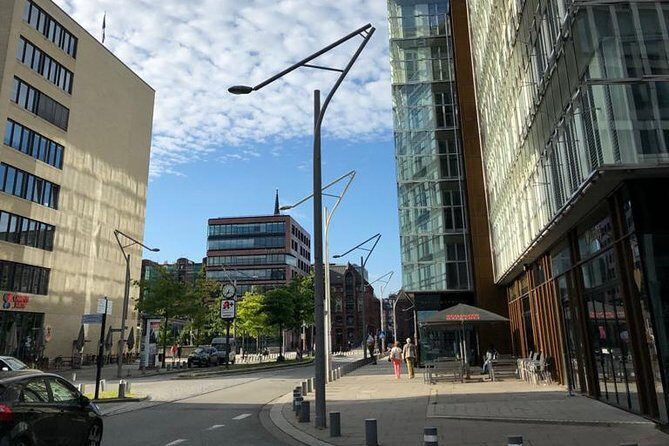
This tour runs about 2 hours and starts at 4:00 pm. The meetup is at Überseequartier (Überseequartier 20457 Hamburg), near the top station of Baumwall, which helps you get oriented fast—especially if you arrive a little early and want to take a quick look at the HafenCity waterfront.
You’ll be moving on foot and the pace feels built for understanding, not just checking boxes. The group stays small (max 15 travelers), so the guide can adapt when people have questions or want a slower photo stop. You’ll also use a mobile ticket, which means fewer papers to juggle.
One practical note: the experience is listed as requiring good weather. If you’re traveling in Hamburg during a rainy stretch, check the forecast the day-of. This is the kind of walk where umbrellas work, but you’ll enjoy it more when you can take your time along the water.
Other harbor and port cruises in Hamburg

HafenCity’s Waterfront Plan: From a Free Port to a 120,000-Person Day
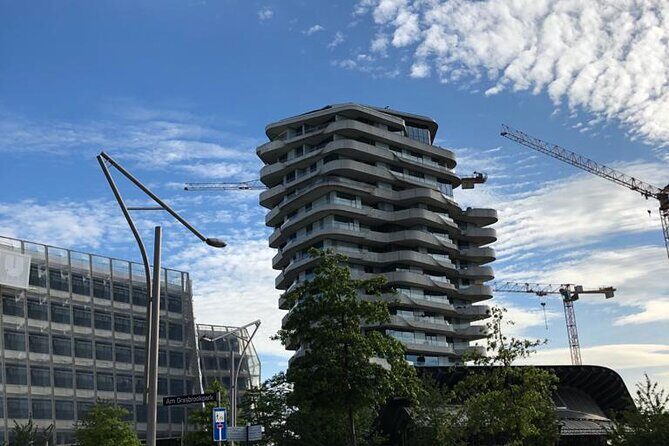
The first big shift you’ll notice is that HafenCity doesn’t feel like a finished neighborhood. Even when you’re standing in front of completed buildings, the story is still about what’s coming next—and how this space will function when it’s fully built out.
The area itself is about 157 hectares on the former Großer Grasbrook, once tied to the free port. What makes the guide’s explanation valuable is the way the numbers connect to real daily life. By the beginning of the 2030s, HafenCity is projected to house up to 14,000 residents and create up to 45,000 workplaces, mostly in offices and service. There are also targets for up to 3,000 hotel rooms and a steady flow of education and visitors—up to 10,000 pupils and students and around 50,000 customers and tourists per day.
When those predictions add up, you’re looking at over 120,000 people enlivening the district every day. That’s not just trivia. It’s why HafenCity isn’t designed as a dead “sightseeing zone.” It’s being planned like a living part of the city, with housing, work, school, and visitor draw working together.
This stop is ticket-free, so you’re free to focus on comprehension: where the basins are, how the streets align, and how Hamburg builds a modern district without erasing the port’s identity. The only drawback is also the honest one: since much of HafenCity is still evolving, you might see construction rhythms and mixed phases. If you love “finished postcard” scenes only, you’ll have to accept some active-city feel.
Kibbelstegbrücke: Storm-Surge Engineering You Can Actually See
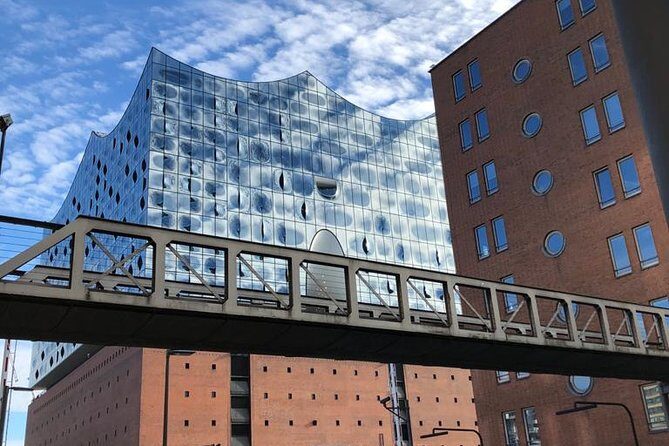
Next comes a very Hamburg kind of sight: the Kibbelstegbrücke. This bridge isn’t just there for pedestrians. It plays a role in storm surge planning, used to help evacuate the site if extreme water levels threaten the area.
Standing here, it clicks why Hamburg’s river and port towns carry a sense of control and preparation. When you know the bridge’s purpose, the whole waterfront reads differently. You start noticing how routes are shaped by the need to move people and keep the city functional during water emergencies.
It’s only a quick stop, but it’s a good one because it turns an abstract risk into a physical piece of infrastructure—plus you get an eye-line toward the historic warehouse district beyond the dike line.
Magdeburger Hafen and the View-Tech Stops: HCU, Maritime Museum Lines, and Small Parks
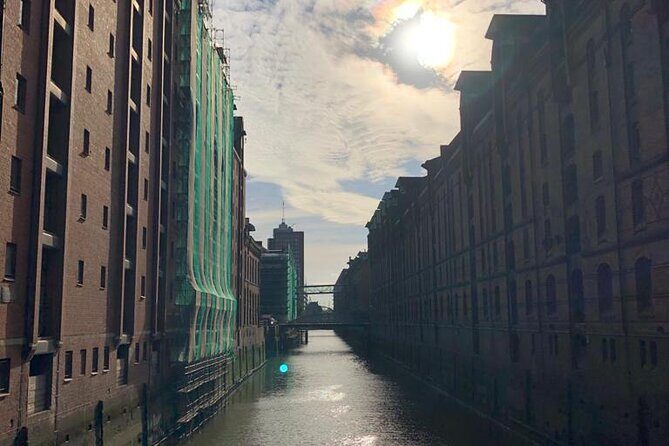
After the storm-surge logic, the tour shifts to a mix of city functions and water views.
You’ll pass by the HafenCity University of Hamburg (HCU), a state university. The point of this stop isn’t a campus tour; it’s the idea that HafenCity is built to support multiple roles at once—design, engineering, natural sciences, and humanities and social sciences are all part of what the HCU brings together. For me, that matters because it shows the district isn’t only about skyline glamour. It’s tied to how Hamburg thinks about building cities.
At Magdeburger Hafen, you get another quick hit of waterfront context. The area is described as having typical fleets and modern HafenCity buildings, plus a view angle connected to the Maritime Museum and the Elbarkaden. Even without going inside, these sightlines help you connect landmarks across the water.
Then there’s a smaller pause at Grasbrookpark. This is a neighborhood park in HafenCity, located around Am Sandtorpark / Grasbrook, between Überseequartier and the Marco Polo terraces. Parks like this are easy to ignore when you’re chasing big icons, but they’re a big part of what makes a planned district feel like a place you’d live, not just visit.
A small consideration here: because the tour is short, some stops are necessarily “look-and-learn” rather than “sit and linger.” If you’re the type who likes long museum time, plan your extra time after the tour.
Sandtorhafen / Traditionsschiffhafen: Maritime Heritage, Right at the Water
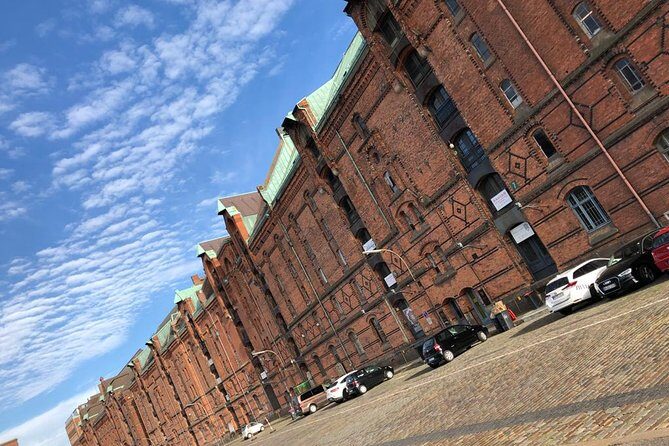
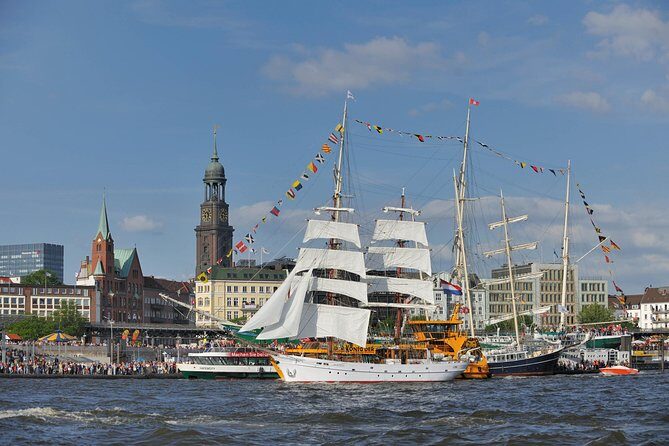
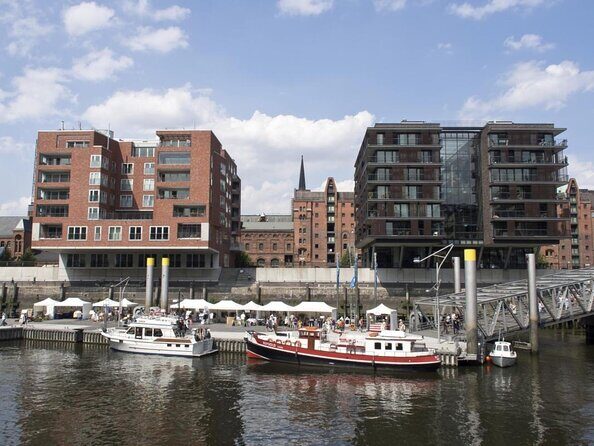
The maritime heart of the walk comes at Sandtorhafen / Traditionsschiffhafen. This is the traditional shipping port of the Hamburg Maritim Foundation. Unlike a museum that hides behind walls, this is about culture happening directly on the water’s edge.
The pontoon facilities are meant to be experienced from the start, tied to the historical importance of the area. The messaging here is practical: you’re seeing the types of historic ships, port facilities, and work equipment that helped define Hamburg as a working port city.
One specific detail worth catching is the Sandtorkai, Hamburg’s oldest quay wall, restored in 2002 with major effort. The area is opened up by historical access bridges, which makes this feel less like a single viewpoint and more like a connected port space. Even if you only spend a short time here, you’ll come away with a stronger sense of “how it worked,” not just “what it looked like.”
This stop is ticket-free, so it’s one of the best value moments in the whole tour—time well spent without extra costs.
Other Speicherstadt and HafenCity tours in Hamburg




Speicherstadt Warehouses: UNESCO Brickwork and the Mini Stops That Make It Human
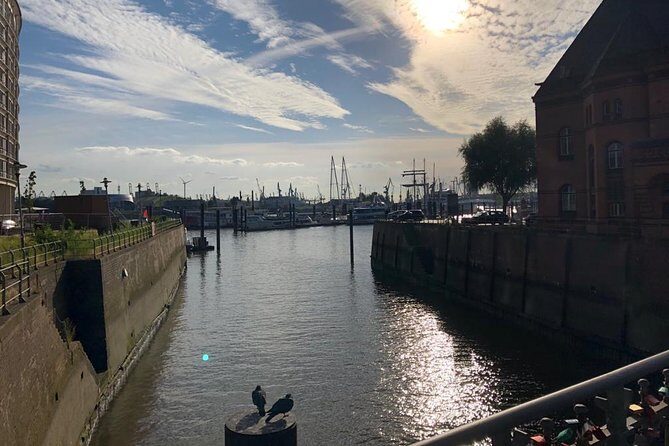
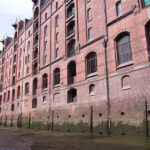
Then you roll into Speicherstadt, and that’s where the tone changes. This is Hamburg’s warehouse district and it’s described as the world’s largest historic warehouse complex. It sits in the port area between Bäumenall and Oberhafen.
It became a listed building in 1991, and it entered UNESCO World Heritage status on July 5, 2015, along with the neighboring Kontorhaus district under the combined name Speicherstadt and Kontorhaus district with Chilehaus. If that sounds formal, here’s why it matters on foot: UNESCO status often comes with preservation rules, and in this case you can feel it in the brickwork, canal edges, and careful layout. This isn’t a district that gets replaced every decade. It’s built to last.
You’ll spend about 45 minutes here, which is long enough to go beyond the “wow, old buildings” stage and get a sense of how the complex is organized.
Miniatur Wunderland (Optional, but a Big Draw)
One quick detour in Speicherstadt is Miniatur Wunderland, billed as the largest model railway system in the world. It’s located inside the historic warehouse district. The system uses about 15,715 kilometers of tracks (as of August 2019) on a 1:87 scale, and it runs roughly 1,040 digitally controlled trains over an area of about 1,499 square meters. That’s the kind of detail that turns a quick photo stop into a “wait, that’s actually enormous” moment.
Admission isn’t included, and your time on the tour is short, so you’ll need to decide if it’s worth adding extra ticket time. If you love hands-on, playful experiences, it’s often a good match. If you prefer architecture only, you might just pass by and keep moving.
Fleetschlösschen, Spicy’s, and WASSERSCHLOSS: Small Stops With Character
You’ll also pass a few smaller landmarks that make Speicherstadt feel lived-in even though it’s historically industrial.
- Fleetschlösschen: a historic building in the Speicherstadt ensemble, at the intersection Brooktorkai / St.-Annen-Brücke. It’s listed and has been part of the World Heritage site since July 2015. Its former role is described as a toilet building, and today it’s a café and pub in a former coffee hatch. Even without going inside, it’s a good example of “old infrastructure, new use.”
- Spicy’s Gewuerzmuseum: a private spice museum founded in 1991, noted as one of the city’s more popular museums. Admission isn’t included, so again, this is a “see it, then decide” stop.
- WASSERSCHLOSS Speicherstadt: a four-story landmark built between 1905 and 1907 as part of the third construction phase. It’s one of the most famous and among the oldest buildings in the complex. Admission isn’t included, so you’ll likely view it from outside or with only limited time.
The trade-off with all these extras is simple: the tour keeps moving. If you want to enter multiple places inside Speicherstadt, you’ll need to extend your day.
Elbphilharmonie: The Glass-Facade Landmark Built on Old Port Bones
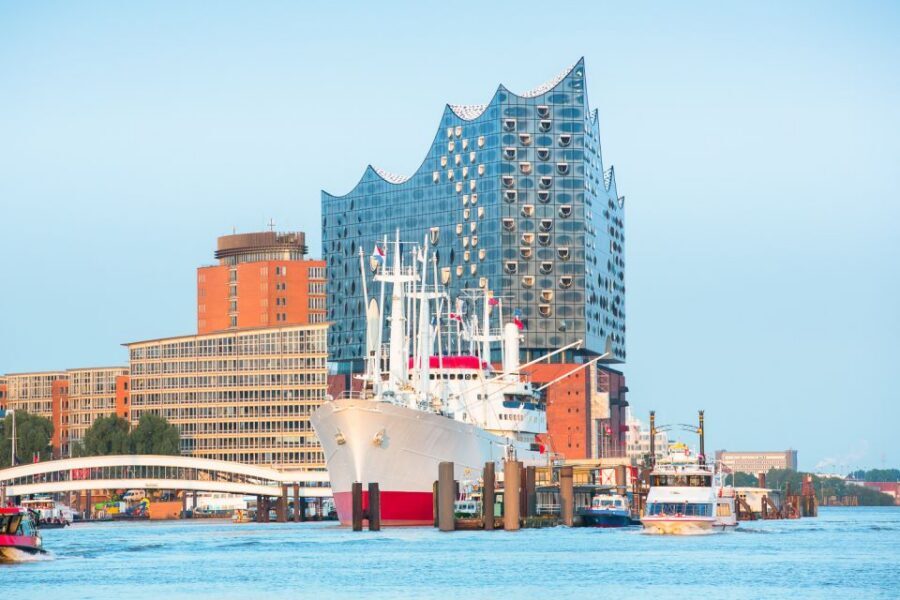
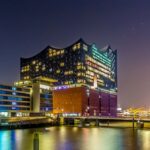
After Speicherstadt’s brick and canals, the walk lands on Elbphilharmonie, also known as the Elphi. This concert hall was completed in November 2016 and was designed as a new landmark plus a cultural monument for all.
It rises 110 meters above the port area and sits in HafenCity on the right bank of the Norderelbe, near the head of the Großer Grasbrooks, between the mouths of the Sandtorhafen and Grasbrookhafen basins.
What I find especially meaningful is how the building is described as using the shell of the former Kaispeicher A (built in 1963). Then a modern, glass facade was placed on top—shaped to evoke sails, water waves, icebergs, or a quartz crystal. That kind of design logic turns the area into a story you can read: industrial storage becomes a public cultural space.
Admission isn’t included on this tour, so you’re there for the outside and the viewpoint value. For many people, that’s enough. You’ll still get the landmark feel and photo angles, without committing to concert tickets.
Kehrwieder and Überseebrücke: Finishing With Flood-Proof Footpaths and Old-Island Logic
Near the end, you’ll move through Kehrwieder, a former island area in Hamburg. It’s described as part of HafenCity, sitting in the western part of the historic warehouse district. It’s associated with the Lower Elbe power cut area and the northern Grasbrook, and it was included in the fortified city in 1532 along with the neighboring island of Wandrahm.
Even if you don’t memorize that timeline, the stop gives you a sense of how the city’s geography kept shifting as the port expanded. It’s a reminder that Hamburg’s identity isn’t only about buildings. It’s also about water, edges, and boundaries.
Then you finish with the Überseebrücke, a covered pedestrian bridge connected to Hamburg’s port system. It leads from the flood protection system of Vorsetzen to a pontoon in Hamburg’s Niederhafen, near the former Jonashafen, east of St. Pauli Landungsbrücken. In practice, this is a great “last perspective” stop: you see how people connect different sides of the water while still respecting the flood-planning reality of the city.
The tour ends at Baumwall Station, which is handy if you plan to keep exploring nearby. You’ll likely feel like you got both the big picture and the on-the-ground mechanics of Hamburg’s waterfront.
Price and Value: What $28.92 Really Buys You
At $28.92 per person for about 2 hours, this tour lands in a sensible “pay for a guide” zone. Here’s what you’re actually buying:
- A guided route through several major districts without having to plan every stop yourself
- Context you can’t easily pick up from street signs alone, especially around HafenCity’s projected scale and Speicherstadt’s UNESCO framing
- Small-group pacing (max 15 travelers) that gives you time to ask questions
- Mostly free-to-approach outdoor areas, with the option to add paid admissions if you want them
If you’re the type who likes to learn a city’s logic quickly—ports, rebuilding, preservation—you’ll feel the value. If you’re chasing only ticketed indoor highlights, you might find the cost less compelling because several named places inside Speicherstadt have admissions not included, including Miniatur Wunderland and a handful of museums/buildings.
Booking timing is also a clue: the average booking is about 25 days in advance, so planning ahead helps you lock in the date you want.
Should You Book This HafenCity + Speicherstadt + Elbphilharmonie Tour?
I’d book it if you want a smart, efficient walking introduction to Hamburg’s port transformation. This is ideal for first-time visitors who want to understand how HafenCity’s planning ideas connect to the historic port power of Speicherstadt, then finish with the Elbphilharmonie as the modern cultural landmark built on older foundations.
Skip it (or pair it with extra time) if you’re mainly looking for long indoor museum sessions. In two hours, the tour’s strength is external orientation and interpretation. You can see plenty, but you’ll need separate entry plans for places where admissions aren’t included.
One more thing: the guide’s vibe matters here. With Florian leading, the focus is on clear explanations and flexibility, and the tour stays friendly instead of stiff. If you like “ask me anything” tours, this type fits your style.
If you’re in town around sunset-ish light, consider booking a time that lets you enjoy the water and brick textures. And check the forecast since good weather matters for a walking route like this.
FAQ
How long is the HafenCity, Speicherstadt, and Elbphilharmonie tour?
It’s about 2 hours.
Where do I meet the guide?
The start is at Überseequartier, 20457 Hamburg. It’s near the top station of Bäumenall.
Is it a small-group tour?
Yes. The tour is limited to a maximum of 15 travelers.
Do I need tickets for every stop?
No. Many stops are listed as free admission, but places like Miniatur Wunderland and several Speicherstadt museums/buildings are marked as admission not included.
What time does the tour start?
The start time listed is 4:00 pm.
Is weather important?
Yes. The experience requires good weather, and it may be canceled due to poor weather with an offer of a different date or a full refund.