REVIEW · HAMBURG
World War 2 Hamburg Private Guided Tour
Book on Viator →Operated by Experience Hamburg Tours · Bookable on Viator
Hamburg tells its WWII story in concrete. This private guided walk turns key sites—former bunkers and memorial squares—into a timeline you can actually follow. You also get an English-speaking guide to keep things clear as the city’s past gets heavy.
I especially like the way the tour builds from the lead-up years into the war years, starting with interwar events and then moving to what Hamburg built and used during WWII. I also like the private Q&A style: you can ask questions and steer the pace, which matters when your group has mixed ages, like kids and grandparents.
One drawback to plan for: you should have moderate fitness, because it’s a 5-hour walk through different parts of the city, and one stop (the St. Nikolai museum/tower) has an admission not included.
In This Review
- Key highlights you’ll feel fast
- A WWII walking route through Hamburg’s bunkers and memorial squares
- Price and what you get: a private 5-hour group tour
- How the 11 stops build the story, not just the facts
- Laeiszhalle and Sievekingplatz: from Versailles trauma to political collapse
- Feldstraße and Turmbar: seeing the bunker system in plain sight
- Planten un Blomen and Jungfernstieg: propaganda, punishment, and decoy ideas
- Grindel and Rathausmarkt: Jewish community, Nazi power, and public memory
- St. Nikolai Memorial: ruins, museum, and reconciliation threads
- Afrikahaus: why colonial history belongs in a WWII tour
- What it feels like on the ground: pace, questions, and taking notes
- Should you book this Hamburg WWII private tour?
- FAQ
- How long is the World War 2 Hamburg private guided tour?
- Is this tour private?
- What group size can this tour accommodate?
- What is the price?
- What language is the tour offered in?
- Are admission tickets included?
- What should I know about the physical demands?
- Where do I meet the guide?
- Where does the tour end?
- What is the cancellation policy?
Key highlights you’ll feel fast
- Private guidance for a 5-hour focus: only your group, in English, with time for questions
- Bunkers as landmarks: you’ll see the WWII bunker footprint, including a site repurposed for today
- Memorials with context: remembrance isn’t treated as a history “end point”
- Jewish history in the neighborhoods: you’ll connect streets in the Grindel area to what happened in the 1930s–1940s
- Colonial legacy added to the WWII story: Afrikahaus helps explain how racial segregation fits into later genocide
A WWII walking route through Hamburg’s bunkers and memorial squares
If you want WWII history that stays grounded, this tour is built for you. Hamburg isn’t just names and dates here—it’s buildings, squares, and streets that still shape what you see today. The payoff is that you leave with a clearer map of how the city changed, year by year, and why the war years were so brutal and so organized.
This is a private experience for up to 15 people. That group size is big enough for families or friends, but small enough that your guide can still keep track of questions and pacing. The guide also helps you avoid that common problem of WWII tours: “I’m looking at something important, but I don’t know what I’m looking at.”
The tone is serious, and it covers topics like antisemitism, deportations, executions, propaganda projects, and displaced persons. Plan for emotional weight. You’ll probably want to bring a small notebook or use your phone for notes, because the explanations are detailed and you’ll be tempted to write everything down.
Other guided tours in Hamburg



Price and what you get: a private 5-hour group tour
The price is $714.85 per group (up to 15), and the tour runs about 5 hours. For a private tour, that can be good value because you’re paying for one guide to work with your whole group, not per person.
Here’s how you should think about value:
- Your guide does the “story threading,” so you don’t waste time trying to match locations to history.
- Many stops have admission tickets that are free, which helps keep the total cost predictable.
- You’re getting an English-speaking guide, with a mobile ticket, plus the flexibility that comes with a private format.
One practical note: there’s an optional-cost stop at St. Nikolai where the museum and tower are not included. It’s also a spot where you can use the elevator for a city view, so it may be worth it if you like viewpoints.
Also, the tour is near public transportation, and it allows service animals. If anyone in your group has mobility limits, keep the “moderate fitness” note in mind when you plan shoe choice and breaks.
How the 11 stops build the story, not just the facts
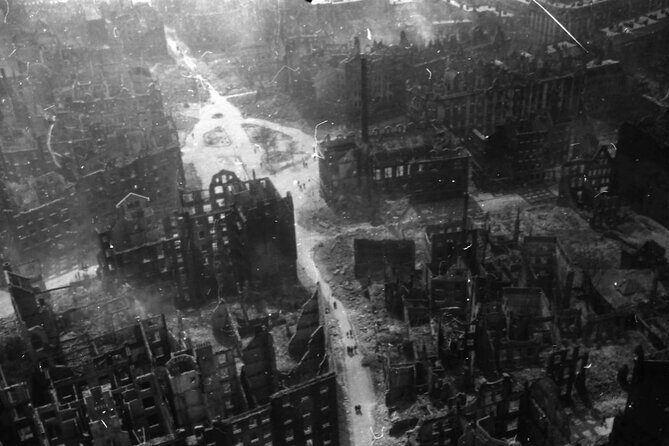
What I like about the structure is that it doesn’t treat WWII like it starts in 1939. You start with the interwar years and the political machinery that made later atrocities possible. Then you move through the war’s physical footprint—especially bunkers—and end in a place built for remembrance and reflection.
The route is also built to keep you oriented. You’ll see a lot, but the guide keeps it connected: why each site mattered, what happened there, and how Hamburg remembers it now.
Laeiszhalle and Sievekingplatz: from Versailles trauma to political collapse
You begin at Laeiszhalle, and the first part of the tour is a useful setup. You’re not only looking at a building—you’re looking at the interwar period and the emotional and economic pressure that shaped the 1930s. You’ll hear about the lesser-known WWI thread, hyperinflation in the 1920s, the rise of antisemitism, and the way the Treaty of Versailles was experienced in Germany.
Then you move to Sievekingplatz to focus on what broke inside Hamburg’s judicial and political system in the 1930s. This stop matters because it connects the broader national story to a local system: how power shifts can lead to catastrophic outcomes. It’s an important reminder that violence doesn’t only come from the battlefield. It also comes from institutions being reshaped to serve repression.
A small consideration here: the tour is time-boxed at each stop, so if you’re the type who likes to linger, you’ll want to ask questions early. In a private setting, you can usually get a bit more explanation without feeling rushed.
Feldstraße and Turmbar: seeing the bunker system in plain sight
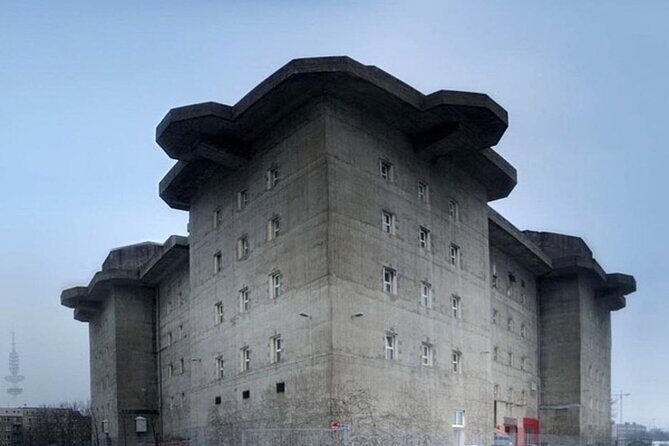
At Feldstraße, you’ll encounter one of the largest WWII bunkers in Hamburg. The striking part is what happens after the war: the structure is currently being repurposed as a skyline garden. Seeing a bunker used for a calmer, greener purpose forces a tough kind of reflection. The walls still carry their history, but the city doesn’t live in that past alone.
Nearby, you also get a quick stop at Turmbar, which looks like a water tower but is actually one of over 2,000 bunkers built in Hamburg during WWII. That number changes how you see the city. You realize bunkers weren’t an exception. They were part of daily planning and large-scale defense.
If you’re the kind of person who likes architecture, this portion is one of the most satisfying. You’ll start recognizing the city’s “infrastructure for fear,” and that visual memory helps the rest of the history stick.
Other private tours in Hamburg




Planten un Blomen and Jungfernstieg: propaganda, punishment, and decoy ideas
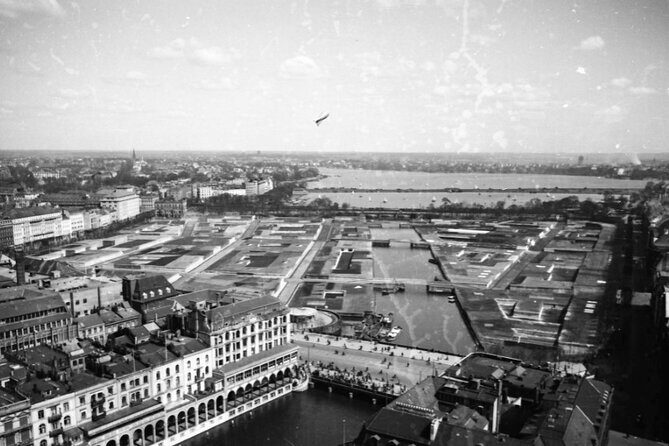
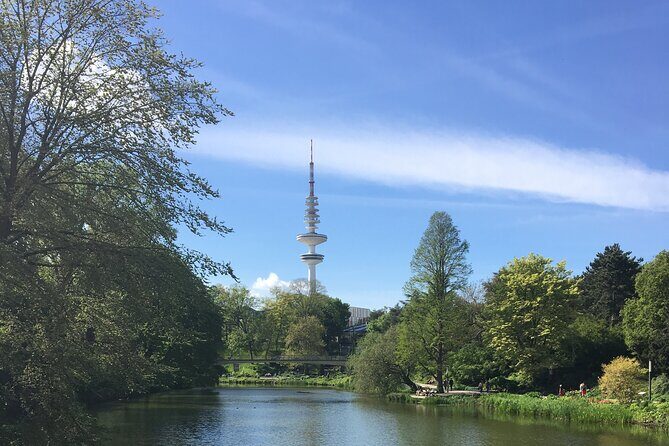
One of the most memorable stops is Planten un Blomen. Today it’s one of Hamburg’s scenic highlights, but your guide will point out its much darker roles during WWII. This is where executions were a central feature, and where you also hear about propaganda projects and a human zoo, plus a displaced persons camp.
After that, you go to Jungfernstieg, where Hamburg tried to build a decoy city center to avoid bombings. This is the kind of detail that makes WWII feel less abstract. Instead of thinking only about bombs and casualties, you see how people tried to manage risk with misdirection.
If you’re traveling with younger adults or mixed generations, this is where the guide’s ability to answer questions matters most. The subject matter is intense, but it’s also organized into clear, cause-and-effect explanations.
Grindel and Rathausmarkt: Jewish community, Nazi power, and public memory
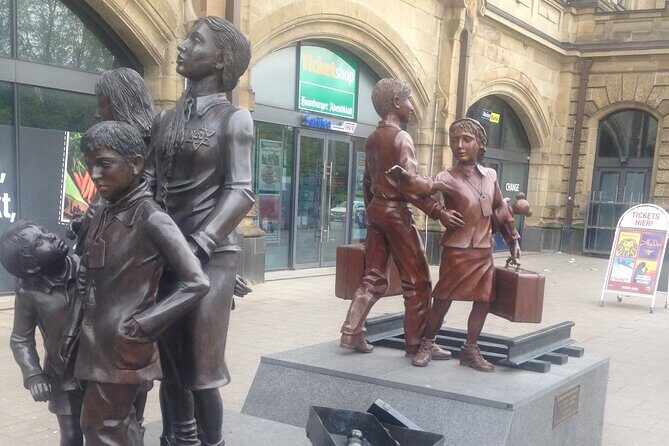
The route then shifts toward neighborhood history with Grindel, an area that once hosted a vibrant Jewish community. You’ll learn how the area formed, who lived there, what happened during the war, and what life looks like today.
This segment includes very specific topics:
- the place of the deported Jewish persons of Hamburg
- Kristallnacht in 1938, tied to the wider spread of violence
- book burnings in 1933
- the Born Synagogue
- the Talmud Torah School
That list matters because it isn’t only about the camps or the final stage of the war. It also covers the staged steps of persecution—public intimidation, cultural destruction, and the shrinking of normal life.
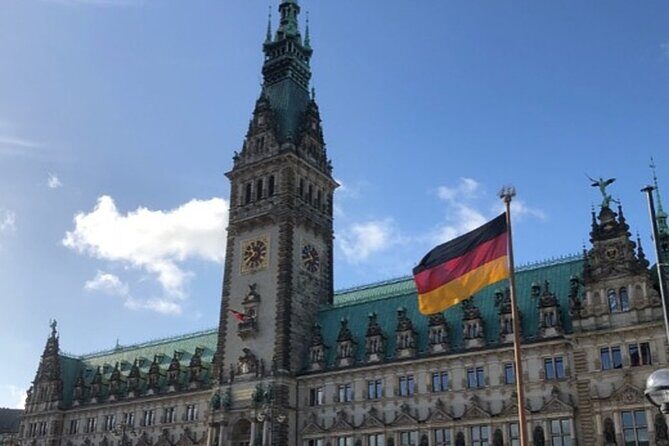
Then you head to Rathausmarkt and the town hall area, which served as a symbolic and literal seat of power. Here your guide connects the space to how the Nazi party used it during WWII. The square also has memorials you’ll read as part of the story of remembrance, including memorials related to political opposition and the 1933 book burnings, plus WWI propaganda in Nazi Germany.
This is a good time to pay attention to what’s still visible. You’ll notice how memorials don’t just “mark” history. They shape how people talk about it in the present.
St. Nikolai Memorial: ruins, museum, and reconciliation threads
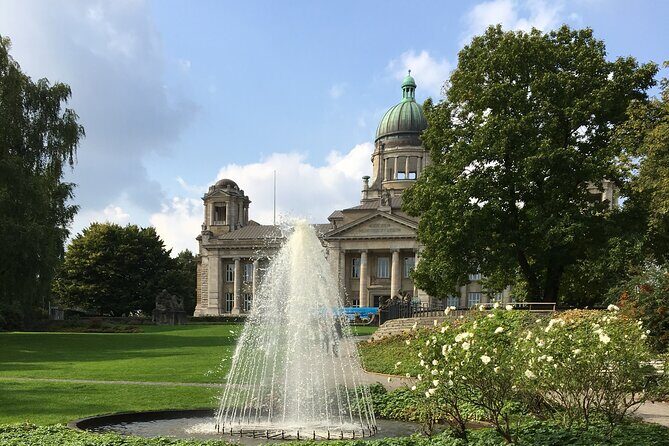
Next is St. Nikolai Memorial, a church site that serves as a memorial to victims of war and the rule of terror. The church ruins themselves are a reminder of how completely Hamburg was bombed—this was the former church bombed and destroyed in 1943.
Inside the story you’ll find memorials connected to:
- the bombing of Hamburg
- victims from the concentration camp Neuengamme
- reconciliation between post-war Germany and the UK
There’s also a museum and a tower option. If you want the view, the tower has an elevator, and it’s described as spectacular. The catch is simple: museum and tower admission is not included.
For me, this stop works because it ties the physical destruction to meaning after the fact. You’re not left only with what happened. You see how a city tries to live with it.
Afrikahaus: why colonial history belongs in a WWII tour
A stop at Afrikahaus adds an extra layer that many WWII tours skip. This building is a leftover from the German colonial period. Your guide explains why colonial history isn’t a separate topic—it helps explain racial segregation and the logic that fed into later genocide in WWII Germany.
Even if you’ve read about the Nazi period before, this part can change how you connect dots. It helps you understand the wider systems of dehumanization and control that existed before the war’s worst crimes reached their most extreme forms.
It’s also one of the stops that makes the tour feel genuinely Hamburg-specific. The city’s story includes imperial-era traces, and this guide makes sure you see that link.
What it feels like on the ground: pace, questions, and taking notes
This is a private tour, so the guide can tailor the explanation to the group. That matters because the story spans economic collapse, law and politics, persecution, war infrastructure, and memorial culture. Even if you know some of the names, the tour is built so you can ask for clarity as you go.
Two guide names come through strongly in past experiences: Evan and Sarah. Both are described as being especially strong at adapting the tour and answering questions. Evan’s tours are noted for tailoring to different needs and guiding people through monuments and the bomb shelter story. Sarah’s tours are noted for strong knowledge and for showing how German deception efforts worked—helpful for understanding that decoy and propaganda theme rather than treating it as a random “side fact.”
If you want to get the most out of this kind of tour, here’s my practical advice:
- Bring comfortable walking shoes and water, because you’ll move between several parts of Hamburg.
- Expect serious topics. If you want a break, ask the guide for a short pause while you still have momentum.
- Bring something to write on. You’ll be given a lot of detail, and it’s easy to wish you’d captured a name or date.
Should you book this Hamburg WWII private tour?
You should book if you want WWII history that’s physical, local, and structured. The bunker stops, the memorial squares, and the neighborhood focus in Grindel give you more than a general overview. The private format is also a big advantage if your group includes multiple generations or if you prefer asking questions rather than passively listening.
Skip it—or at least reconsider—if you don’t handle heavy subject matter well, or if a 5-hour walking route across different sites feels like too much. Also remember that one part of the experience (St. Nikolai museum and tower) has an admission not included.
If you’re on the fence about cost, think in terms of group value: $714.85 covers a private guide for up to 15, with many stops listed as free-admission. That can make it more economical than you’d expect, especially compared with smaller group tours priced per person.
One more thing: you have free cancellation up to 24 hours in advance, so you’re not locked in if your schedule is still flexible.
FAQ
How long is the World War 2 Hamburg private guided tour?
It runs for about 5 hours.
Is this tour private?
Yes. Only your group participates.
What group size can this tour accommodate?
Up to 15 people per group.
What is the price?
The price is $714.85 per group.
What language is the tour offered in?
The tour is offered in English.
Are admission tickets included?
Most stops list admission tickets as free. St. Nikolai Memorial has admission for the museum and tower that is not included.
What should I know about the physical demands?
You should have a moderate physical fitness level.
Where do I meet the guide?
The start is at Denkmal für die Gefallenen beider Weltkriege, Schleusenbrücke 1, 20354 Hamburg, Germany.
Where does the tour end?
The tour ends at Hamburg BUNKER, Feldstraße 66, 20359 Hamburg, Germany. Drop-off to a location of your choice is available upon request.
What is the cancellation policy?
Cancellation is free. You can cancel up to 24 hours in advance for a full refund. If you cancel less than 24 hours before the start time, the amount paid is not refunded.