REVIEW · HAMBURG
Citybeering – Walk with funny and interesting stories while having local beers
Book on Viator →Operated by Jolly Tours · Bookable on Viator
Hamburg has a way of telling jokes with architecture. Citybeering pairs a guided walk with funny, story-driven commentary and local beer stops along the way. I like that it stays practical and easy to follow (English, mobile ticket, small group), and I also like the way it connects major landmarks to everyday port-city life. One thing to consider: you’re outdoors for a good chunk of the walk, and the tour has a clear arc toward the St. Pauli nightlife area, so it’s not the quietest stroll.
You also get a smart mix of big, photo-famous Hamburg—Town Hall, St. Michael’s Church, the Elbe tunnel—with smaller context that helps it all make sense. In at least one instance, the guide name Bela came up as an example of how the pacing can shift if needed, like adjusting timing due to a triathlon. The only real drawback is that the beer element means start times matter; if you book a slot around 10:00, plan for that earlier beer moment.
In This Review
- Key things to know before you go
- Hamburg Citybeering: funny stories plus local beers, in a tight route
- Rathausmarkt and Hamburg Town Hall: Neo-Renaissance meets civic power
- Little Alster vibes: Rathausmarkt, Jungfernstieg, and Deichstrasse details
- St. Michaelis (the Michel): the Hanseatic shipping symbol
- Harbor pubs, the Coast nickname, and the Portuguese Quarter feel
- St. Pauli Landungsbrücken: the port’s front door
- Under the Elbe: the Alter Elbtunnel as an engineering landmark
- St. Pauli’s red light district edge and Park Fiction’s art-politics mix
- How long it takes, where it fits, and timing tips
- Price reality check: is $46.13 good value?
- Guide energy: what entertaining can look like in real life
- Who should book Citybeering in Hamburg?
- Should you book this tour?
- FAQ
- How long is the Citybeering tour in Hamburg?
- What does the tour cost?
- Is the tour offered in English?
- Where do you meet and where does it end?
- How big is the group?
- Do the stops require paid admission?
- Is there a mobile ticket?
- What is the cancellation policy?
Key things to know before you go
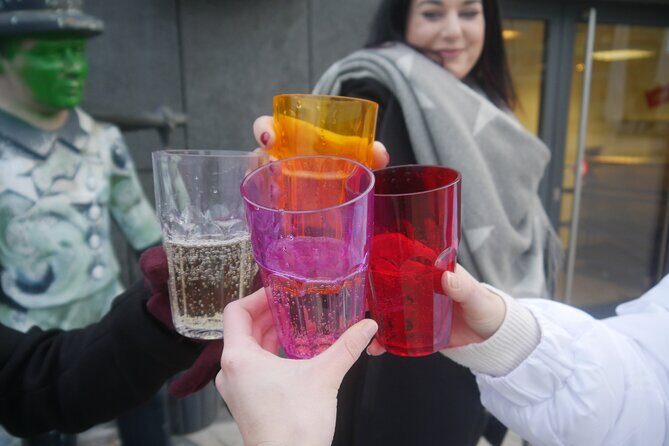
- English-friendly and small group: capped at 15 people, so you’re not lost in a crowd.
- Mobile ticket setup: quick entry without fuss.
- Hanseatic landmarks, not just random streets: Town Hall, Little Alster areas, and St. Michaelis Michel.
- Harbor engineering stop: the 1911 Alter Elbtunnel under the Norderelbe, a listed engineering landmark.
- St. Pauli included: you’ll see the red light district edge, plus pubs and nightlife zones.
- Story-first approach: the walk uses humor and local angles to connect the dots between places.
Hamburg Citybeering: funny stories plus local beers, in a tight route
This tour is built like a good Hamburg afternoon: a mix of formal buildings, port-culture clues, and human stories—then a beer moment to keep it moving. You start at Hamburg Town Hall on Rathausmarkt, then you slowly fan out from the formal civic heart of the city toward the harbor, and eventually into the St. Pauli orbit.
The “walk with funny and interesting stories while having local beers” concept is the core value. You’re not just collecting sights; you’re learning how Hamburg thinks—how a Hanseatic trading city turned its shipping identity into pride, and how the port created its own social geography. It’s also a helpful way to orient yourself if you’re arriving in Hamburg and want the city to explain itself without you doing homework.
Logistics are straightforward. It runs about 2 to 3 hours, and the itinerary is paced around multiple easy stop points. You’ll move mostly on foot and spend enough time at each landmark to get your bearings and photos, without turning it into an all-day hike.
Other walking tours we've reviewed in Hamburg

Rathausmarkt and Hamburg Town Hall: Neo-Renaissance meets civic power

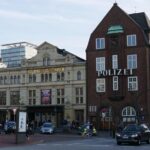
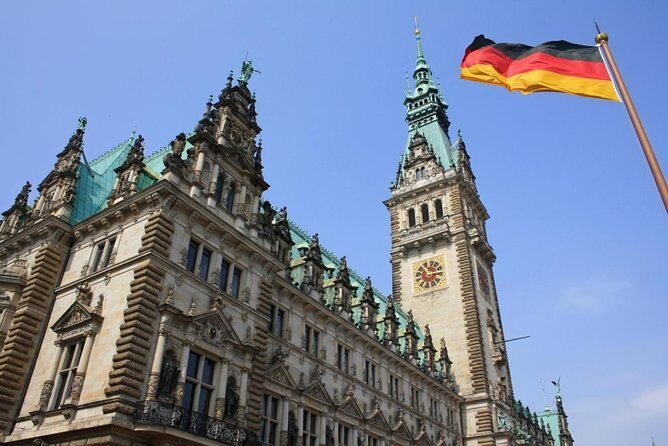
Your first landmark is Hamburg Town Hall (Rathaus / Town Hall), located on the Little Alster. This building isn’t a small-town hall. It’s the seat of Hamburg’s citizenship and the Senate of the Free and Hanseatic City of Hamburg, and the architecture reflects that scale: built from 1886 to 1897 in the historicist Neo-Renaissance style.
What I like about starting here is how it sets the tone. Hamburg’s story is often told through trade and ships, but the civic center reminds you that the city’s institutions grew alongside its maritime ambitions. Even if you don’t care about architectural styles, you’ll feel the weight of why this spot matters.
Then you move to Rathausmarkt, a square shaped partly as a model for the ensemble design—referenced as being inspired by St. Mark’s Square in Venice, including how it opens to the water. Hamburg’s version has its own personality, shaped by the Little Alster setting, but that Venice comparison gives you a quick mental hook.
Practical note: the stop time is short at the first sites, so if you’re the type who wants to linger, use this as your orientation anchor. You can always come back later.
Little Alster vibes: Rathausmarkt, Jungfernstieg, and Deichstrasse details
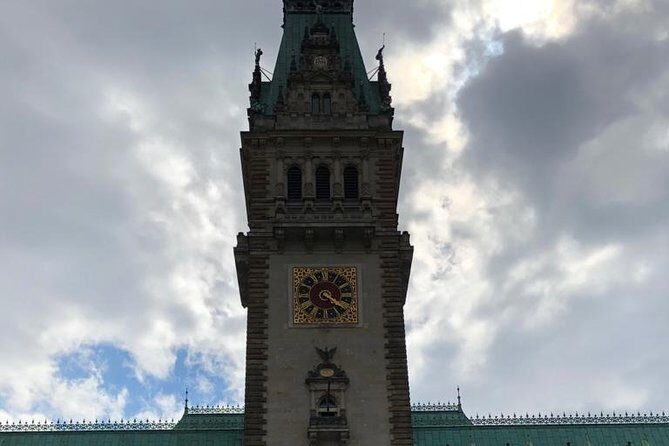
From the Town Hall area, you slide into the small but meaningful geography of the inner harbor edge. Jungfernstieg is a street on the southern bank of the Inner Alster, running from Reesendammbrücke to Gänsemarkt. The name also gives a clue: it’s about the act of showing up, being visible, and doing city life along the water. It’s one of those places where you can watch everyday Hamburg energy without needing a museum ticket.
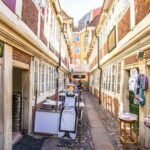
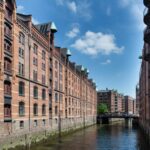
A little farther along is Deichstraße, known for having the last remaining ensemble of old Hamburg town houses in the city center. That’s important because Hamburg went through lots of change, and the city keeps certain historic fragments alive by protecting specific street-scale groups like this one. You also get the sense of how port-side life expanded into dense, practical neighborhoods.
Another interesting part is how “old Hamburg” connects across the waterways. The area preserves something called the Cremon’s storage group on the opposite side of the Nikolaifleet, a relic that gives the historic quarter more than one viewpoint. If you’re the type who likes seeing how cities layer their past, this stretch is worth paying attention to, not just walking through.
St. Michaelis (the Michel): the Hanseatic shipping symbol
Next up is St. Michael’s Church (St. Michaelis / Michel), Hamburg’s best-known evangelical church building. It’s considered one of the most important baroque church buildings in northern Germany, and the church’s architecture is famous enough that you can often see it from far away.
The best part of this stop is the meaning. St. Michaelis is described as a symbol of Hamburg for shipping on the Elbe. That turns a church visit into something more than a pretty façade. It’s an easy reminder that in a port city, spiritual life, commerce, and identity often overlap.
Because this is part of a walking tour, you’ll likely focus on the exterior and quick orientation moments. The tour’s structure lists the stop as not requiring paid admission, which is nice if you’re watching your budget, but don’t plan on a long sit-down here. Treat it as a landmark “chapter marker” before you move into the harbor districts.
Harbor pubs, the Coast nickname, and the Portuguese Quarter feel
As the route starts moving toward the St. Pauli side, you pass through an area strongly connected to small business and gastronomy. This neighborhood is tied to what’s often described as the Portuguese Quarter. The harbor pubs helped create the nickname The Coast in the 1950s and 1960s.
Here’s the useful angle: port cities develop reputations fast, and those reputations travel with sailors, workers, and visitors. The Coast name isn’t random branding. It points to the kind of local social life that grew around the harbor—places where you could eat, drink, reset, and meet people from elsewhere.
In the 2000s, the number of catering spots increased, and by 2011 there were around 40 cafés and restaurants in that area. That detail matters because it helps you understand why the neighborhood feels like it has a steady “food and drink” rhythm rather than being a one-night-only party zone.
This part of the tour is a good mental reset: you leave the big civic scale and church symbolism and slide into the daily rhythm of eating and meeting around the port.




St. Pauli Landungsbrücken: the port’s front door

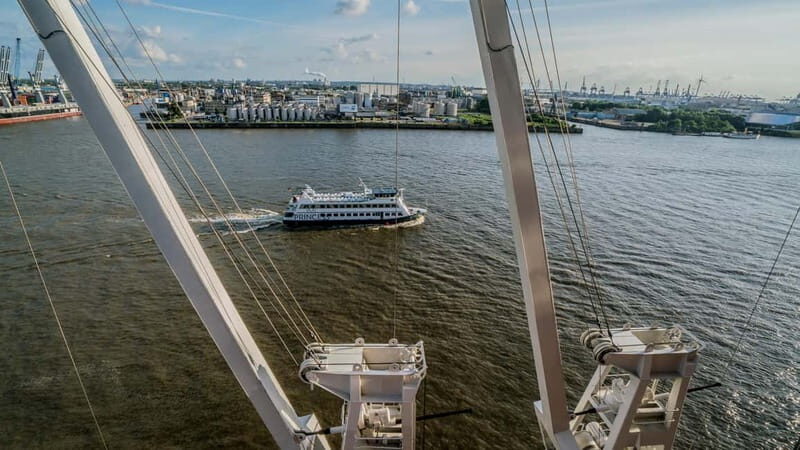
Then you hit the St. Pauli Piers (St. Pauli Landungsbrücken). These are landing stages for passenger ships at the northern edge of Hamburg’s port. The jetties sit in the St. Pauli district between Niederhafen and St. Pauli Fischmarkt on the Elbe.
If you want one reason this stop works on a story-based tour, it’s that Landungsbrücken is the place where the city meets the water in a practical way. You’re not looking at an old postcard. You’re seeing the working edge of Hamburg that still serves real movement.
It’s also the pivot point. After this, the tour heads deeper into the harbor-to-city-center-to-nightlife sequence. The route starts to feel more like a journey than a list of landmarks.
Under the Elbe: the Alter Elbtunnel as an engineering landmark
One of the most memorable segments is the Elbtunnel, specifically the St. Pauli–Elbtunnel, which opened in 1911 and is also known as the Alter Elbtunnel to distinguish it from the newer tunnel that came later.
Key details you’ll want to notice:
- It runs under the Norderelbe with a length of 426.5 meters.
- It connects the northern harbor edge at the St. Pauli landing bridges (north entrance) with the Elbe island Steinwerder (south entrance).
- It’s used as a public traffic route by pedestrians and cyclists, and only limited for motor vehicles.
When it opened, it was considered a technical sensation. It’s also a listed building since 2003, and it received the Historic Landmark of Engineering in Germany title in 2011 from professional engineering bodies in Hamburg.
This is the moment where the tour earns its “local stories” promise. You don’t just walk through a tunnel; you walk through a piece of Hamburg’s confidence in solving physical problems at a massive scale. Even if you’re not an engineering person, the symbolism is obvious: people needed to cross, ships and traffic needed to keep moving, and Hamburg built a solution that still works.
St. Pauli’s red light district edge and Park Fiction’s art-politics mix
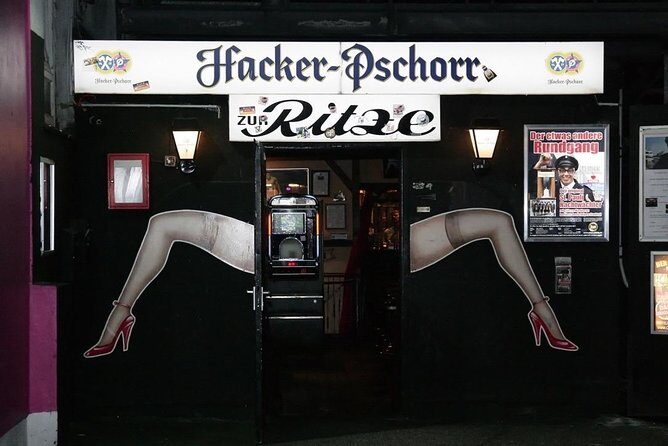
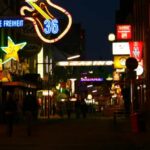
After the tunnel, the tour reaches St. Pauli, including the well-known red light district area with bars, pubs, clubs, and adult entertainment venues. The point here isn’t to make it a sensational stop. It’s to show how close you are to Hamburg’s nightlife engine and how the port city shape changes once evening arrives.
If you’d rather avoid that atmosphere, you can choose how long you want to linger during the tour’s allotted time. The experience is built to keep moving, so you’re unlikely to get stuck in a long stretch unless you want to.
Then the walk ends at Park Fiction (Schauermanns Park). This isn’t just a green space. Park Fiction has been described as an artistic and socio-political project in Hamburg since the mid-1990s. Ending here works because it closes the loop: Hamburg starts with civic institutions and old architecture, travels through maritime engineering and working waterfront life, and finishes in a space that uses creativity to question and shape public life.
You finish at the harbor edge with a picturesque view, which is the right kind of payoff for a 2–3 hour stroll.
How long it takes, where it fits, and timing tips
The tour runs about 2 to 3 hours, which makes it a smart mid-day or afternoon activity. You’ll start at Rathausmarkt and progressively work toward the harbor, so plan for gradual movement and outdoor time.
One practical timing note that comes up with the beer portion: if your departure is around 10:00, it can feel early for the beer element. If you’re traveling with people who prefer a later start to drinking, consider booking an afternoon slot instead. That simple shift can make the same tour feel less like a morning commitment and more like a proper city-walk.
Also, wear shoes you’d use for a full neighborhood walk. Hamburg streets can be a mix of cobbles and smooth stretches depending on where you are, and you’ll be moving between multiple stops without a long sit-down break.
Price reality check: is $46.13 good value?
At $46.13 per person for 2 to 3 hours, this tour’s value mainly comes from two things: guided storytelling and the fact that it’s structured around local beer stops. The landmarks themselves are not the expensive part—most stops are listed as free for admission—so your money is paying for interpretation, pacing, and that beer-included experience.
If you like tours where the guide is actively linking places to how the city works, the cost can feel fair. If you’re the type who just wants to take photos and move on, you might find it harder to justify, because the tour earns its price through the explanations and the beer moments.
Group size helps too. With a max of 15, you’re more likely to feel like you’re part of the walk instead of just an extra body in a big group.
Guide energy: what entertaining can look like in real life
The experience’s best moments tend to be story-driven, and the guide can influence that tone. One guide name you may see associated with this tour is Bela, described as entertaining and informative. There’s also an example of him adjusting the pacing when something like a triathlon affects timing.
What you should take from that: the tour isn’t rigid to the point of robotic. If your guide is handling the route smoothly, you’ll feel it. The walk becomes easier, and the stories land at the right spots instead of fighting the schedule.
Who should book Citybeering in Hamburg?
This is a great fit if you want:
- A short, guided way to understand Hamburg beyond a single neighborhood.
- A mix of major sights (Town Hall, Michel, Landungsbrücken) and city character (Coast nickname, food-and-drink district rhythm).
- Local beer included as part of the experience, not an afterthought.
It might be less ideal if:
- You want a strictly quiet, family-only itinerary with no nightlife edge (St. Pauli is included).
- You prefer tours that sit down more often. This one is a walk-and-story format.
If you’re pairing it with other Hamburg plans, think of this as your orientation + context tour. You’ll finish at Park Fiction with a good sense of what Hamburg is like when it shifts from civic center to port to nightlife.
Should you book this tour?
I’d book it if you like guided walks where the guide makes the city make sense, and you’re happy to include beer as part of the sightseeing rhythm. The itinerary is built around efficient stops that cover Hamburg’s key identity themes: civic power on the Alster, shipping symbolism at Michel, port-life at Landungsbrücken, and Hamburg’s edge in the St. Pauli zone—then it ends at a creative project that feels like an actual wrap-up.
If you hate early beer or you’re sensitive to adult-entertainment neighborhood vibes, choose your slot carefully and be ready to move on quickly when the tour reaches St. Pauli.
FAQ
How long is the Citybeering tour in Hamburg?
It runs about 2 to 3 hours.
What does the tour cost?
The price is listed as $46.13 per person.
Is the tour offered in English?
Yes, it is offered in English.
Where do you meet and where does it end?
You meet at Hamburg Townhall, Rathausmarkt 1, 20095 Hamburg, Germany. You end at Park Fiction, Schauermanns Park, Pinnasberg 27, 20359 Hamburg, Germany.
How big is the group?
The maximum group size is 15 travelers.
Do the stops require paid admission?
The itinerary lists admission tickets as free at each stop.
Is there a mobile ticket?
Yes, the tour uses a mobile ticket.
What is the cancellation policy?
You can cancel for a full refund up to 24 hours before the experience starts. After that time, the amount paid is not refunded.