REVIEW · HAMBURG
Hamburg: Tour from St. Michael’s to the Elbphilharmonie
Book on GetYourGuide →Operated by Lucky Time · Bookable on GetYourGuide
Hamburg’s past and present, stitched together on foot. I like that this 2-hour walk hits St. Michaelis and the Elbphilharmonie in one smooth loop, with the church’s huge clock in Germany as a real photo-moment. I also enjoy how the route connects everyday water-control details and the oldest surviving row-house area to the harbor-facing finale. One important consideration: it is not suitable for people with mobility impairments.
You’ll cover the Michelwiese toward the harbor, pass through the Portugiesenviertel, and stop where Hamburg explains flood protection at the underground station Baumwall. Then it shifts into the UNESCO dockside world of Speicherstadt, continuing into the more modern HafenCity look before ending at the Elbphilharmonie area.
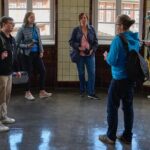
Logistics are simple: arrive about 10 minutes early and meet on the right side of St. Michaelis Church’s main entrance. You’ll recognize your guide by a white bag, and you’ll want comfortable shoes since the tour runs rain or shine.
In This Review
- Key points worth knowing before you go
- Entering Hamburg’s story: from St. Michaelis to the Elbphilharmonie
- Getting oriented at St. Michaelis Church (and what to watch for)
- The Krameramtswohnungen stop: oldest row-house settlement, not just a pretty street
- Michelwiese to the harbor edge: the quick walk that changes the view
- Portugiesenviertel: a brief neighborhood pass with useful context
- Siel-Einsteigehäuschen and Baumwall: the flood protection lesson you’ll actually remember
- Speicherstadt (UNESCO) to HafenCity: past docklands, present design
- Elbphilharmonie finale: modern architecture with harbor-scale views
- Price and value: is $25 for a 2-hour walk worth it?
- Who this tour suits best
- Should you book this St. Michaelis to Elbphilharmonie walking tour?
- FAQ
- Where is the meeting point?
- How long is the tour?
- What language is the tour guide?
- Does the tour run in bad weather?
- What’s included in the $25 price?
- Are entrance tickets to sights included?
- Is the tour suitable for people with mobility impairments?
- When does the tour end?
- Can I cancel and get a refund?
Key points worth knowing before you go
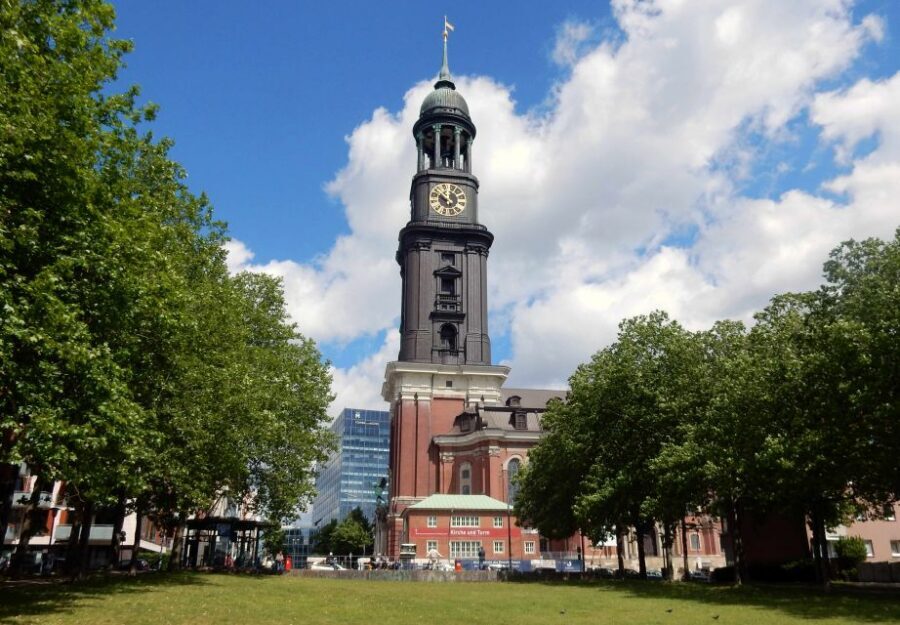
- St. Michaelis Church clock: a standout visual and a great start to the story
- Krameramtswohnungen / Krameramtsstuben row-house area: Hamburg’s oldest surviving settlement of its kind
- Sieleinstiegshäuschen + Baumwall flood protection stop: a practical look at how the city lives with water
- UNESCO Speicherstadt walking section: perspective on Hamburg’s past and present side by side
- Elbphilharmonie harbor view: you end with photos and the option to explore the plaza on your own if open
- German live guide: clear narration, with enough time for questions and stops
Entering Hamburg’s story: from St. Michaelis to the Elbphilharmonie
If you only see Hamburg from the water or only from the new buildings, you miss how the city thinks. This tour is built around a simple idea: start with the biggest spiritual landmark and timing landmark you can see, then walk toward the newest international icon and compare what each place is saying.
I especially like the tone of the tour. It’s not just architecture-buff content. You get human-scale things, like the row-house settlement that shows how people lived long ago, and the water-control explanations that make sense of why Hamburg developed the way it did. It’s that connection—old life, practical engineering, then modern design—that makes the whole walk feel coherent.
And yes, you will come away with better “where-am-I?” instincts. By the time you reach the harbor side, you’ll understand why Speicherstadt and HafenCity sit the way they do, and how the Elbphilharmonie fits into the skyline.
Other Elbphilharmonie tours in Hamburg



Getting oriented at St. Michaelis Church (and what to watch for)
The tour starts at St. Michaeliskirche, where you’ll meet on the right side of the main entrance. Arrive roughly 10 minutes early, because you’ll want a smooth start before the group moves off. Your guide is easy to spot, thanks to the white bag.
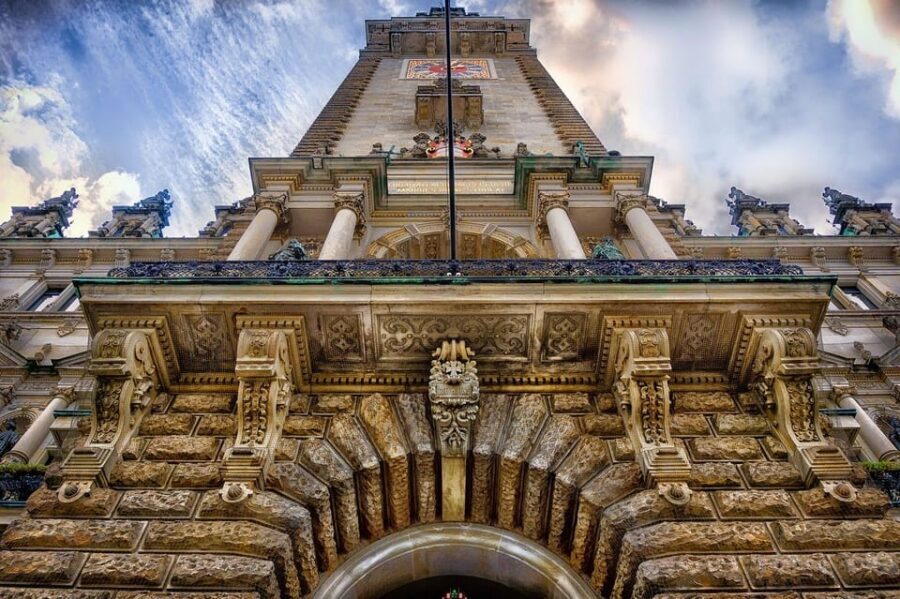
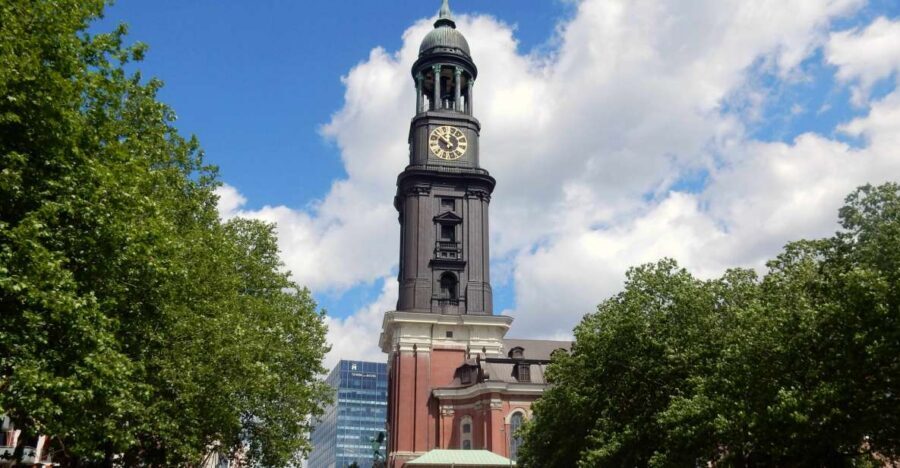
Once the walking begins, the church itself is the instant mood-setter. St. Michaelis is a major Hamburg landmark, and your guide points out the church clock—described as the largest church clock in Germany. Even if you’re not a “clock person,” you’ll notice how much it dominates the façade and the way people orient themselves around it.
Practical tip: bring your camera, but also take a few moments without it. Standing close to the church makes it easier to compare the scale later when you reach the modern buildings.
The Krameramtswohnungen stop: oldest row-house settlement, not just a pretty street
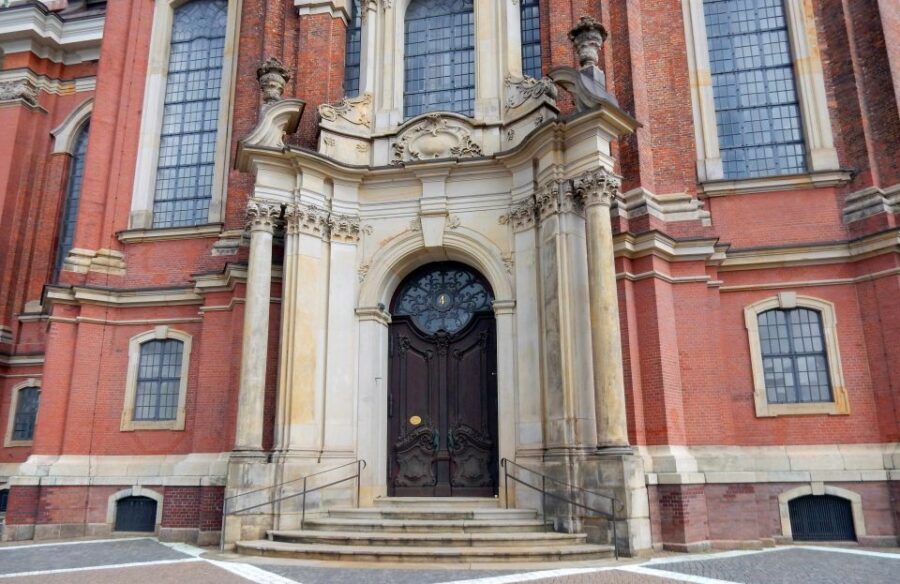
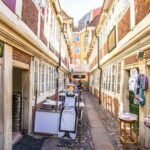
One of the best parts of this walk is the Krameramts area—Krameramtswohnungen (also tied to Krameramtsstuben). This is described as the oldest row house settlement still existing in Hamburg, and you can feel why that matters.
Modern Hamburg can look like a series of strong design decisions. This stop grounds it in something older: long, connected living spaces where trade communities shaped the city. You get a photo stop plus guided sightseeing here, so you’re not just walking past brickwork—you’re getting the context for what you’re looking at.
What makes it valuable for you: a guided explanation turns a normal-looking historic street into a map. After this, Michelwiese and the harbor approach feel less random, and more like a continuation of how the city grew around work, trade, and—of course—water.
Michelwiese to the harbor edge: the quick walk that changes the view
After the row-house area, the tour heads toward the harbor using the Michelwiese. This part is short, but it matters. You’re not just moving from one landmark to another; you’re shifting your perspective.
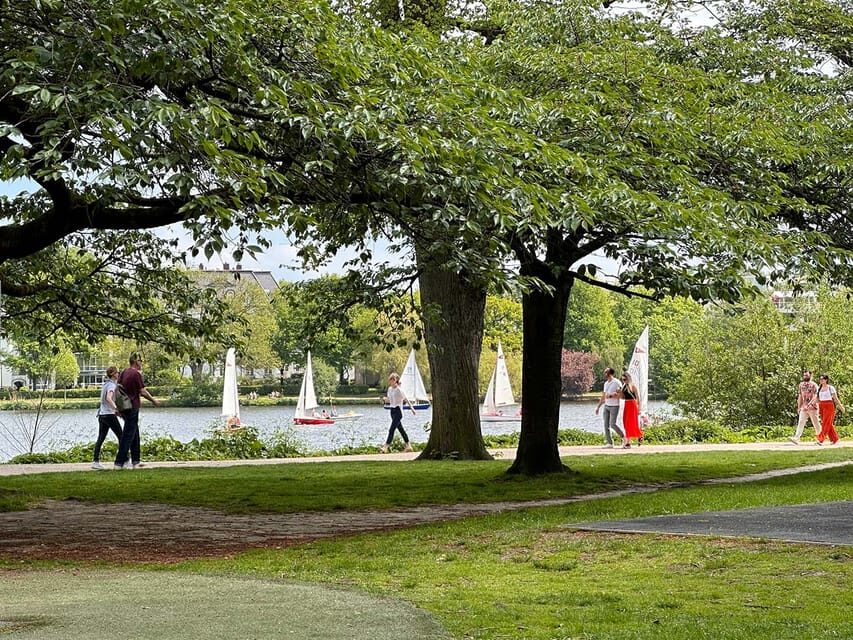
The Michelwiese stretch is where the “Hamburg feeling” starts to show up—open space, direction toward the water, and that sense that the city is always negotiating with its port geography. Your guide includes a guided moment and a walk here, so you get a bit of framing before you hit the next neighborhood area.
If you like tours that help you read a city instead of just collecting highlights, this is where you’ll feel it. It’s a breathing space between the older inner-city sights and the harbor-facing stops.
Portugiesenviertel: a brief neighborhood pass with useful context
Next comes the Portugiesenviertel. The tour treats it as a pass-by with guided sightseeing for a short moment, which means you should expect quick impressions rather than a long wandering session.
Still, this is one of those “bridge” stops. It helps connect the church-and-row-houses story with the harbor side. In a city where different eras sit close together, that sort of bridge matters.
If you’re the kind of traveler who wants to go deeper later, make a mental note here: the more time you spend in the Elbe/harbor zones, the more you’ll appreciate this as a transition layer.
Other St. Michael's Church tours in Hamburg

Siel-Einsteigehäuschen and Baumwall: the flood protection lesson you’ll actually remember
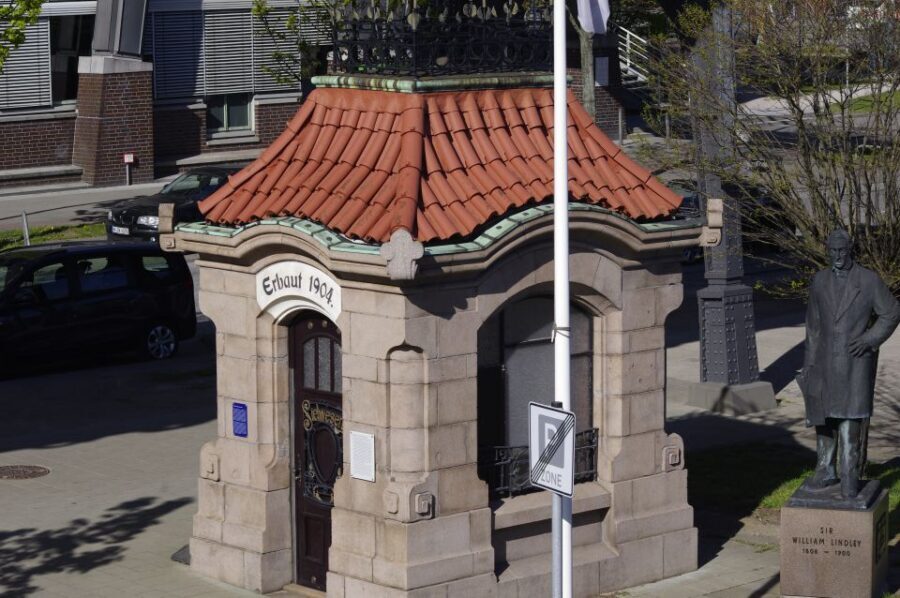
This is one of the most memorable sections of the tour. You stop at the Siel-Einsteigehäuschen for a photo stop and guided sightseeing. Then you continue to the underground station Baumwall, where the guide explains flood protection.
Here’s why this section is so good: it’s practical. Hamburg isn’t just a pretty port. It’s a city that had to plan for water threats and manage water flow over time. When you hear the flood protection explanation while you’re in the right place—rather than reading about it later—you’ll retain it.
What you should do as you listen: picture the city’s water system as a network, not a single event. The tour gives you just enough structure to connect what you see around the port with the behind-the-scenes engineering that protects people.
Also, wear shoes you can trust. Even if this section is not described as a long walk, you’ll be moving and stopping in a compact area, and you’ll want sure footing.
Speicherstadt (UNESCO) to HafenCity: past docklands, present design
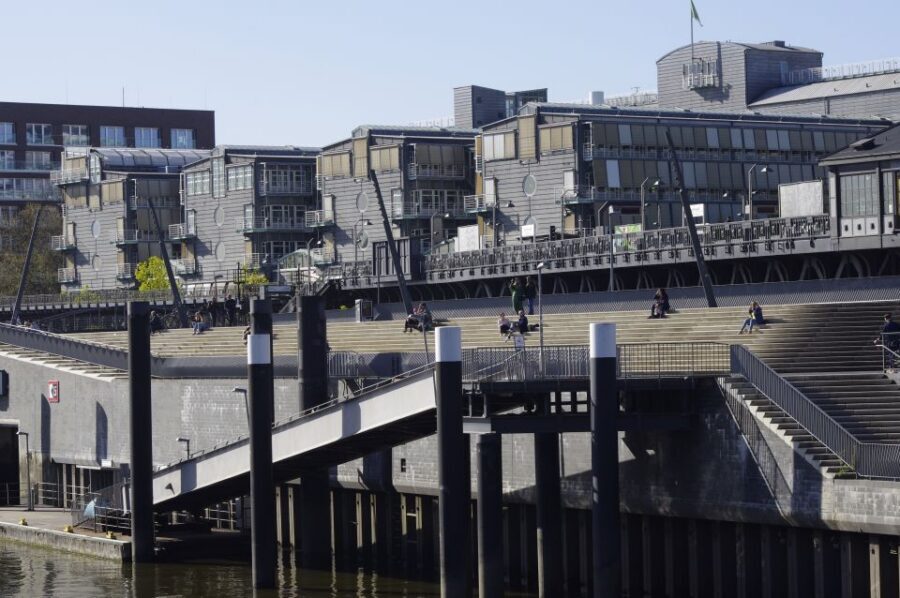
From the modern harbor side, the tour moves along the Speicherstadt, which is a UNESCO World Heritage Site. You get photo time and guided sightseeing here, focused on getting a perspective on Hamburg’s past and present.
This is where the tour’s “traditional to modern” promise becomes real. You’re not only seeing a historic warehouse district; you’re also seeing how Hamburg uses that memory while moving forward. The walk along Speicherstadt gives you that anchor, and then the tour shifts toward the modern HafenCity, characterized by its striking buildings.
If you like comparisons, this is your payoff moment. Historic timber-and-brick port heritage sits close to new architectural statements. The contrast is visual, but the guide helps you understand what changed and why the city keeps re-inventing its waterfront.
Elbphilharmonie finale: modern architecture with harbor-scale views
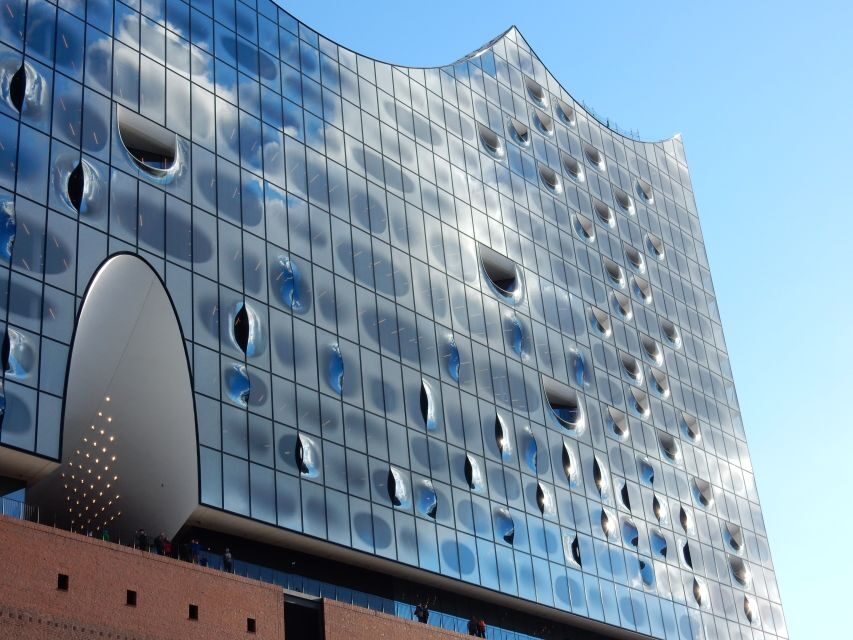
Finally, you reach the Elbe Philharmonic Hall—the Elbphilharmonie. The tour ends at its base area with a direct harbor view, including a look across the water toward the musical theatres on the other side.
During the last photo stop, you’ll get guided sightseeing and a chance to take in the modern architecture. The way the tour frames it is helpful: it’s presented as a project that combines tradition and modernity, and you’ll feel that in how the building sits in the skyline and how people move through the harbor area.
Important for your expectations: the tour includes no entrance to sights. That means you’ll get the exterior architecture and the harbor-side views, and you can choose what to do next on your own.
After the guided portion, it may be possible to explore the Elbphilharmonie Plaza on your own, but closures can happen. If your goal is a specific viewpoint or inside access, check on-site timing so you don’t show up expecting open doors.
Price and value: is $25 for a 2-hour walk worth it?
At $25 per person for a 2-hour guided walking tour, the value comes from two things: the guide and the number of major stops packed into one route.
You’re paying for interpretation, not just movement. A church clock tour and a harbor architecture photo walk can be done alone, but here you also get water and flood protection explanations at Baumwall, plus context for Speicherstadt and the older row-house settlement. Those are the details that turn “I saw places” into “I understand the city’s logic.”
It also helps that the tour runs rain or shine. You’re not forced to gamble with plans the moment weather changes, as long as you’re comfortable walking in wet conditions.
The tradeoff is that it is very much a walking-and-standing experience. If you’re easily tired or have mobility limits, you’ll struggle with the pace and layout. If that applies, you’ll get more enjoyment with a different format.
Who this tour suits best
This is a great match if you:
- Want a guided way to connect Hamburg’s major landmarks without planning a route yourself
- Like architecture but also care about the practical side of a city (like flood protection)
- Enjoy photo stops paired with short explanations, not long museum time
- Are comfortable walking in the weather and taking short guided pauses
It may not be a great match if you:
- Have mobility impairments (it is not suitable for that)
- Want ticketed interior access at sights (entrances are not included)
Should you book this St. Michaelis to Elbphilharmonie walking tour?
I’d book it if you want a clean introduction to Hamburg that goes beyond the postcard view. The itinerary is built around strong contrasts—church clock scale, oldest surviving row houses, water-control storytelling, UNESCO docklands, then the Elbphilharmonie finish with harbor views. That mix is exactly what makes this kind of guided walk worth paying for.
I wouldn’t book it if you need an easier pace, more seats, or interior access included. Since it’s a rain-or-shine walk and not designed for mobility impairments, choose it only if you’re comfortable moving for the full 2 hours.
If you’re visiting for a short time and want to understand how Hamburg connects old trade life to modern waterfront design, this is one of the smarter ways to spend a morning or afternoon.
FAQ
Where is the meeting point?
Meet on the right side of the main entrance of St. Michaelis Church. Arrive about 10 minutes early, and look for the guide holding a white bag.
How long is the tour?
The duration is 2 hours. Starting times depend on availability.
What language is the tour guide?
The live tour guide speaks German.
Does the tour run in bad weather?
Yes. The tour takes place rain or shine.
What’s included in the $25 price?
The guide is included. You are not paying for food or drinks.
Are entrance tickets to sights included?
No. Entrance to sights is not included.
Is the tour suitable for people with mobility impairments?
No. It is not suitable for people with mobility impairments.
When does the tour end?
The activity ends back at the meeting point.
Can I cancel and get a refund?
Yes. You can cancel up to 24 hours in advance for a full refund.