Hamburg’s ships tell stories on foot. This Elbe port walk from Landungsbrücken to Övelgönne is built to make maritime Hamburg click, with fish trading and harbor life explained in a way that stays fun. I also like the tour’s pace: enough time to see the working waterfront and pause for context. One thing to plan for: it’s outdoors along the river, so wind and weather can affect comfort.
What makes this one feel practical is that you’re not just looking at ships—you’re learning the “why” behind places like Neumühlen, plus what the waterfront changed into over time. You’ll also pass the St. Pauli Fish Market area, where the trade and the eating culture overlap in an unmistakably local way.
And because it’s private for your group up to 10, you’re not squeezed into a huge crowd while you try to take in container yards, shipyard areas, and the portside neighborhoods. Still, if you expect an all-glass-and-waterfront promenade with zero industrial edges, set your expectations for a real working port path.
In This Review
- Key highlights I think you’ll care about
- Walking Hamburg’s Elbe: Landungsbrücken to Övelgönne
- Hamburg’s port as Germany’s gateway to the world
- St. Pauli Fish Market stop and the trade-to-food connection
- Neumühlen’s meaning: fish trade, warehouses, and new uses
- What you see around the port: piers, shipyards, and terminals
- Private group up to 10: a better fit than the big crowd
- Price in plain terms: is $357.90 worth it?
- Timing, meeting point, and what to bring for a good walk
- Who this Hamburg port promenade suits best
- Should you book the Hamburg Port Promenade Tour?
- FAQ
- What is the Hamburg Port Promenade Tour duration?
- Where is the tour meeting point?
- How much does the tour cost?
- What does the tour include along the Elbe?
- Is this tour a private experience?
- Do I need a paper ticket?
- Is the tour near public transportation?
- Is the tour suitable for most people?
- What happens if weather is poor?
- Can I cancel for a full refund?
Key highlights I think you’ll care about
- Landungsbrücken to Övelgönne along the Elbe: a river walk tied to Hamburg’s maritime identity
- St. Pauli Fish Market area: a natural stop for understanding the trade-to-food connection
- Neumühlen trade history in plain terms: fish trade, factory-building shops, and warehouse-to-homes transformations
- Old pilots’ and captains’ houses meeting new architecture: the city layering you can actually see
- Piers used for pleasure boat routes: you’ll spot the starting points for Elbe sightseeing boats
- Private group up to 10 with a mobile ticket: easier coordination than joining a big public tour
Walking Hamburg’s Elbe: Landungsbrücken to Övelgönne
This tour follows the Elbe along a stretch that feels like a moving timeline. You start near Landungsbrücken, a key waterfront area where you can sense Hamburg’s “gateway” role right away, because ships and port activity shape what you see. From there, the route continues toward Övelgönne, where the vibe shifts from pure harbor working areas toward the more neighborhood-like feel along the river.
What you get, in real-world terms, is a guided walk that helps you read the waterfront. If you’ve ever visited a port and felt like you were just watching logistics from the outside, this one tries to connect the dots: where goods came in, how neighborhoods grew around trade, and why certain spots became popular.
The pacing matters. At around two hours, it’s long enough to take meaningful stops and learn the story of the places you pass, but not so long that you’re stuck walking when the weather turns. That balance is especially useful if you’ve got limited time in Hamburg and still want something that feels local.
If you're still narrowing it down, here are other tours in Hamburg we've reviewed.



Hamburg’s port as Germany’s gateway to the world
Hamburg isn’t just a pretty harbor town—it’s a working port, and this tour leans into that. You’ll be walking through areas described as part of Germany’s gateway to the world, which is a helpful way to frame what you’re seeing. Instead of treating the harbor like a backdrop, the guide-focused format helps you interpret the waterfront as infrastructure tied to shipping, trade, and daily movement.
Along the way, you’ll likely notice the contrast between major shipping activity and the city’s human side. The Elbe frontage includes viewing spots that connect you to what’s happening on the water, plus piers that link to leisure boat trips. That combination is exactly why the route is fun: you’re not only studying ships, you’re also seeing how people use the same water for recreation.
Practical tip: plan for the fact that the “port look” comes with open sightlines, sometimes strong wind off the river, and walking paths that can be a bit uneven. Comfortable shoes aren’t optional here.
St. Pauli Fish Market stop and the trade-to-food connection
A standout part of this experience is that it includes the St. Pauli Fish Market area. This isn’t just a photo stop. The tour connects the market with the fish-trade story of Hamburg, so the market becomes an outcome of the city’s trading past instead of just a name on a map.
I like how this kind of stop teaches you what to look for. You learn how maritime commerce shaped where shops and services clustered near the water. Then you see how that economic history still influences what people eat and buy along the harbor today.
The best part is that it can make you hungry in a good way. The information about the trade connects naturally to the idea of traditional food along the waterfront. If you’re trying to eat like a local rather than eat like a tourist, this stop gives you a better sense of what kind of food makes sense in this area.
If you’re the sort of person who enjoys markets but hates long lines, keep this in mind: your time here is part of a walking tour length, so treat it as a learning pause and use it to decide what you might want to try later rather than expecting a full food crawl.
Neumühlen’s meaning: fish trade, warehouses, and new uses
One of the most interesting parts of the route is the story behind Neumühlen. The tour frames it as a name with trade meaning—centered on fish trade—and then carries that idea forward into what the waterfront has become.
You’ll hear about fish trade history, but the real visual hook is what happened afterward: shops in former factory buildings, old warehouses converted into flats, and the mix of traditional and newer dining that line the water’s edge now. This is one reason the walk feels more satisfying than a generic sightseeing loop. The guide points you toward specific transformations you can recognize with your own eyes.
What I think you’ll enjoy most is that the route shows the contrast between time periods. The tour description notes how contemporary architecture meets older pilots’ and captains’ houses. That kind of city layering is a big part of why people fall for Hamburg. It doesn’t pretend the harbor is frozen in time; it shows how the port kept evolving.
Possible consideration: because you’re walking through areas shaped by trade and industry, some sections can feel less like a postcard promenade and more like a working waterfront. If you want only scenic views with minimal industrial edges, you may prefer to plan a bit of extra downtime elsewhere after the tour.
What you see around the port: piers, shipyards, and terminals
Hamburg’s Elbe waterfront is packed with “types” of places: working zones, transit points, cruise areas, and leisure piers. The tour helps you read those zones instead of treating them all as the same industrial blur.
From what’s shared about the experience, you can expect to pass by a mix of:
- cruise ship terminal areas and ports associated with big vessels
- shipyard and harbor infrastructure viewpoints
- container-related sights and port-scale operations
- areas that feel more like residential waterfront along the route
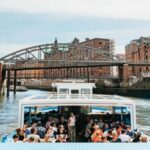
You also get the piers, which are important because they connect the working harbor to everyday leisure. The piers along the way act like start points for pleasure boat trips up and down the Elbe. Even if you don’t hop on a boat immediately, you’ll come away with a clearer sense of how the river is used for both business and fun.
If you’re planning your day: this tour is a great way to orient yourself. After the walk, you’ll be better able to choose where a boat trip might make sense, since you’ll have already seen the key Elbe stretches and how they relate to neighborhoods.



Private group up to 10: a better fit than the big crowd
This is a private tour/activity, meaning it’s only for your group. The group size cap is up to 10, which matters more than you’d think. With a smaller group, it’s easier to keep moving at a comfortable pace, hear details, and ask questions without everyone falling behind.
The mobile ticket also helps. You won’t be hunting for paper at the meeting point, and you can focus on arriving on time and getting ready to walk.
Another practical upside: a private format usually makes it easier to match the tour to your interests within the general theme. Even when the core route is fixed, a guide can adjust how much attention goes to fish trade, port infrastructure, or waterfront neighborhoods based on your questions. That’s a big reason why the two-hour format works so well here.
Price in plain terms: is $357.90 worth it?
The price is $357.90 per group (up to 10), lasting about 2 hours. That can sound steep if you’re picturing a solo or couple visit. But if you’re traveling as a small family or a group of friends, the math shifts quickly.
- If you fill the group at the cap, you’re roughly looking at about $35–$36 per person for two hours.
- If you’re just 2 people, the per-person cost is obviously higher, since you’re paying for the group package.
So the value question isn’t really about the headline number. It’s about how many people you can bring. I’d call it a good deal when you have at least a few people sharing the cost, because you get a private guide experience along a high-demand waterfront.
Also, you’re paying for guided context. A self-walk along the Elbe can be enjoyable. But this tour is set up to connect the names—Landungsbrücken, Neumühlen, St. Pauli Fish Market—with the reasons behind them. That’s the part that saves time and makes the walk feel intentional.
Timing, meeting point, and what to bring for a good walk
You meet at Landungsbrücken Brücke 320359, Hamburg, Germany. It’s near public transportation, so you should be able to fit it into a typical Hamburg day without needing a complicated transfer plan.
The tour ends in Hamburg. The exact final spot isn’t specified in the details you have, so keep it flexible. A good strategy is to schedule a nearby meal or activity that doesn’t depend on being at a specific corner.
What you should bring:
- Comfortable walking shoes (you’re on a riverside route with port surfaces)
- A layered jacket (wind along the Elbe is common sense for any river walk)
- Water and a small snack if you get peckish, since the experience is about learning and moving, not sitting for long stretches
Most people can participate, which is great. Still, it’s a walk, not a bus tour. If your mobility is limited, you’ll want to consider whether you’re comfortable with outdoor walking for about two hours along a waterfront.
Who this Hamburg port promenade suits best
This tour is a smart fit if you like:
- maritime themes but also want clear explanations you can actually remember
- walking tours that feel like learning, not just drifting around
- food culture connected to place names, especially around the St. Pauli Fish Market area
- seeing the contrast between port industry and livable waterfront neighborhoods
It’s also a good option when you’re traveling with a small group and want something more personal than a standard group tour.
If you’re coming for purely scenic river views and nothing else, you might find parts of the harbor side of the route less “pretty.” But if you’re curious about how Hamburg works as a port city, this format is exactly on target.
Should you book the Hamburg Port Promenade Tour?
I’d book it if you want a two-hour Elbe walk that turns waterfront scenery into understanding. The combination of fish trade context, a stop around St. Pauli Fish Market, and the stories behind Neumühlen and the port neighborhoods is the kind of travel value that makes a city stick in your mind after you leave.
Skip it (or at least be cautious) if you’re traveling when the weather is likely rough for outdoor walking, because the experience requires good weather. Also, if you’re going solo or as a duo and the group price doesn’t fit your budget, you may get better value by joining another option that charges per person instead of per group.
If you can gather a small group and you’re ready for an outdoor harbor walk with real local context, this is the kind of tour that pays off fast.
FAQ
What is the Hamburg Port Promenade Tour duration?
The tour lasts about 2 hours.
Where is the tour meeting point?
The start is at Landungsbrücken Brücke 320359, Hamburg, Germany.
How much does the tour cost?
It costs $357.90 per group, for groups of up to 10.
What does the tour include along the Elbe?
You’ll walk along the Elbe from Landungsbrücken to Övelgönne and you’ll see the St. Pauli Fish Market along the way.
Is this tour a private experience?
Yes. It’s a private tour/activity, and only your group participates.
Do I need a paper ticket?
No. The tour uses a mobile ticket.
Is the tour near public transportation?
Yes, it’s listed as being near public transportation.
Is the tour suitable for most people?
Most travelers can participate.
What happens if weather is poor?
This experience requires good weather. If it’s canceled due to poor weather, you’ll be offered a different date or a full refund.
Can I cancel for a full refund?
Yes. You can cancel up to 24 hours in advance for a full refund.