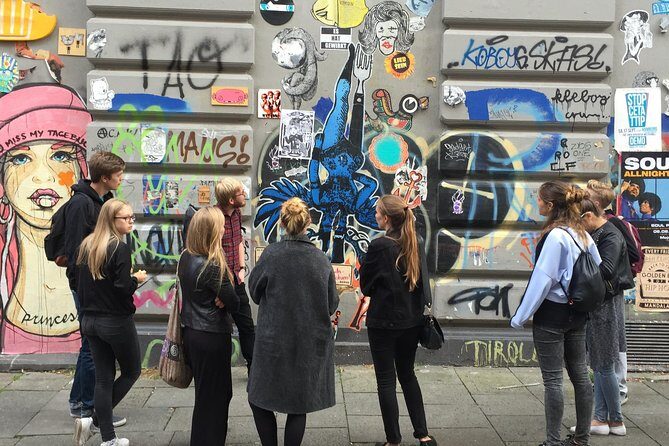
REVIEW · HAMBURG
St. Pauli Queertour – 100 Jahre Pride auf St. Pauli
Book on GetYourGuide →Operated by St. Pauli Office · Bookable on GetYourGuide
Hamburg’s queer history walks you right into the streets. The St. Pauli Queertour is interesting because it ties 100 years of Pride to real places in St. Pauli, from hardship to nightlife. I like the small-group feel (you get more room to ask questions) and the local-guided focus on LGBTQI+ characters like Pauline Courage, Corny Littmann, and Anita Berber. One possible drawback: pacing can feel long for some, and the tour may end in a bar setting where air quality isn’t ideal for everyone.
This is a value-priced $23 experience with a German live guide, starting right from the St. Pauli Office. You’ll be walking for about two hours and you’ll leave with a clearer sense of why St. Pauli has always been a magnet for queer community life—especially when you see the sites through the lens of the people who built that culture.
In This Review
- Key points before you go
- St. Pauli and the 100-year Pride angle
- Starting at Wohlwillstraße: the cozy office meets the street
- The people behind the route: Courage, Littmann, and Berber
- A 2-hour walking tour across decades (and why pacing matters)
- What you’ll actually see: queer nightlife culture in street-level context
- Price and value: what $23 buys you
- Practicalities that affect your experience
- Language and comprehension
- Group size and the human factor
- End stop and comfort
- Accessibility
- Cancellation and flexibility
- Who should book this tour?
- Should you book St. Pauli Queertour?
- FAQ
- What is the duration of the St. Pauli Queertour?
- Where does the tour start?
- What time should I arrive?
- How much does it cost?
- What language is the tour in?
- Is the tour wheelchair accessible?
- What’s included in the price?
- Are food and drinks included?
- Can I cancel if my plans change?
- Are there different starting times?
Key points before you go
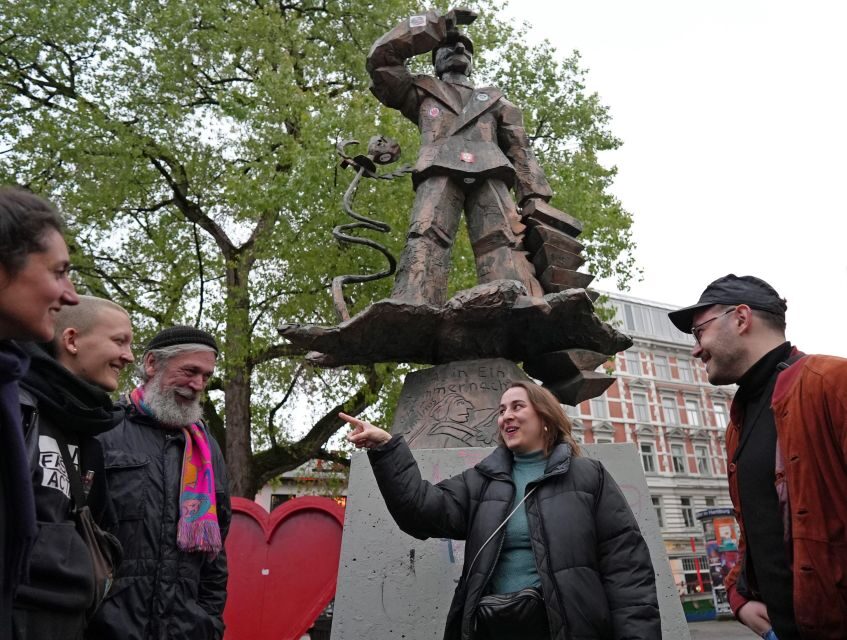
- Small groups, local perspective: You move slower than in big tours and you’re guided by people who know the neighborhood.
- 100 Jahre Pride theme: The stories connect LGBTQI+ life to a century of change, not just one era.
- Named figures you can picture: Pauline Courage, Corny Littmann, and Anita Berber are woven into the route.
- A walking tour format: You learn best by seeing street-level context as you go.
- Starts at the St. Pauli Office: The tour begins in a cozy office, which makes the start feel grounded and friendly.
- No food included: If you’re hungry afterward, you’ll want to plan a meal on your own.
St. Pauli and the 100-year Pride angle
St. Pauli is the kind of place where the contradictions feel built in. You get the tension of persecution and discrimination, and you also get the defiant energy of pride, community, and partying. This tour uses that contrast as its backbone. Instead of treating queer history like a museum topic, it treats it like a living thread: the streets, venues, and public spaces that shaped queer nightlife culture over the past century.
What I find helpful here is the way the tour frames “progress” as something messy. Pride doesn’t erase the hard parts. It grows alongside them. That’s the mood you’ll pick up as you walk, especially when the guide highlights how queer life persisted even when it was unsafe.
You’re also not just learning abstract facts. The tour explicitly brings in LGBTQI+ personalities—Pauline Courage, Corny Littmann, and Anita Berber—so the history has faces, not just dates. When a story has names, you remember it later. It also makes the neighborhood feel less anonymous.
Other Reeperbahn and St. Pauli tours we've reviewed in Hamburg



Starting at Wohlwillstraße: the cozy office meets the street

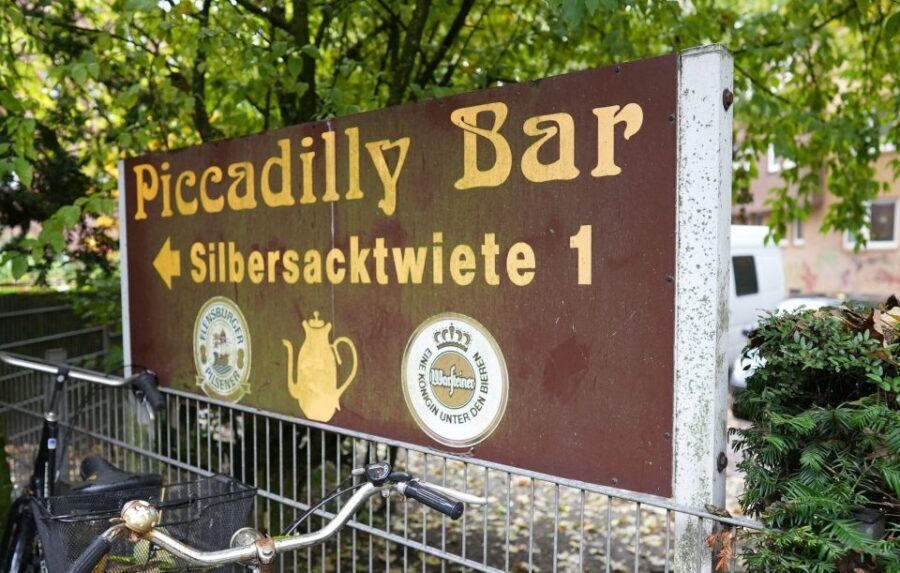
The tour begins in the St. Pauli Office at Wohlwillstraße 1, 20359 Hamburg. It’s a small detail, but it matters: starting in a proper office makes it easier to settle in before you hit the streets. You’ll register at the counter 15 minutes before the tourstart, so plan a quick buffer if you’re finding the address.
Since the tour is guided in German, your first “real moment” is listening to the intro and getting context for the walk. If you speak German comfortably, you’ll likely enjoy this more, because the storytelling is part of the tour’s value. If your German is basic, don’t panic—this still works as a place-based experience—but you’ll want to rely on the guide’s pacing and the visible sites around you.
From there, you head out on foot. The walking format keeps the focus on neighborhood texture: locations connected to queer nightlife culture, and the way those places shifted as decades passed. It also keeps the tour grounded in something you can repeat later. After two hours, you’ll know what you’re looking at.
The people behind the route: Courage, Littmann, and Berber

One of the strongest reasons to book this tour is that it doesn’t rely only on “what happened” in St. Pauli. It names people you can connect to the culture.
Here’s how that helps you as a traveler:
- Pauline Courage gives the tour a sense of identity and agency. Instead of history being something done to queer people, you get a clearer sense of personalities shaping community life.
- Corny Littmann helps connect LGBTQI+ nightlife culture to a recognizable slice of Hamburg’s broader character. You’re not only learning “queer history”; you’re learning queer presence within the city’s social life.
- Anita Berber adds a more personal, arts-and-performance angle. Her name signals that queer life in St. Pauli isn’t only about clubs—it’s also about expression, creativity, and visibility.
I like this approach because it turns the neighborhood into a map of influence. As you walk, you can start mentally placing these personalities into the physical spaces you’re passing. That’s the kind of understanding that makes a city feel real.
A 2-hour walking tour across decades (and why pacing matters)
The duration is 2 hours, and that’s a sweet spot if you want meaning without committing an entire afternoon. But it also means the tour has to pack a lot into a short window: a century of LGBTQI+ life, with both painful and celebratory chapters.
This is where expectations matter. On paper, two hours sounds easy. In practice, the tour depends on how long each stop gets and how smoothly the group stays together. One caution I’d give you: if your priority is fast, tight storytelling, keep an open mind. Some experiences may feel longer than expected between certain stops, especially when the group dynamics get noisy.
That said, the walking format helps you absorb the bigger arc. You’re not stuck in one location, and you’re not forced to imagine what the neighborhood looked like. Instead, you get a series of site-based moments—places associated with queer nightlife culture—where the guide connects past and present.
What you’ll actually see: queer nightlife culture in street-level context

The tour’s core promise is queer life in St. Pauli—from persecution to pride and partying—over the last 100 years. You’ll learn about queer nightlife culture through the places tied to it. Even though the exact stop list isn’t something I can confidently pin down here, the themes are clear:
- You’ll be shown places connected to LGBTQI+ nightlife culture.
- You’ll hear how the community responded to discrimination and risk.
- You’ll also learn about the pride side: the energy of celebration and community-building.
For me, that’s the real value of a walking tour like this. It’s hard to reduce queer history to one building or one era. St. Pauli’s story is distributed across time, venues, and street corners. Walking makes that feel natural.
Also, because the tour starts at a real local office and stays on foot, it has a neighborhood rhythm. You’re not just reading the past—you’re sensing how the area still supports social life today.






Price and value: what $23 buys you
At $23 per person for a 2-hour guided walking tour, the pricing feels built for access. You’re paying for a local guide, live interpretation, and the time it takes to connect names and stories to real places.
It’s not a “tour that also feeds you.” Food and drinks are not included. That’s actually a good thing for value, because it keeps the price lower and lets you choose what fits your day. Just don’t plan to skip dinner because you expect it to be part of the tour.
If you’re comparing costs, think about what you’re buying: not just a route, but context. For queer history in a specific neighborhood, a guided narrative often makes the difference between “I passed buildings” and “I understood why these buildings mattered.”
Practicalities that affect your experience
Language and comprehension
The tour is in German. If you don’t speak German, this might still be doable if you’re comfortable with basic listening and you enjoy place-based sightseeing. But if you want to fully follow the stories and named personalities, plan for stronger German skills.
Group size and the human factor
The tour is described as small group. That usually means better attention and more manageable pacing. Still, group energy can influence how fast or slow things feel in real life. One concern that has come up for some participants is that when people in the group are very intoxicated, it can affect the guide’s comfort and the flow of the walk. If you’re sensitive to that, choose your moment carefully and be mentally prepared for a party neighborhood.
End stop and comfort
One downside you should be aware of: the tour may finish with a bar-related stop. If smoke bothers you, you’ll likely want to plan around it—either by bringing what you need for comfort or by deciding in advance that you’re okay stepping out briefly when the group enters any smoke-heavy space.
Accessibility
The tour is listed as wheelchair accessible. Since it’s a walking tour, I’d still consider asking the provider if you need specifics about surfaces and pacing. It’s one of those “don’t guess—confirm” moments that can save stress.
Cancellation and flexibility
If your plans can shift, the tour offers free cancellation up to 24 hours in advance for a full refund. It also supports reserve now & pay later, which is useful if you want to hold a spot while you lock in other parts of your Hamburg trip.
Who should book this tour?
This is a strong choice if you:
- want queer history tied to real St. Pauli places, not just a generic overview
- enjoy guided storytelling that includes named people like Pauline Courage, Corny Littmann, and Anita Berber
- prefer small-group experiences with a local guide
- are looking for a focused 2-hour activity that fits into a day without exhausting you
It may be less ideal if you:
- need very tight, fast pacing and hate time spent at stops
- are very sensitive to smoke or don’t want any bar setting at the end
- expect a tour in English (this one is German-led)
Should you book St. Pauli Queertour?
I’d book it if you want a meaningful, neighborhood-based queer history walk with local guidance, clear Pride context, and a manageable time commitment. The $23 price also makes it easy to add to a Hamburg itinerary without guilt.
But go in with the right expectations: it’s a walking tour, it’s German, and the group atmosphere can matter on party-heavy streets. If you want a smooth, quiet museum-style experience, you might feel disappointed. If you’re okay with street-level reality and you want the stories to land where they happened, this is exactly the kind of tour that makes a city feel personal.
FAQ
What is the duration of the St. Pauli Queertour?
The tour lasts 2 hours.
Where does the tour start?
You meet at the St. Pauli Office, Wohlwillstraße 1, 20359 Hamburg.
What time should I arrive?
Please register 15 minutes before the tourstart at the counter in the St. Pauli Office.
How much does it cost?
The price is $23 per person.
What language is the tour in?
The live tour guide speaks German.
Is the tour wheelchair accessible?
Yes, the tour is listed as wheelchair accessible.
What’s included in the price?
Included are a local tour guide and the walking tour.
Are food and drinks included?
No. Food and drinks are not included.
Can I cancel if my plans change?
You can cancel up to 24 hours in advance for a full refund.
Are there different starting times?
The tour notes that you should check availability to see starting times.