REVIEW · HAMBURG
Hamburg: 2-hour harbor cruise
Book on Viator →Operated by Rainer Abicht Elbreederei GmbH & Co. KG · Bookable on Viator
Hamburg from the water hits different. This 2-hour harbor cruise has you cruising past the Speicherstadt warehouse area and straight into the working heart of the Port of Hamburg—container terminals, cruise berths, shipyard views, and Elbe waterfront spots. I really like the big-sky, close-up views of ships and historic buildings from the moving boat, and I also like that you get guidance from the crew on what you’re seeing. One thing to consider: the live guide commentary is in German, so your experience in English depends on using the onboard audio app with your own headphones.
The ship docks and turns around in the St. Pauli area, with sights spaced along the route so you can follow the action without feeling rushed. Expect a comfortable ride (including a restroom), and a layout that works for all ages. Just go in knowing this is a port-and-ship tour as much as a city sightseeing loop—and plan your audio setup before you board.
In This Review
- Quick things to know before you board
- Two hours on the Elbe: what you’re really buying
- Price and value: is $48.06 worth it
- Getting to the boat: St. Pauli Landungsbrücken, Bridge 1
- The St. Pauli piers setup: where the cruise life meets cargo life
- Speicherstadt and the old warehouse feel: where the story starts
- The port showstopper: container terminals and massive ships
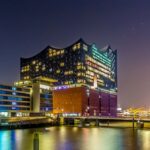
- Hafencity and the “modern city” angle
- Cruise berths and the shipyard zone: what “Hamburg built” looks like
- Altona Fish Market (Sundays) and the fish-auction connection
- The tunnel under the Elbe: a weirdly cool engineering pass
- Musical venues and viewing platforms along the route
- Commentary and audio app reality: German live, English through RainerAbicht
- Comfort on board: restrooms, room to sit, and a practical pace
- Families and kids: good for all ages, but plan for quiet listening
- Group size: up to 274, so pick your view
- So… who is this cruise best for?
- Should you book this Hamburg harbor cruise?
- FAQ
- Is this Hamburg harbor cruise really in English?
- How long is the cruise?
- Where do I meet the tour?
- Where does the cruise end?
- What sights does the cruise cover?
- Is there a restroom on board?
- Can I buy drinks or snacks during the cruise?
- Do I need headphones for the audio app?
- What’s the group size like?
- Is free cancellation available?
Quick things to know before you board
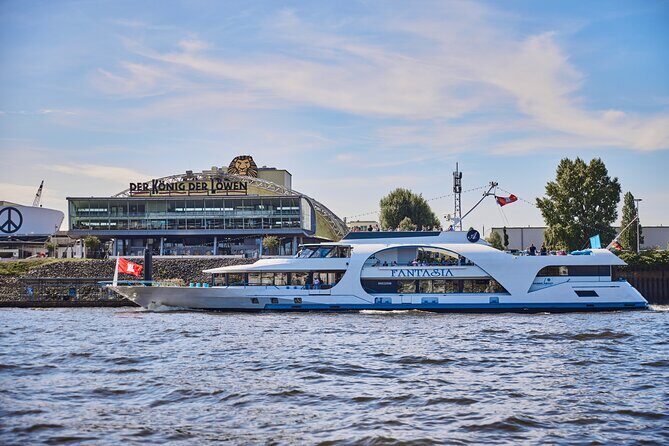
- Live guide is German; English comes via the audio app, so bring earbuds/headphones.
- Most of the early time is industrial: container ships, cranes, and port infrastructure.
- You’ll pass classic Hamburg waterfront areas like Speicherstadt and St. Pauli piers along the Elbe.
- The route includes a mix of working port views plus landmarks like the shipyard zone and a functional tunnel under the river.
- Comfort basics are handled with a restroom on board, plus the chance to buy drinks and snacks.
Two hours on the Elbe: what you’re really buying
This cruise is built for people who want the Hamburg waterfront in “real life,” not just postcard corners. In two hours, you get a tour of how the city sits beside its port—warehouses and old quays one moment, container ships and cargo cranes the next.
If you’re the type who loves seeing how cities function—how trade moves, how ships are docked, how waterfront neighborhoods connect—this format works well. Even if you’re not a ship-nerd, the scale of the port does a lot of the explaining on its own.
The big value is that you don’t have to figure out a route or logistics. You simply board at St. Pauli and let the boat carry you along the Elbe, with stops and sights that help you connect what you’ll see later on land.
Other harbor and port cruises in Hamburg

Price and value: is $48.06 worth it
At about $48.06 per person for roughly 2 hours, you’re paying for two things: access to the harbor from the water and built-in context while you’re there. When the audio is working well for you, the commentary can make the views more meaningful—especially around historic areas and major port features.
It’s also a practical deal if you want a low-effort activity that’s easy to repeat in your travel rhythm. You don’t need museum tickets, reservations, or a timed entry plan. You just show up, sit back, and watch.
The “value risk” here is language expectations. The experience is advertised as available in English, but the live guide narration is in German. If you depend on English and the app is slow, glitchy, or hard to use on your phone, your enjoyment may drop.
Getting to the boat: St. Pauli Landungsbrücken, Bridge 1
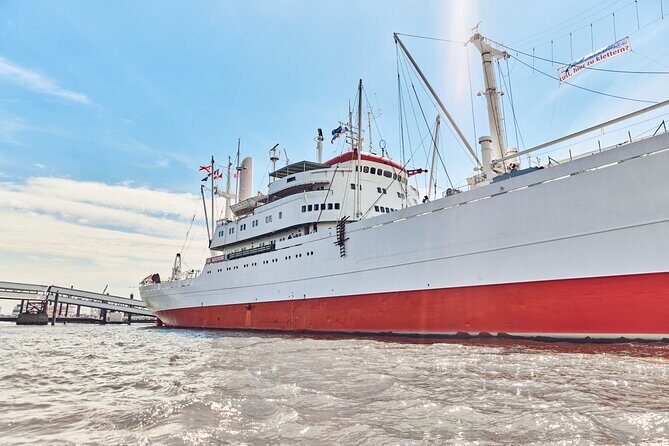
Your starting point is at Rainer Abicht Elbreederei by the St. Pauli Landungsbrücken, Brücke 1. It’s close to the city core, but the St. Pauli pier area can still be a little confusing at arrival time—there are multiple bridges and multiple boat operations.
My practical advice is simple: arrive early and keep an eye on day-of instructions. One common snag is being sent to a different boarding bridge than the one shown at booking, so you don’t want to be rushing.
The good part: once you’re on board, the ship takes over. The route is planned, and the ride ends back at the Landungsbrücken area (at various bridges), so you’re not stranded far from transit.
The St. Pauli piers setup: where the cruise life meets cargo life
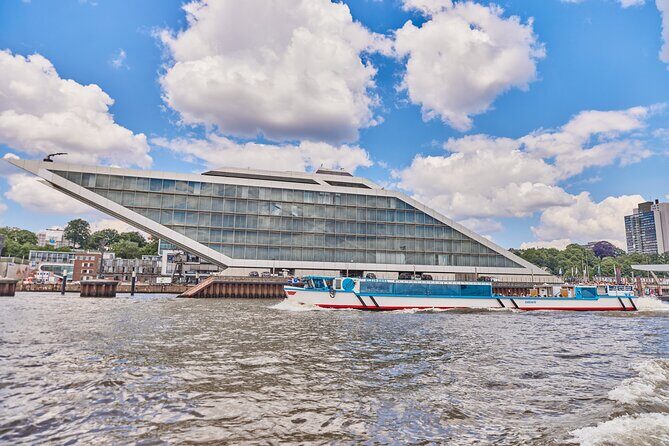
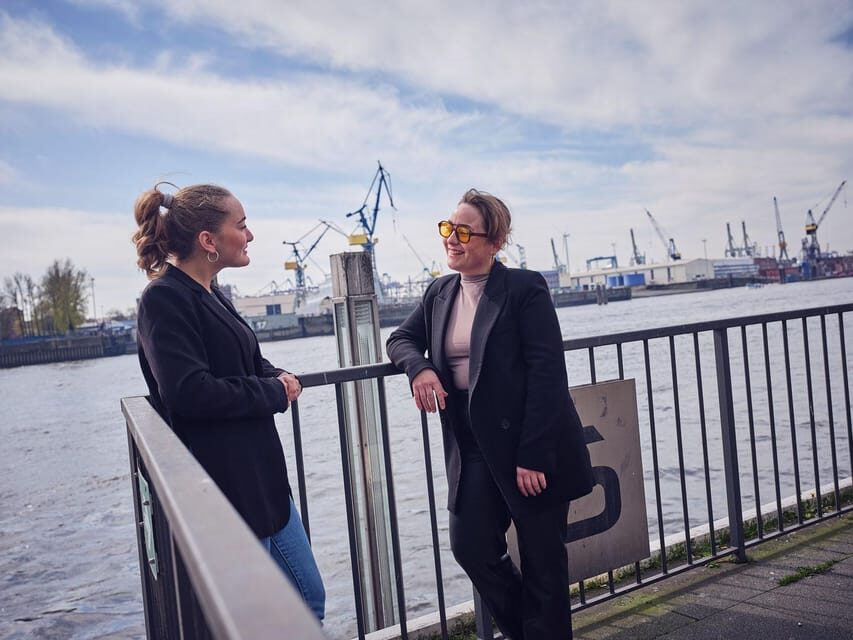
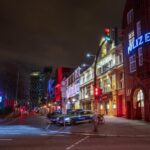
The route runs along the northern edge of Hamburg’s port, in the St. Pauli district, between Niederhafen and the St. Pauli Fish Market area along the Elbe. These docking points are also where passenger ships load and unload, so you’ll likely see big liners in port depending on the date.
That’s one of the most interesting contrasts on the cruise. You may catch a “luxury ship” moment on one side of the water and then, just minutes later, be staring at the opposite world: container terminals and working infrastructure.
You’re not just passively sightseeing. You’re watching how Hamburg shifts from visitor-friendly scenery to heavy industry, and that contrast is the point.
Speicherstadt and the old warehouse feel: where the story starts
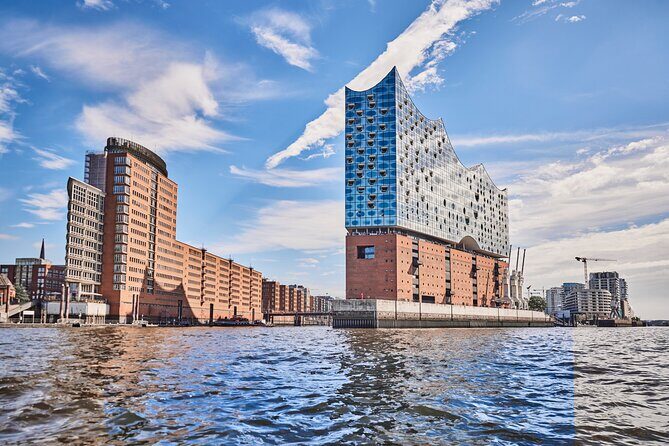
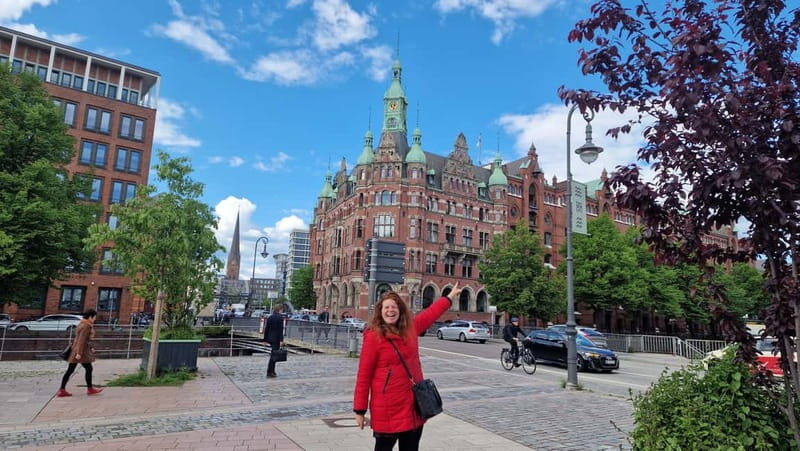
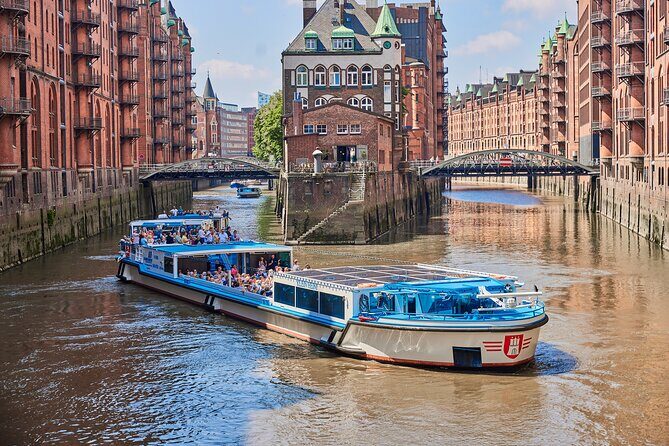
A key part of the cruise is moving through the city’s waterfront story, beginning with sights tied to the Speicherstadt area and historic buildings/warehouses along the route.
From the water, these structures look different than they do from street level. You get long lines, multiple layers, and a clearer sense of how the waterfront was built to support storage and shipping. It’s a reminder that Hamburg’s identity isn’t only modern glass and shopping streets—it’s also dockside industry and logistics.
One practical takeaway: if you’re planning to spend time in Hamburg later, this portion helps you recognize locations. Even if you don’t memorize everything, you’ll remember the shape and position of major waterfront zones when you walk around.
Other boat tours in Hamburg


The port showstopper: container terminals and massive ships
Most cruises in this time window can’t cover both “old waterfront” and “real port operations.” This one tries, and the early part can feel very heavy on ships, cranes, and cargo berths.
Plan for that. If you’re expecting a gentle sightseeing loop with lots of commentary about charming streets, you might feel disappointed during the first stretch. But if you love port visuals, this section is where the cruise earns its keep.
Seeing container ships and the container-loading scene from the deck gives you a new scale for the city. Hamburg’s port is not a background detail—it’s the engine.
If you’re coming with kids, this part can work great too, because the motion, the size, and the constant activity are naturally attention-grabbing.
Hafencity and the “modern city” angle
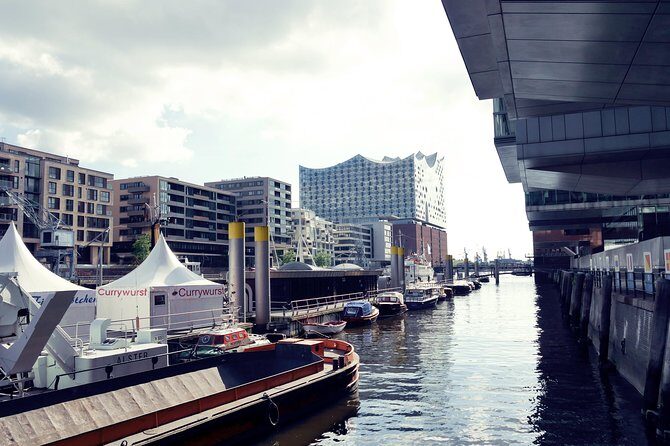
After the port-focus stretch, the cruise shifts toward other Hamburg waterfront areas, including parts of the city that look newer and more planned. A recurring theme in the experience is that the later portion tends to feel more like “Hamburg the city,” while the earlier portion is more maritime.
Even if your understanding of German is limited, the shift is visible. The scenery becomes less about cargo handling and more about the urban edge—architecture, harborfront promenades, and how the city is developing around the water.
This is also where you may appreciate the two-hour length. The cruise doesn’t spend all its time in one mode. You get an arc from industrial scale to cityfront atmosphere.
Cruise berths and the shipyard zone: what “Hamburg built” looks like
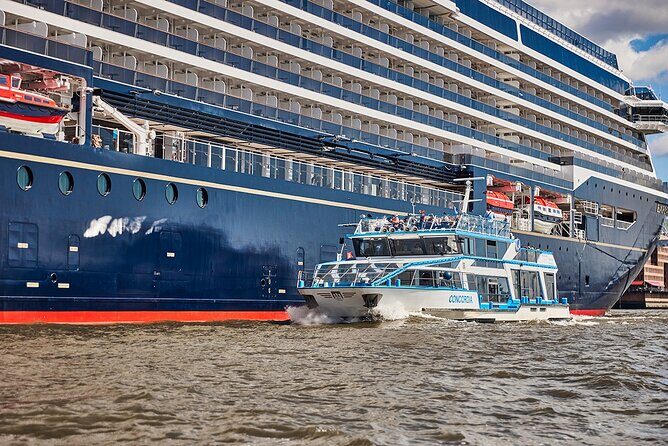
Along the way, you’ll pass areas associated with major ship activity. Depending on the date, you may see cruise ships docked—names like Queen Mary 2 and AIDA show up as examples of what can be in port.
You’ll also get views toward Blohm & Voss, the shipyard area where ships are built and/or repaired. That’s a different kind of industrial sightseeing than container terminals. Shipyard work tends to look more craft-and-construction than pure loading-and-unloading.
If you’re the kind of traveler who likes “how things are made and maintained,” this portion is a good match.
Altona Fish Market (Sundays) and the fish-auction connection
The cruise route references the Altona Fish Market, a public market in the Altona-Altstadt district where you can find everything from fish and groceries to flowers and clothing on Sundays. If your cruise lines up with Sunday, it’s worth thinking of the market as an extra option before or after your ride.
You’ll also pass the Fish Auction Hall, a historic event venue that’s used for events and concerts and is tied to the Sunday fish market.
Even if you don’t plan to shop, these spots help you understand that Hamburg’s harbor tradition isn’t only about shipping containers. It’s also about food supply chains and daily waterfront markets.
The tunnel under the Elbe: a weirdly cool engineering pass
One of the more unique landmarks included is a historic tunnel that is still functional, running under the Elbe from the Landungsbrücken area to Steinwerder.
You won’t be touring inside the tunnel. You’ll be seeing it as part of the harbor landscape. But it adds a layer of “this city engineered the water problem” that you won’t get from more generic harbor cruises.
If you like practical engineering stories—how cities connect sides of a river—this is a nice bonus sight.
Musical venues and viewing platforms along the route
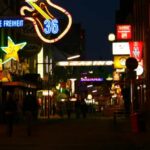
As you move along the piers, you may also pass the area connected to Hamburg’s most successful musical, plus another musical nearby (the exact one can vary) and a viewing platform.
This part matters because it signals that Hamburg’s waterfront isn’t only trade and transport. It’s also entertainment geography. When you’re on the deck, you see the harbor as part of daily life, not just industry.
Commentary and audio app reality: German live, English through RainerAbicht
Here’s the make-or-break detail: the live commentary is in German. The tour description includes English availability, but in practice, English depends on the audio app RainerAbicht (available on Apple and Play Store) and using it on your phone with headphones.
This is where you should be picky and careful. Some people report the app works well once downloaded. Others report it’s glitchy, the audio quality isn’t great, or they struggle to hear it over the live guide.
A tip that comes from repeated experience: don’t wait until you’re standing on the pier. Download the app ahead of time, test your headphones, and make sure you understand how the app cues the route.
Also, be aware that the audio may not be perfectly automatic. One reported frustration is that you may need to watch a map indicator and choose which narration segment to play, rather than having the audio trigger automatically at each point.
If you’re English-dependent and want the spoken tour to be effortless, this is the part of the experience you should double-check before you book.
Comfort on board: restrooms, room to sit, and a practical pace
A big win for many people is basic comfort: there’s a restroom on board and you can buy drinks and snacks while you’re cruising. That matters on a two-hour outing, especially if you’re traveling with kids or timing lunch/dinner around it.
The boat experience is also generally relaxed in structure: you’re not doing lots of stairs or stopping constantly. You’re mostly watching from the deck, taking in sights as the ship moves along the river and the port.
One more practical note: Hamburg weather can turn on you. Even in warmer months, you’ll likely want a light layer for breeze on open water. A hat helps too.
Families and kids: good for all ages, but plan for quiet listening
The tour is marketed as all-ages, and the ship-and-ship visuals can absolutely work for kids. Watching container ships from up close tends to grab attention fast.
Still, be ready for the listening setup. If the English experience depends on the app, kids will need headphones too, and that can affect the whole family’s comfort level. Also, shared boat spaces can feel stricter when the guide is speaking over the microphone.
If your kids are very young or easily distracted, you may want to position yourself where you can keep an eye on them while still hearing the audio.
Group size: up to 274, so pick your view
This cruise has a maximum group size of 274 travelers, which means it can feel crowded depending on the departure day. You’ll want to arrive a bit early to get comfortable seating or a good deck spot.
Because the views are wide (ships and harbor lines), it’s not like everyone needs the same single photo angle. But when people stand up to film or point, the crowd rhythm can change.
If you care about photos, I’d plan to be on deck at the moments when the ship slows near major landmarks—container areas, shipyard zones, and the cluster around St. Pauli docks.
So… who is this cruise best for?
This is a strong match if:
- you want port scenery and not just city streets
- you like ship scale and real-world harbor operations
- you can manage the English audio app experience on your phone
- you want a simple, low-commitment activity that works on many travel schedules
It’s a weaker match if:
- you’re expecting a fully English live guided experience
- you don’t want to deal with downloading, selecting, or troubleshooting audio
- you’re mainly after historic walking-style city storytelling
Should you book this Hamburg harbor cruise?
If you love the idea of seeing Hamburg as a working port city, I think you’ll enjoy this cruise a lot. The two-hour mix of Speicherstadt-style waterfront sights and big industrial harbor visuals is a practical way to get your bearings fast, and the on-board comfort helps make it an easy win.
But be honest about your language plan. With German commentary live and English delivered through the RainerAbicht app, your trip quality will hinge on whether the app works smoothly for you and whether you’re comfortable using it with headphones. If you want effortless English narration without your phone being part of the experience, you should probably look for an option that guarantees it.
In short: book it if you’re excited by ships and water views and you’re willing to prep your audio setup. Skip it if you need live English guiding to feel informed.
FAQ
Is this Hamburg harbor cruise really in English?
The live guide commentary is in German. English narration is available through the audio guide app RainerAbicht, which includes multiple languages.
How long is the cruise?
The cruise runs for about 2 hours.
Where do I meet the tour?
You meet at Rainer Abicht Elbreederei at the St. Pauli Landungsbrücken, Brücke 1.
Where does the cruise end?
The tour ends at the St. Pauli piers area at various bridges (near St. Pauli Landungsbrücken 8).
What sights does the cruise cover?
You’ll pass areas connected to Speicherstadt and historic warehouses, a modern Hamburg district under development, St. Pauli piers, Altona Fish Market (noted for Sundays), container terminals and cargo ships, an Elbe beach for relaxing, the Blohm & Voss shipyard area, a functional tunnel under the Elbe, and musical venues near a viewing platform, plus the Fish Auction Hall.
Is there a restroom on board?
Yes. There is a restroom on the boat.
Can I buy drinks or snacks during the cruise?
Drinks and meals are not included, but they are available for booking on-site.
Do I need headphones for the audio app?
The tour uses the RainerAbicht app for audio in various languages, and using headphones/earbuds is important so you can hear the narration clearly.
What’s the group size like?
The maximum group size is 274 travelers.
Is free cancellation available?
Yes. You can cancel up to 24 hours before the experience for a full refund.